






Rosewood Tier Shelf Table
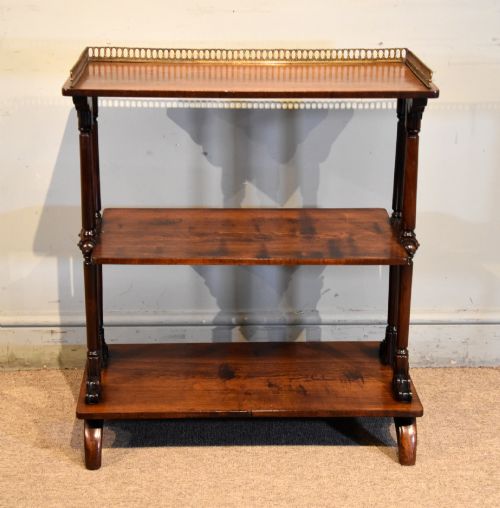
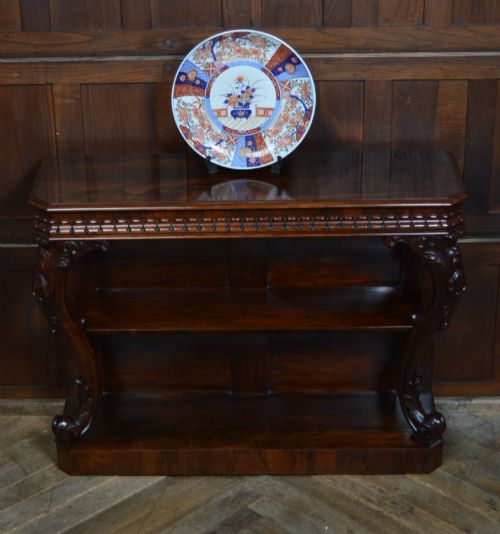
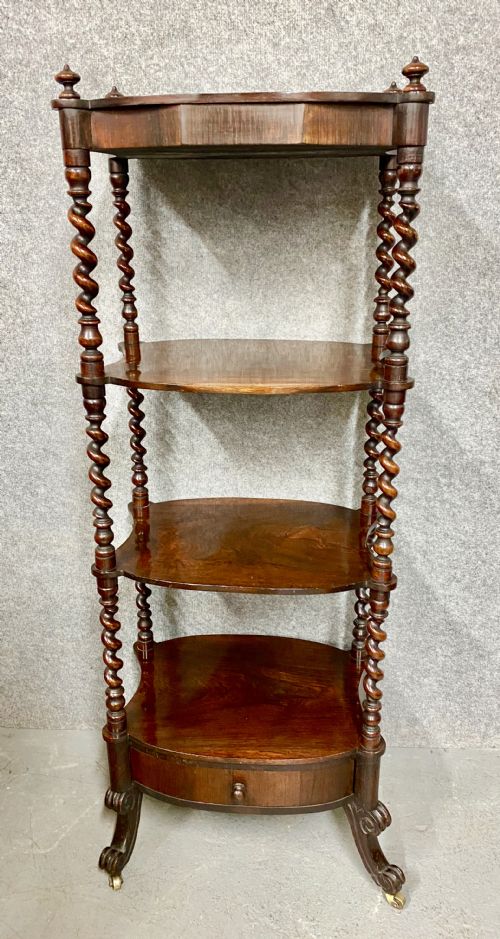
These rosewood tier shelf table pieces are multi-tiered display stands and cabinets that bring useful surface space and rich grain to a room.
Rosewood Tier Shelf Table
When you search for a rosewood tier shelf table, you encounter multi-tiered furniture known primarily in these listings as étagères, whatnots, and console tables. These pieces span periods from the Georgian and Regency eras through the Victorian, Edwardian, and late nineteenth century.
You are most likely to meet three-tier and four-tier examples designed for display and storage, alongside related forms such as chiffoniers and side cabinets. The structural focus rests on stacked open shelves supported by uprights, occasionally incorporating lower cabinets or marble tops.
Origins represented in the current selection include English workshops alongside French interpretations in the Louis XVI period taste and the French manner. Makers such as Robert Strahan also appear among the Irish Victorian console tables.
How they were made
Construction relies heavily on rosewood as the primary timber, often augmented by contrasting secondary woods such as satinwood, kingwood, and walnut for marquetry panels and inlay details. Cabinetmakers utilised these dense tropical hardwoods for their durable framing and deep grain patterns.
Metalwork plays a functional and decorative role, with brass mounts appearing on French-manner pieces to protect edges and accent corners. Surface ornamentation includes intricate marquetry work executed in the eighteenth-century taste, alongside turned wooden supports and gallery rails.
Rosewood Tier Shelf Table Retail Price Guide 2026
Typical asking prices for rosewood tier shelf table among the pieces listed under this phrase on Sellingantiques today, from the lower quarter to the upper quarter. They describe what is for sale here now, not the wider market.
Listings feature nineteenth-century items spanning the Regency, Victorian, and Edwardian periods, constructed primarily in rosewood with brass, satinwood, and marble.
What varies in quality
The distinction between tiers of quality rests in the crispness of the marquetry inlay and the selection of the rosewood veneer. Superior examples display tightly figured grain matched across the shelves and precise botanical or geometric wood-in-wood decoration.
Structural integrity and the quality of the turning on the upright supports separate standard pieces from finer ones. The finesse of the brass mounts and the rigidity of the multi-tiered shelving assembly indicate the level of craftsmanship invested by the maker.
Robert Strahan
The Rosewood Tier Shelf Table Glossary
- Étagère
- A piece of furniture consisting of a set of open shelves for displaying small objects or ornaments. This term is frequently used interchangeably with whatnot in nineteenth-century listings.
- Whatnot
- An open multi-tiered shelving unit designed to hold books, ornaments, or bric-a-brac. Victorian and Regency examples often feature three or four graduated tiers.
- Marquetry
- Decorative veneer work forming geometric patterns or pictures using various coloured woods. Late nineteenth-century pieces often employ this technique in the French taste.
- Console table
- A table fixed to a wall or standing against it, supported by console brackets or legs. Irish Victorian iterations often incorporate rosewood construction and specific maker attributions.
- Chiffonier
- A low cabinet originating in the nineteenth century, sometimes topped with marble. These pieces combine enclosed lower storage with display surfaces.
Rosewood Tier Shelf Table: Frequently Asked Questions
What is a tier shelf table?
A tier shelf table is a multi-level display piece, commonly called a whatnot or étagère in nineteenth-century inventories. These items provide graduated surfaces for books, ceramics, and decorative objects.
They combine the utility of a side table with the vertical display capacity of shelving units. Most pieces feature three or four open shelves supported by turned wooden columns.
How were these tables used?
Victorians and Georgians utilised these stands in reception rooms and drawing rooms to exhibit ornaments, silver, and small collections. The open tiers kept valued possessions visible and accessible.
Some variants included enclosed cabinets or drawers in the lower section for concealed storage. Marble-topped versions also served as console or serving surfaces in larger rooms.
How do I date a rosewood whatnot?
Dating relies on stylistic markers and timber characteristics associated with specific nineteenth-century periods. Regency and William IV pieces often display heavier architectural proportions and distinct turning.
Later Victorian and Edwardian examples incorporate marquetry inlays or lighter satinwood banding. Documentation or maker signatures, when present, provide more precise chronological placement.
Where should I place an étagère?
These pieces suit living rooms, hallways, and studies where vertical display space is preferred over a large footprint. Their open construction prevents them from visually crowding smaller interiors.
Placing them against flat walls protects the upright supports and multi-tier structure from accidental knocks. They function effectively alongside seating groups or as standalone accent furniture.