





Rosewood Table Stands
These rosewood table stands bring rich timber grain and compact utility to an interior, bridging British domestic rooms and Eastern export traditions.
Rosewood Table Stands
When you search for rosewood table stands, you encounter a diverse group of compact furniture designed to hold plants, display objects, or serve adjacent to seating. The selection spans distinct geographic origins and design movements, uniting British Regency and Victorian domestic forms with Chinese and Anglo-Indian export pieces.
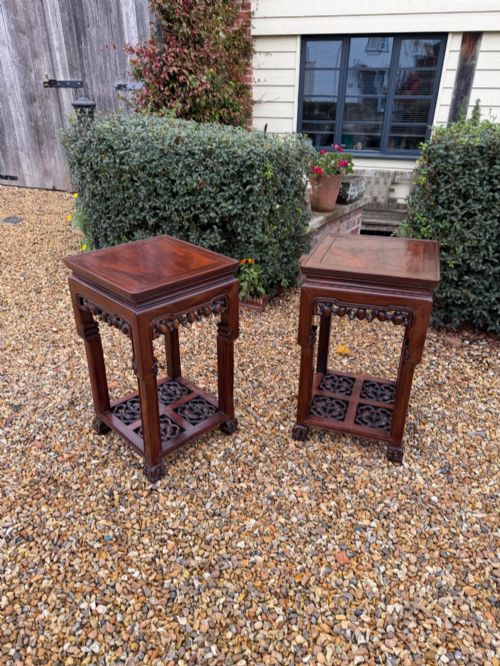
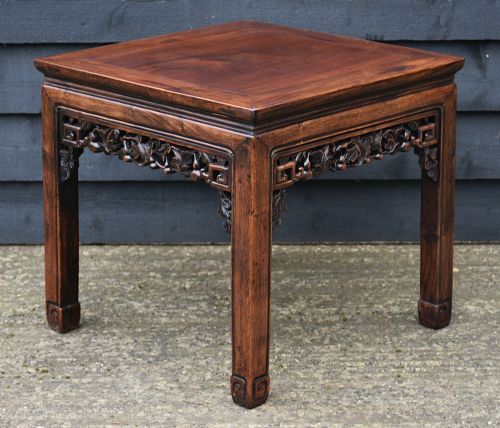
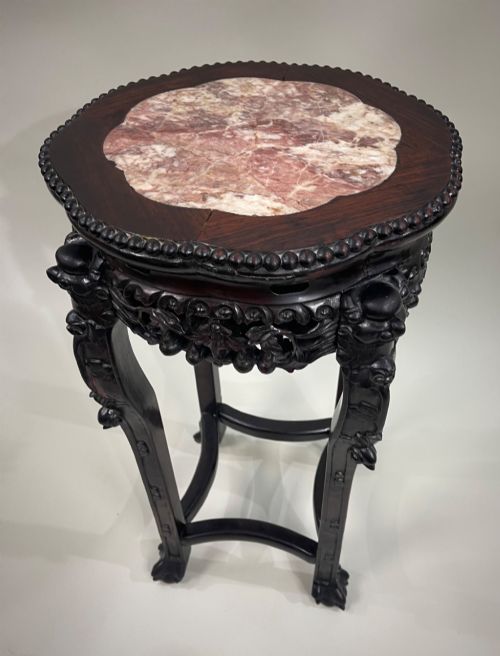
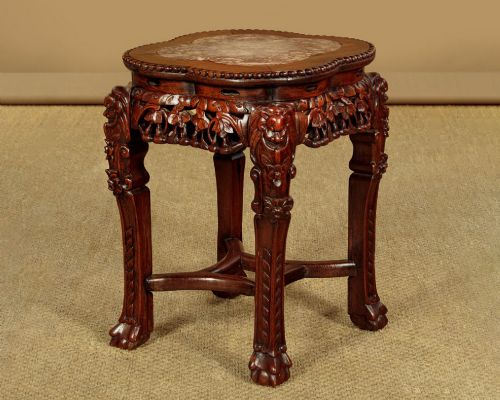
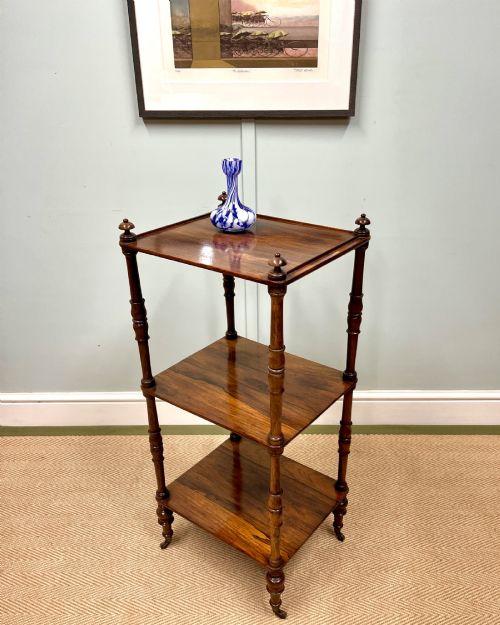
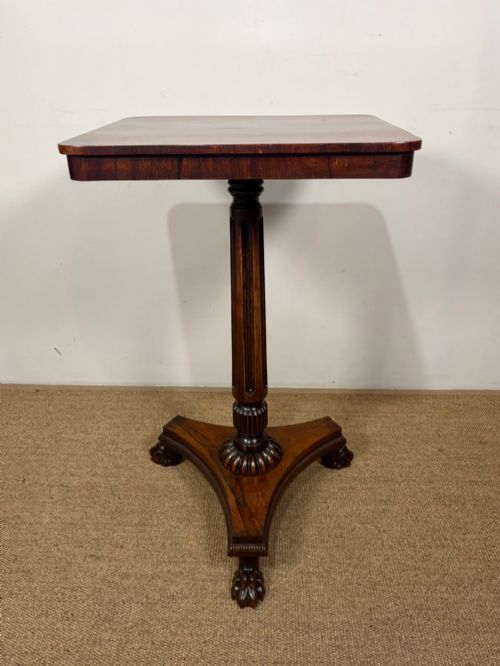
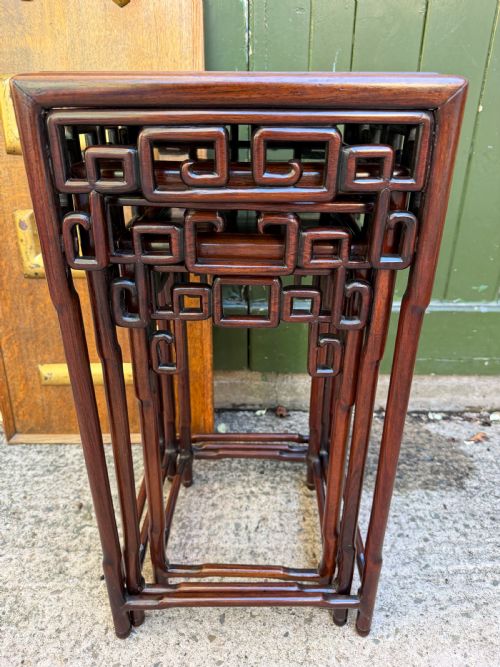
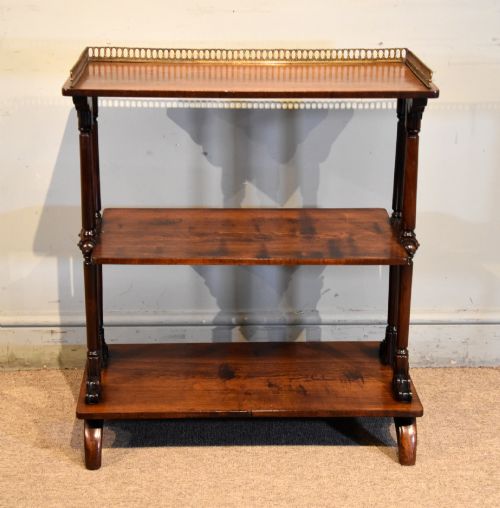
You are most likely to meet Chinese carved hardwood low tables, plant stands, and nesting tables alongside British occasional tables and wine tables from the nineteenth century. These forms vary from simple round or octagonal surfaces to tiered étagères, reading stands, and specialised pot stands featuring inset marble panels.
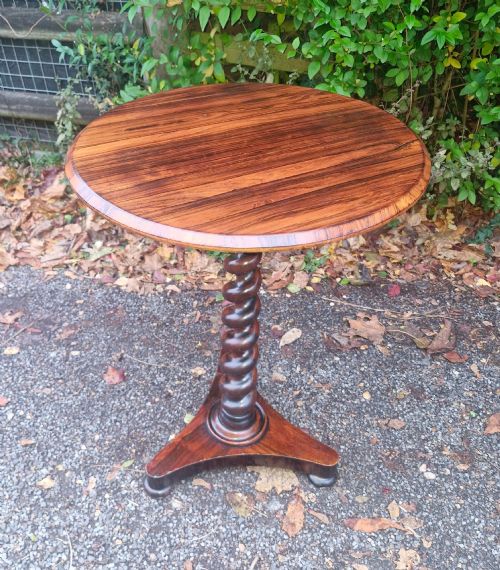
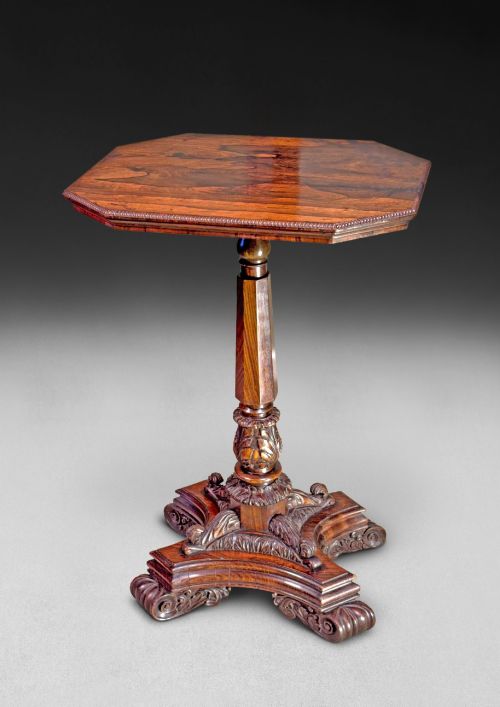
The materials reflect a broad trade network, pairing dense tropical hardwoods with native British timbers. Pieces range from formal Georgian and William IV tripod bases to intricately carved oriental frames utilising bone inlay and mother-of-pearl.
Materials and construction techniques
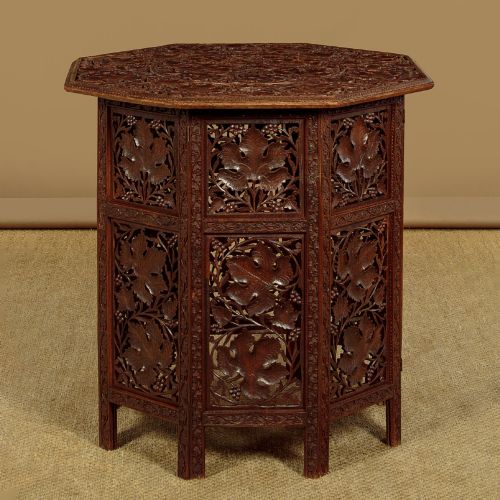
The primary material is rosewood or allied dense hardwoods, chosen for deep colouration and heavy weight. These timbers are frequently carved in high relief, particularly on Chinese export pieces and Hoshiapur tables.
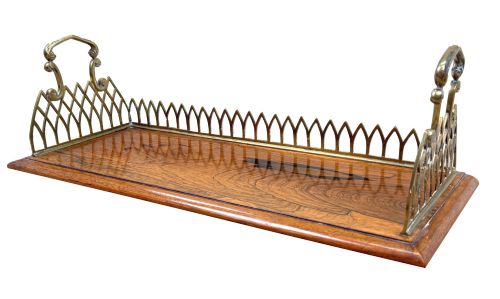
Contrasting materials appear as functional or decorative accents. Brass galleries, ormolu mounts, and bone or mother-of-pearl inlay integrate with the timber surfaces, while marble inserts provide stable, heat-resistant tops for plant stands and pot stands.
Joinery methods range from traditional mortise and tenon frames to turnery on tripod wine tables and specialised mechanisms for telescopic or revolving stands.
Rosewood Table Stands Retail Price Guide 2026
Typical asking prices for rosewood table stands among the pieces listed under this phrase on Sellingantiques today, from the lower quarter to the upper quarter. They describe what is for sale here now, not the wider market.
Some nineteenth-century tables come with removable tops, allowing a flat surface to double as a serving tray during tea time.
Judging execution and design
The standard of carving defines the distinction between standard production and exceptional examples. Crisp undercutting in floral motifs or geometric borders on hardwood stands indicates skilled hand-tool work.
Timber selection and grain matching across table tops and nested sets determine visual cohesion. Uniformity in the rosewood grain and careful integration of contrasting marble or inlay elements elevate the piece.
Structural stability in slender forms, such as tripod wine tables and tall plant stands, relies on balanced joinery and substantial weight in the base.
Liberty & Co·George Bullock·Lesage
The Rosewood Table Stands Glossary
- Rosewood
- A dense, heavy tropical timber prized for its dark purple-brown grain and natural oily lustre. It takes a high polish and forms the primary structural and decorative material for these stands.
- Étagere
- A piece of furniture consisting of open shelves for displaying small objects or ornaments. These tiered stands often incorporate brass galleries or delicate spindle supports.
- Nesting tables
- A set of graduated tables designed to fit one beneath another to save floor space. They appear frequently in nineteenth-century Chinese export production.
- Wine table
- A small, portable occasional table with a circular or octagonal top supported by a central pillar and tripod legs. They were traditionally used beside seating for drinks or books.
- Whatnot
- A multi-shelved piece of furniture used for displaying ornaments and curiosities. Miniature versions function as table stands or bedside furniture.
Rosewood Table Stands: Frequently Asked Questions
What is the difference between a plant stand and a wine table?
Plant stands and pot stands generally feature taller, narrower proportions with stable tops designed to support heavy containers, often incorporating inset marble to resist moisture.
Wine tables utilise a lower profile with a central pedestal and tripod base, created specifically to sit beside seating areas for holding small items or drinks.
How do I identify Chinese export pieces?
Chinese export stands utilise dense indigenous hardwoods carved with traditional motifs such as prunus, dragons, or key-fret borders. They frequently incorporate shaped marble inset panels or nesting configurations.
These pieces combine Eastern carving traditions with Western furniture forms requested by nineteenth-century European markets.
Where were rosewood table stands used historically?
These versatile stands occupied principal reception rooms, drawing rooms, and studies. Smaller wine tables and reading stands sat beside armchairs and sofas for immediate utility.
Plant stands and jardinières stood near windows or in conservatories to display ferns and floral arrangements within domestic interiors.
What periods do these stands typically date from?
The majority of these pieces date from the nineteenth century, spanning Regency, William IV, and Victorian eras. Edwardian examples from the early twentieth century also appear.
Design characteristics and construction methods help distinguish earlier Georgian and Regency craftsmanship from later nineteenth-century revival and export work.