


Rosewood Slant Front Desk
A rosewood slant front desk combines rich timber and practical writing compartments, offering a classic writing surface for the home.
Rosewood Slant Front Desk
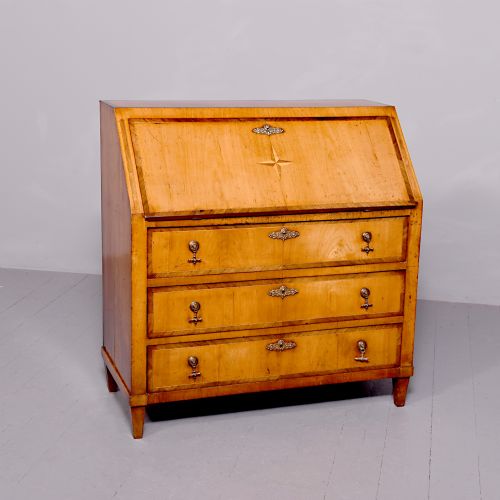
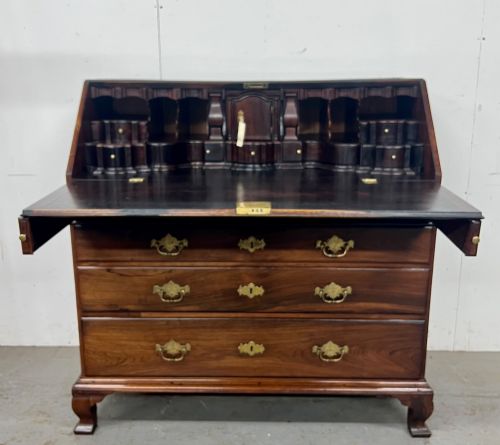
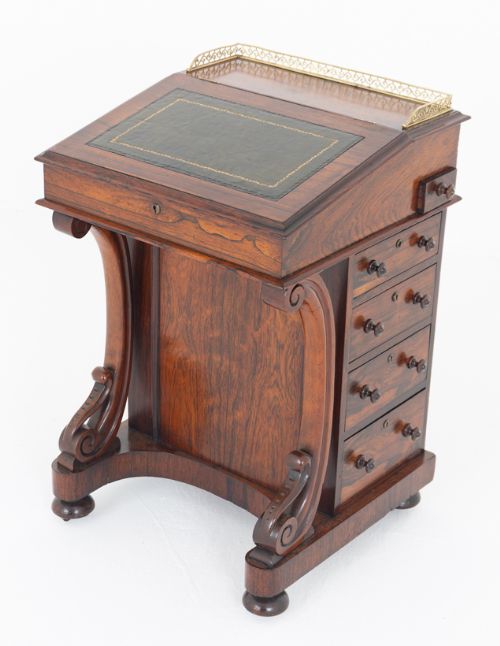
A rosewood slant front desk encompasses a variety of compact writing furniture, from 18th century Portuguese solid timber pieces to Victorian and Regency bureaux and davenports. Buyers looking at this phrase will encounter writing desks with hinged writing flaps, such as the French bureau de dame and the ladies bonheur du jour, alongside compact davenport desks.
Most examples found on this page date from the 19th century and the Victorian era, reflecting the popularity of rosewood in domestic study and boudoir settings during that time. Continental pieces, including Dutch marquetry and French revival styles, sit alongside British Regency and William IV forms to provide a diverse selection of writing furniture.
How they were made
Craftsmen built these pieces using solid rosewood or applied rosewood veneers over secondary timbers, frequently enhancing the surfaces with marquetry, stringing, and contrasting inlay using woods such as walnut, kingwood, and satinwood. The structural integrity relied on traditional joinery techniques suited to housing fitted internal drawers and pigeonholes behind the angled writing flap.
Metal mounts in brass and ormolu often decorated the corners, galleries, and handles of French and Victorian models, while inset panels of leather provided a durable writing surface. Glass components sometimes appeared in associated upper shelving units of bonheur du jour desks.
Several desks include clever secret compartments designed to hide love letters from curious household eyes.
What varies in quality
Quality in a rosewood slant front desk rests upon the selection and matching of the timber veneers, the crispness of any marquetry inlay, and the finesse of the brass or ormolu mounts. Superior pieces display continuous grain patterns across the fall front and drawers, alongside precise cabinetwork that ensures smooth movement of internal compartments.
The sophistication of the internal layout - such as secret drawers, lockable compartments, and well-executed pigeonholes - separates standard production items from finer workshop commissions. The integrity of the secondary woods and the preservation of the original surface finish further determine the standing of an individual piece.
The Rosewood Slant Front Desk Glossary
- Bureau
- A desk featuring a sloping lid that folds down to provide a writing surface above a set of drawers. It typically conceals a fitted interior with pigeonholes and small drawers.
- Davenport
- A compact pedestal desk originating in the early 19th century, featuring a sliding or sloping writing top with drawers opening to the side. They were frequently used as ladies writing desks.
- Bonheur du jour
- A light, elegant ladies writing desk with a small cabinet or set of shelves mounted on the upper surface. This French form became popular during the 19th century.
- Marquetry
- Decorative patterns formed by fitting together thin veneers of various coloured woods and other materials onto a carcase. It requires considerable skill to execute on curved or angled surfaces.
- Ormolu
- Gilt bronze mounts applied to furniture for decorative effect, commonly seen on French bureau de dame pieces. The technique involves applying a gold amalgam to bronze.
Rosewood Slant Front Desk: Frequently Asked Questions
What is a bureau de dame?
A bureau de dame is a feminine writing desk, usually small in scale, featuring a sloping fall front that conceals fitted compartments. These pieces often incorporate delicate inlay and decorative metal mounts.
Originating largely in France during the 19th century, they were designed for private reception rooms and boudoirs rather than formal libraries.
How do I identify a Davenport desk?
A Davenport desk is instantly recognizable by its compact pedestal form, where a sloping, often leather-lined writing surface sits above a stack of drawers that open to the side. Many examples include a small raised gallery at the back for holding stationery.
They emerged during the Regency period and remained popular throughout the Victorian era as space-saving writing furniture.
Are these desks suitable for daily use?
Most antique rosewood writing desks function well for modern writing tasks, provided the hinged slant front and internal supports are treated with care. Their compact footprints make them practical for studies, living rooms, or bedrooms.
Due consideration should be given to protecting the polished rosewood surface and leather writing inserts from heavy wear or moisture.
How do I date a rosewood bureau?
Dating relies on stylistic clues, construction methods, and the specific characteristics of the rosewood veneer and inlay. Regency and William IV pieces often display heavier classical proportions, while Victorian and Edwardian examples may feature lighter marquetry or revival styling.
Examining the secondary timbers inside the drawers and the style of the brass hardware provides additional chronological evidence.