

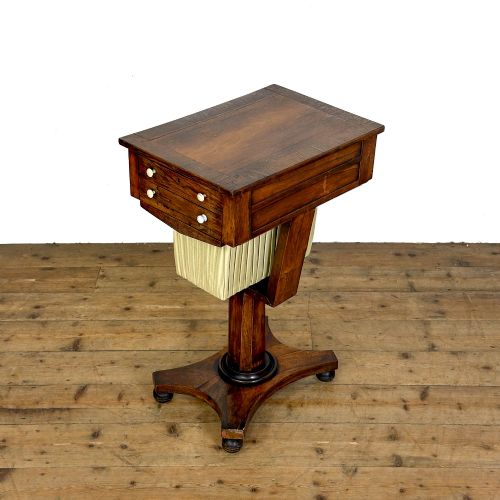
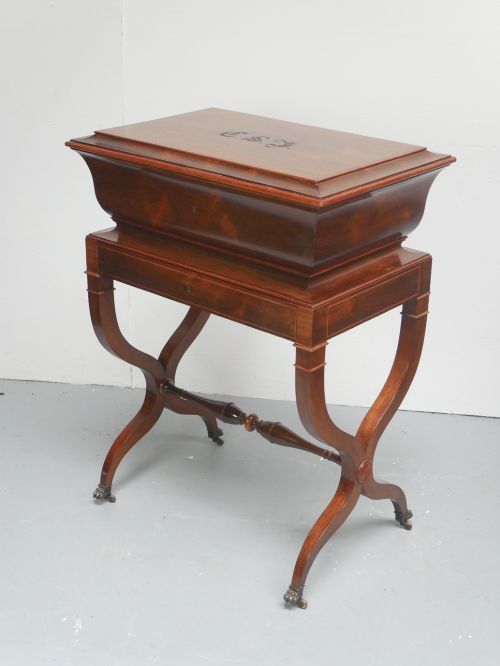


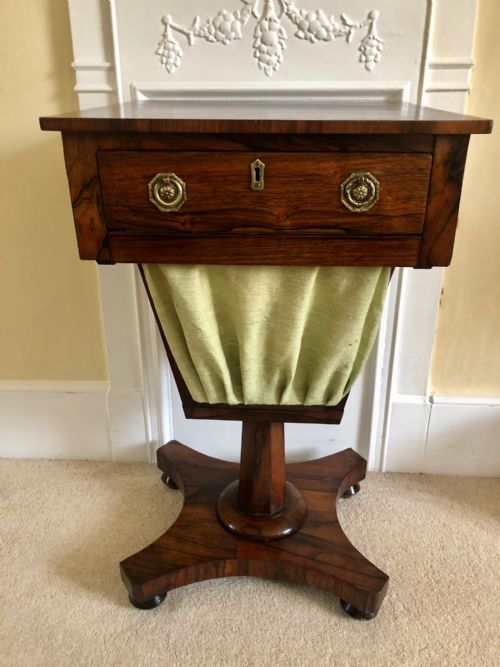
Rosewood Sewing Box
When you search for a rosewood sewing box, you uncover a nineteenth-century essential designed to house needlework and thread with elegance.
Rosewood Sewing Box
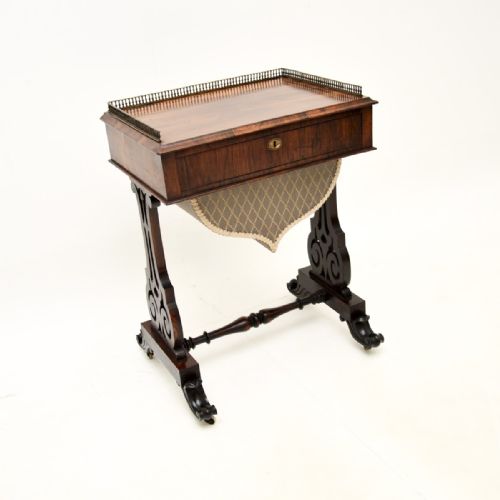
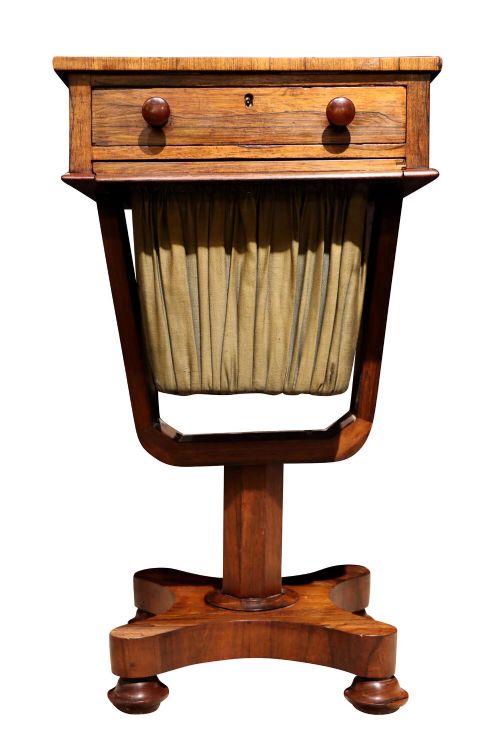
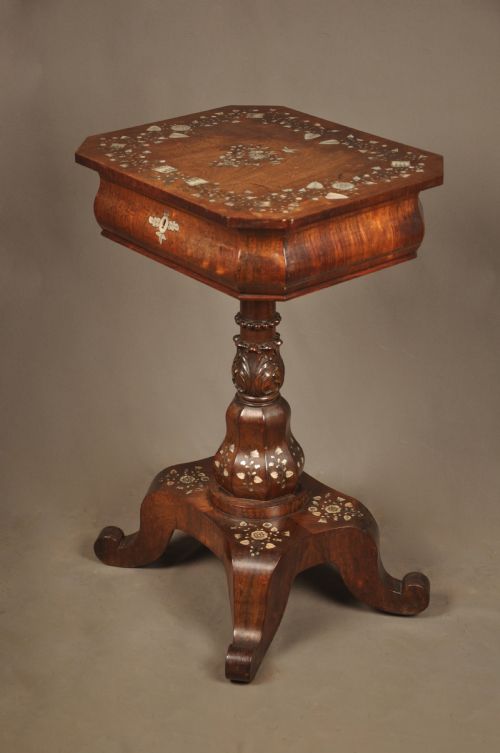
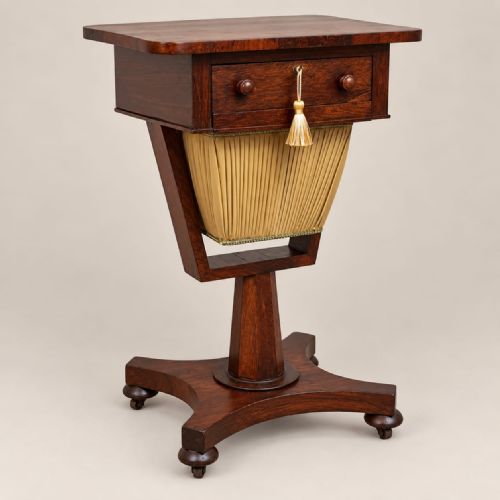
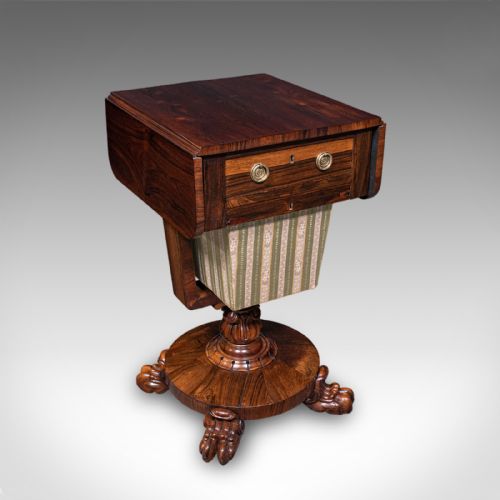
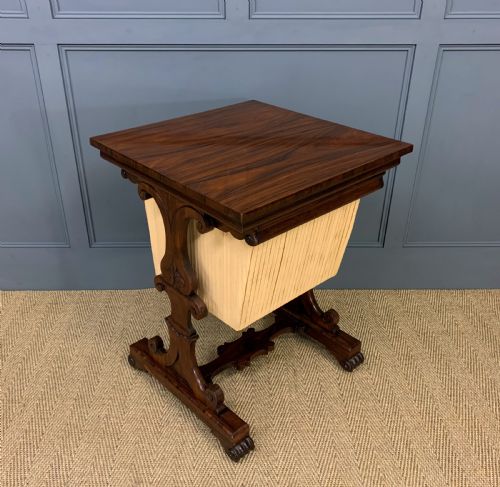
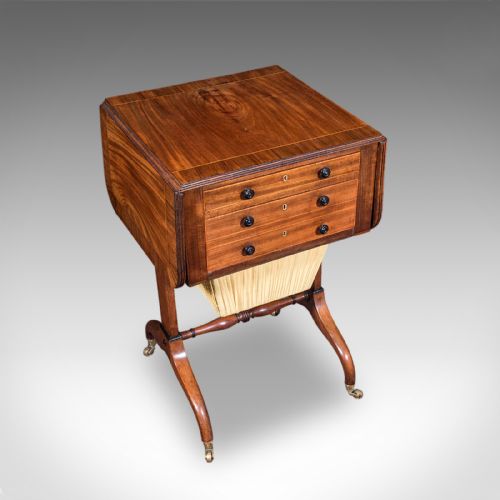
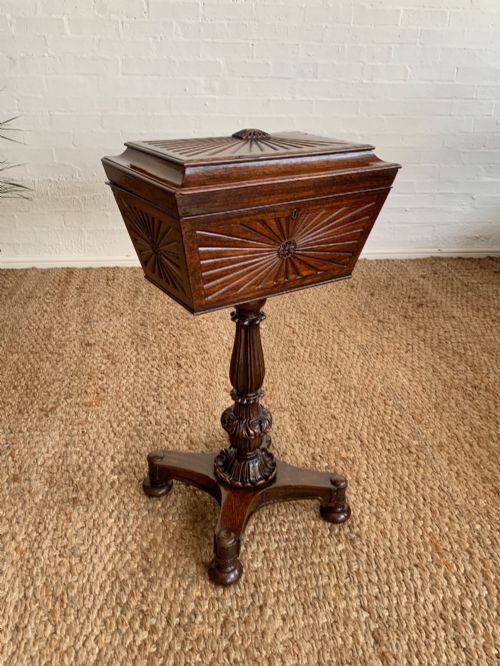
A rosewood sewing box encompasses both compact tabletop caskets and larger freestanding work tables designed for the nineteenth-century parlour. The tabletop variants typically take rectangular or sarcophagus shapes, often fitted with internal trays, compartments, and pin cushions for domestic needlecraft.
Freestanding examples, frequently termed work tables or hobby tables, appear regularly with drop-leaf surfaces and hanging silk catch bags below. These pieces span the Regency, William IV, and Victorian periods, reflecting the shifting domestic fashions of the nineteenth century.
Origins include English workshops, French makers, and Anglo-Indian production, demonstrating a wide geographical spread within the nineteenth-century furniture trade. The material remains central, appearing alongside walnut and amboyna in related sewing furniture.
Markers of distinction
The degree of internal completeness largely separates standard storage items from superior examples. Boxes retaining their original fitted trays, compartments, and matched sewing implements command greater interest among collectors.
The precision and complexity of surface decoration also dictate standing. Finely executed brass inlay, elaborate mother-of-pearl geometric patterns, and detailed pictorial Tunbridge Ware marquetry represent higher tiers of craftsmanship compared to plain rosewood surfaces.
Proportion and structural integrity matter significantly in larger work tables. Pieces with balanced drop leaves, crisp carving on the pedestal supports, and intact original silk work bags demonstrate superior original commissioning.
Rosewood Sewing Box Retail Price Guide 2026
Typical asking prices for rosewood sewing box among the pieces listed under this phrase on Sellingantiques today, from the lower quarter to the upper quarter. They describe what is for sale here now, not the wider market.
Several boxes still retain tiny lead-weighted thread winders designed to keep silk from tangling during Victorian embroidery sessions.
Thomas Briggs·Gillows of Lancaster·Lesage
The Rosewood Sewing Box Glossary
- Rosewood
- A heavy, durable timber prized for its dark purple-brown grain and capacity for a high polish.
- Tunbridge Ware
- Small wooden items decorated with microscopic mosaic tesserae forming pictorial or geometric designs.
- Sarcophagus
- A coffin-shaped box style with a domed lid and tapering body, popular during the Regency period.
- Work Table
- A freestanding domestic table incorporating a drawer and a suspended fabric bag for needlework.
- Mother-of-Pearl
- The iridescent inner layer of certain mollusc shells, utilised for decorative inlay and escutcheons.
- Teapoy
- A small cabinet or box for storing tea, occasionally overlapping in form with nineteenth-century work boxes.
Rosewood Sewing Box: Frequently Asked Questions
What tools belong inside?
Original interiors typically housed compartments for spools, bodkins, thimbles, and small scissors. Many boxes included dedicated pin cushions and lead-weighted thread winders.
Finding these implements intact alongside the rosewood enclosure remains a key indicator of a complete survival.
How do I date a box?
Regency examples often feature brass inlay and sarcophagus forms, while later Victorian pieces frequently employ mother-of-pearl marquetry and Tunbridge Ware. Construction details, such as dovetailing and interior lining materials, also help narrow the decade.
Consulting the specific combination of decorative techniques provides the clearest chronological indicator.
Where were they used?
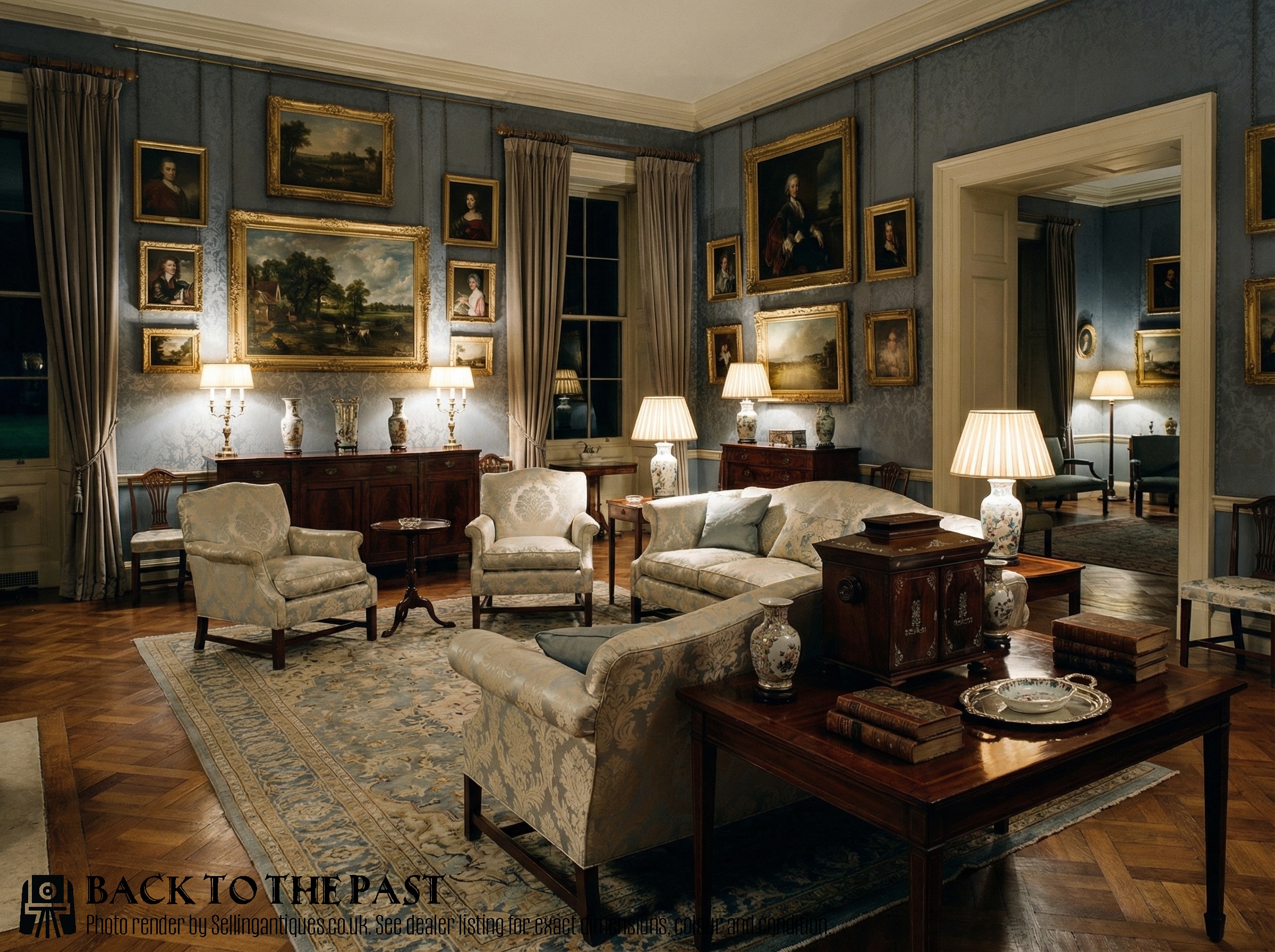
These pieces sat upon parlour tables, sideboards, or beside seating areas where ladies practiced needlework. Freestanding work tables stood within the main reception rooms of nineteenth-century homes.
They functioned both as practical storage and as decorative furniture displaying refined taste.
Are keys usually included?
Working locks were standard for securing valuable sewing tools and personal jewellery, though original keys are frequently lost over time. Many retain their decorative escutcheons surrounding the keyhole.
The presence of an operable lock adds functional authenticity to the piece.