

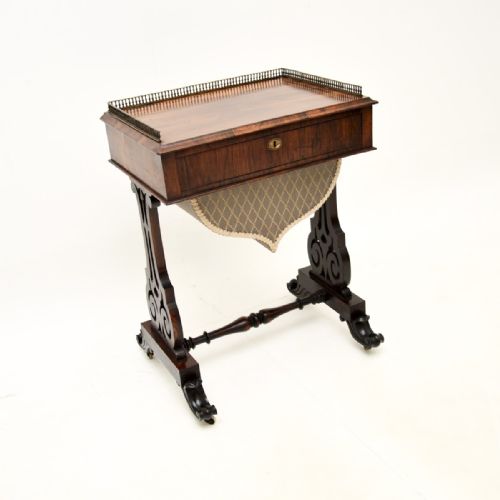

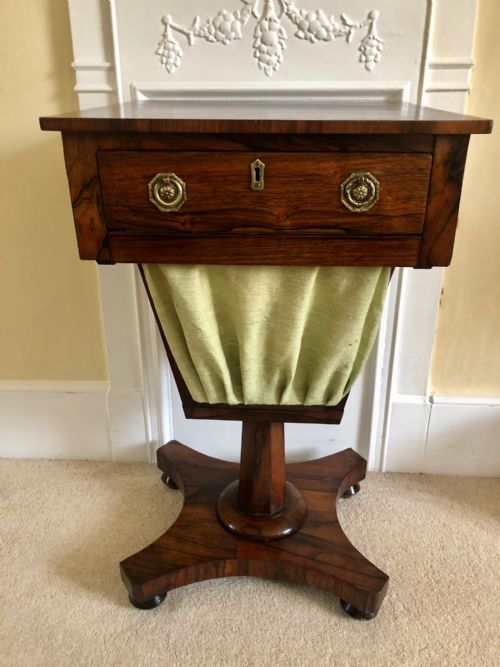


Rosewood Sewing Basket Table
A rosewood sewing basket table is a domestic piece designed for needlework and small pastimes, combining fine timber with hidden storage for the home.
Rosewood Sewing Basket Table
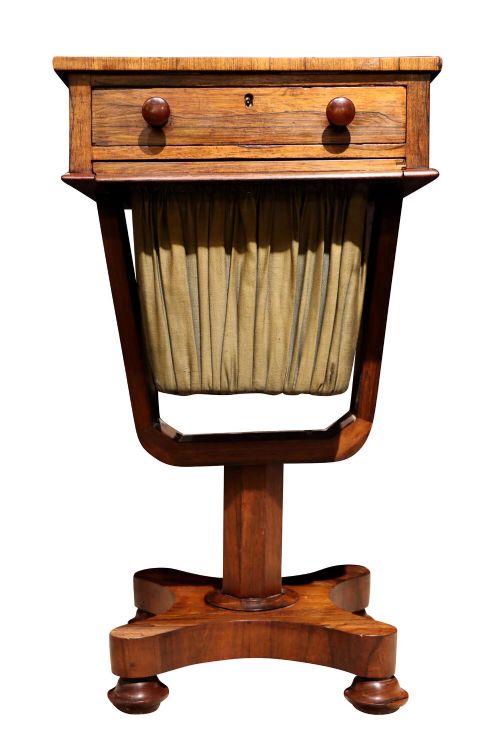
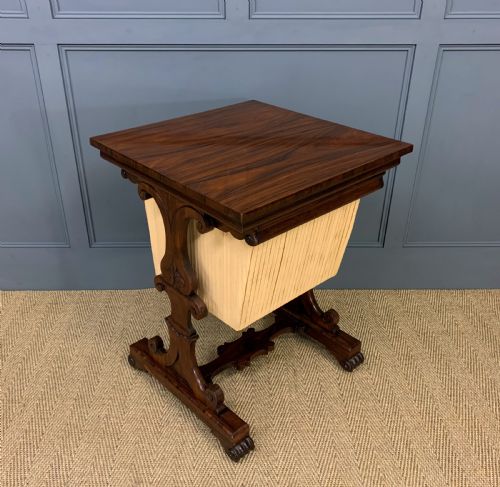
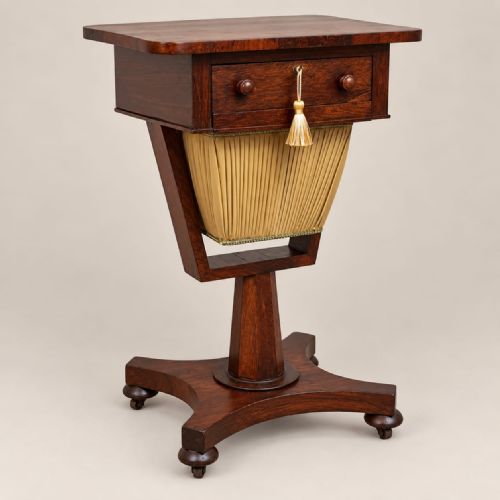
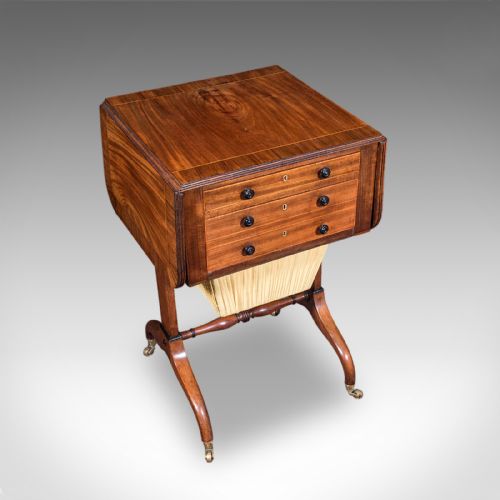
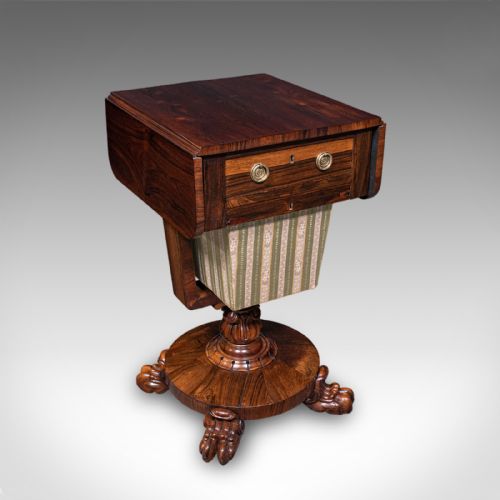
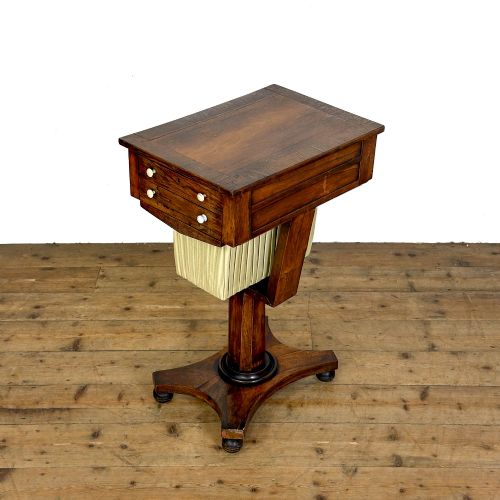
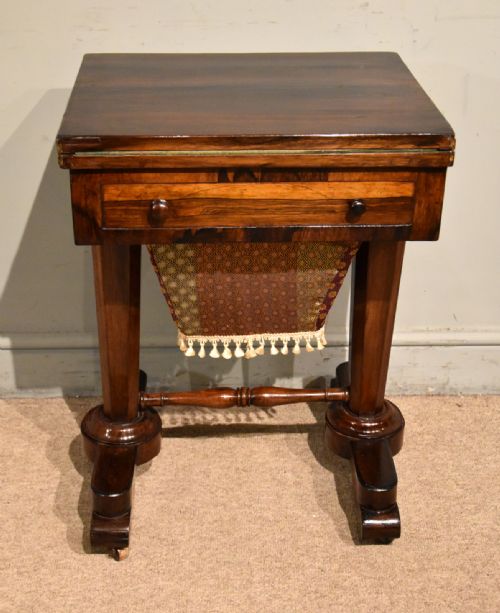
A rosewood sewing basket table serves as a functional and decorative piece of nineteenth-century furniture, designed specifically for domestic needlework and small pastimes. These tables combine a sturdy timber frame with a suspended fabric bag or fitted interior compartment beneath the top.
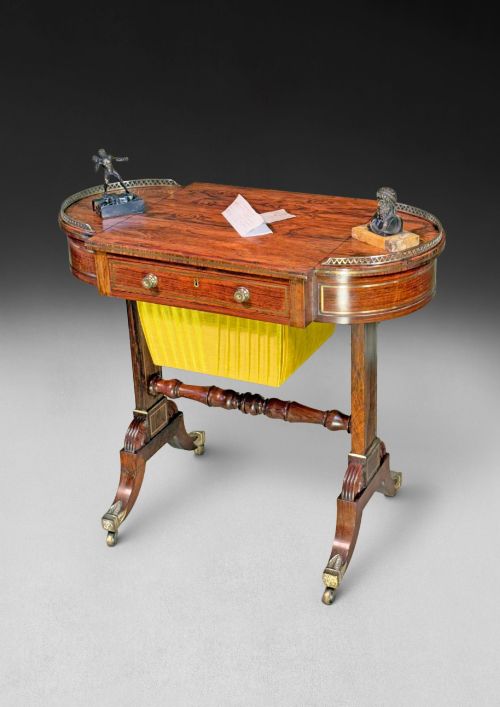
The versions most commonly met on this page span the Regency, William IV, and Victorian periods, often taking the form of work tables or drop-leaf occasional tables. Many incorporate secondary surfaces or foldover tops configured for writing and games alongside their primary sewing function.
Makers of these pieces utilised rich rosewood veneers, frequently pairing the dark timber with contrasting satinwood or boxwood stringing. The combination of elegant proportions and utilitarian storage makes the rosewood sewing basket table a practical addition to period interiors.
Assessing quality in rosewood sewing tables
Quality rests upon the selection of the timber grain, the precision of any brass or lighter wood inlay, and the structural integrity of the pedestal support. Finer examples display highly figured rosewood veneers matched symmetrically across the top.
The sophistication of the internal fittings, such as partitioned work boxes and original silk-lined baskets, separates standard production pieces from finer workshop outputs. The fluidity of the drop-leaf action and the stability of the turning also indicate the standard of manufacture.
Rosewood Sewing Basket Table Retail Price Guide 2026
Typical asking prices for rosewood sewing basket table among the pieces listed under this phrase on Sellingantiques today, from the lower quarter to the upper quarter. They describe what is for sale here now, not the wider market.
Listings feature rosewood, mahogany, satinwood, and boxwood alongside silk and baize, spanning the Georgian, Regency, William IV, and Victorian periods.
The Rosewood Sewing Basket Table Glossary
- Work table
- A small domestic table fitted with drawers, compartments, or hanging bags to hold sewing and needlework materials. These pieces were central to ladies' parlours in the nineteenth century.
- Drop leaf
- A table top featuring hinged flaps on one or both sides that can be raised to extend the surface or dropped when space is required. This mechanism allowed sewing tables to occupy minimal room.
- Foldover
- A hinged table top that opens out to double its surface area, frequently revealing a baize-lined interior for card games or chess. Many sewing tables incorporated this dual functionality.
- Stringing
- A narrow inlay of contrasting light wood, such as boxwood or satinwood, set flush into the darker rosewood surface to create geometric borders. It highlights the architectural lines of the piece.
- Baize
- A coarse woollen woven fabric resembling felt, traditionally used to line the playing surfaces of games tables and the interiors of writing drawers. It provides a durable surface for cards and counters.
Rosewood Sewing Basket Table: Frequently Asked Questions
What is a rosewood sewing basket table used for?
These tables were designed to hold sewing equipment, threads, and needlework supplies within fitted internal compartments or suspended fabric bags. Their tops provided a stable surface for hand crafts and domestic correspondence.
Many examples also doubled as games or writing tables, featuring foldover tops and baize-lined playing surfaces. This multifunctionality made them popular fixtures in nineteenth-century sitting rooms and parlours.
How do I date a rosewood sewing table?
Dating relies on stylistic markers such as pedestal turnings, timber choices, and inlay techniques associated with the Regency, William IV, and Victorian eras. Heavier pedestals and bolder scrollwork typically point towards the William IV period.
Earlier Regency examples often display leaner proportions and finer brass inlay, while mid-nineteenth-century Victorian pieces incorporate robust proportions and simpler turning. Comparing the hardware and internal construction helps confirm the period.
How do I care for rosewood furniture?
Rosewood benefits from stable environmental conditions away from direct sunlight and heat sources, which can cause the timber and veneers to dry out or crack. Regular dusting with a soft, dry cloth preserves the polished finish.
Applying a traditional beeswax polish occasionally helps nourish the wood and maintain its natural depth of colour. Avoid using modern silicone-based sprays, as they can damage antique finishes over time.
What is the difference between a work table and a sewing table?
The terms are largely interchangeable, as both describe nineteenth-century pieces equipped with internal storage and textile baskets for needlework. Makers and contemporary catalogues often used both designations for the same form.
Minor variations depend on whether the piece emphasises writing drawers, gaming surfaces, or deep storage compartments beneath the main top. All share the primary purpose of housing domestic handwork.