
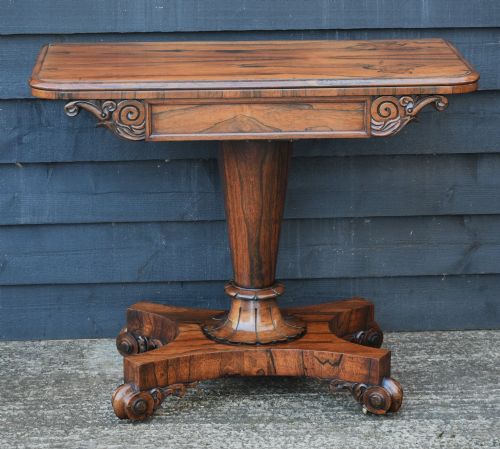
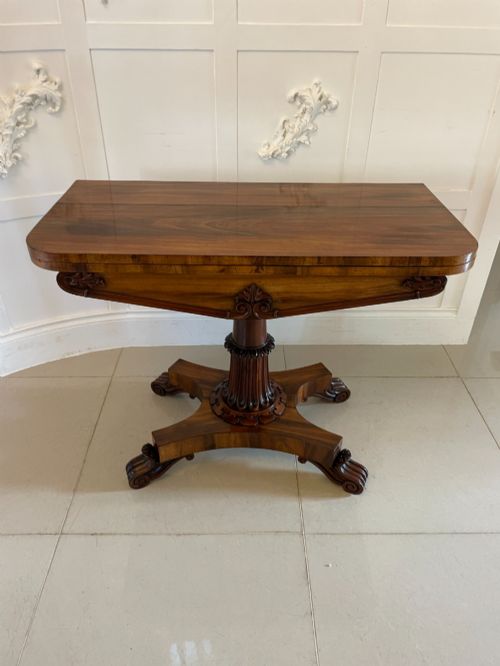
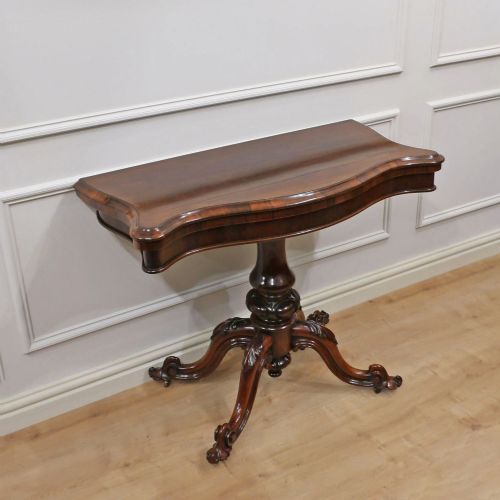

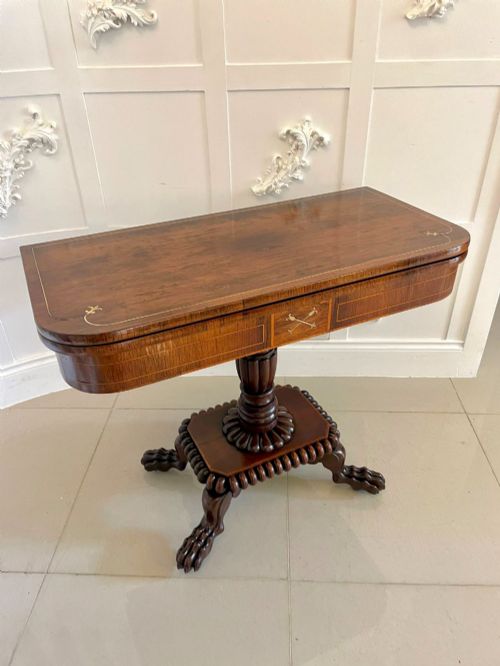
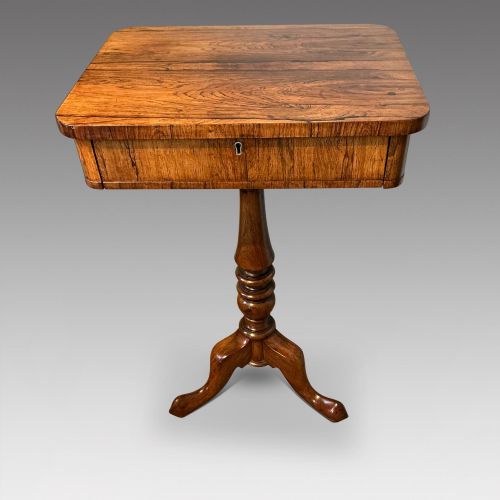
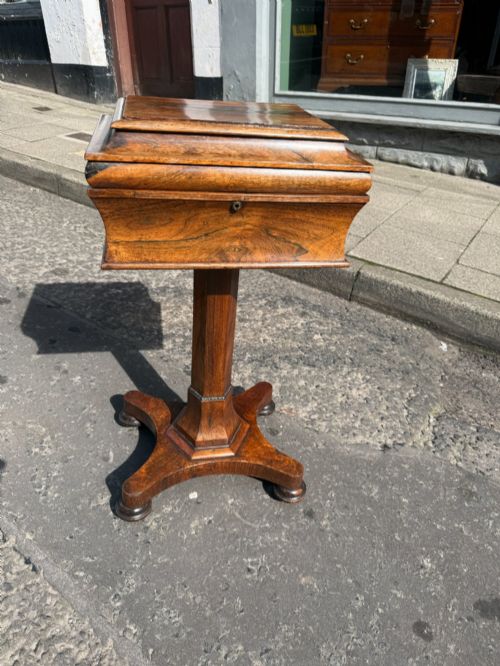
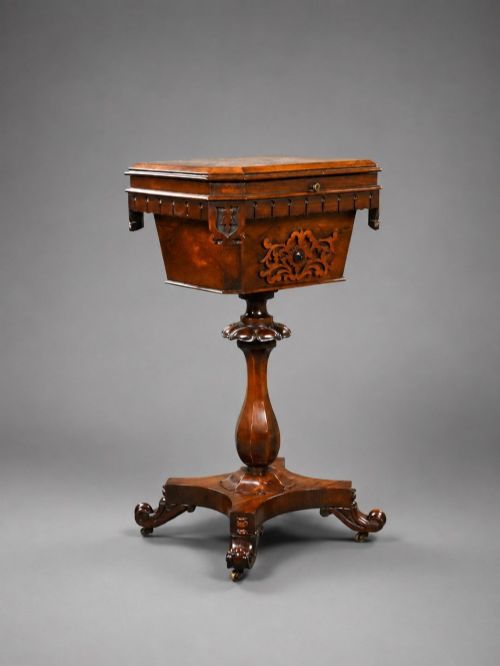
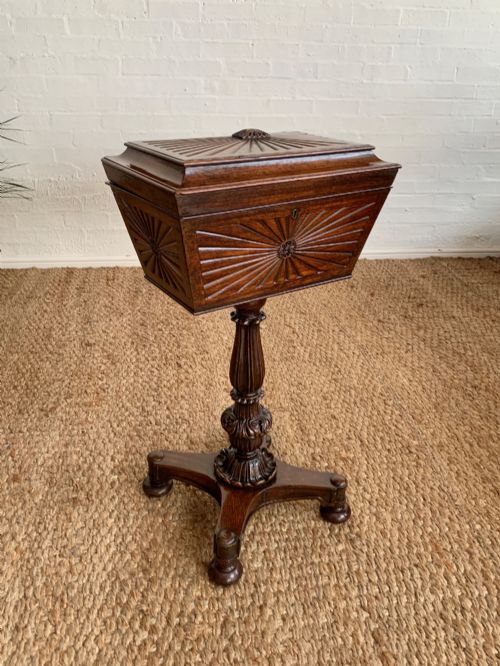
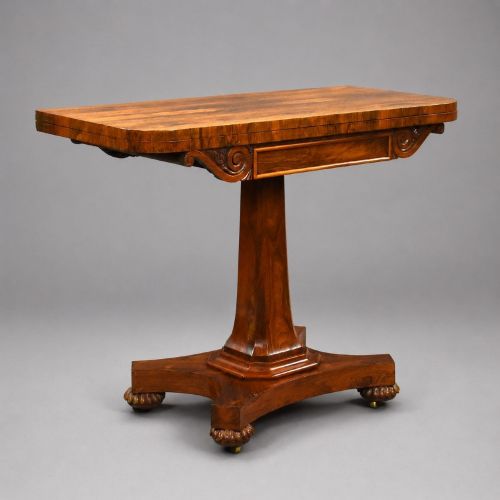
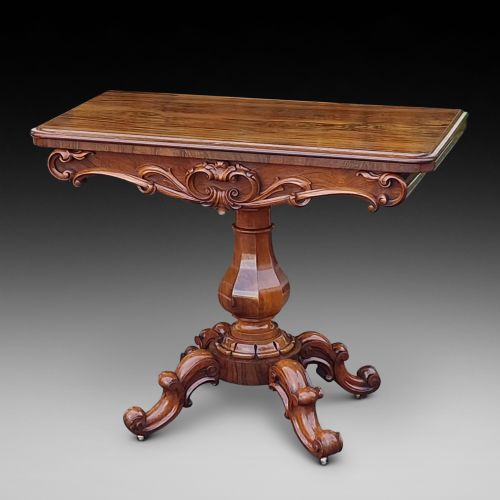
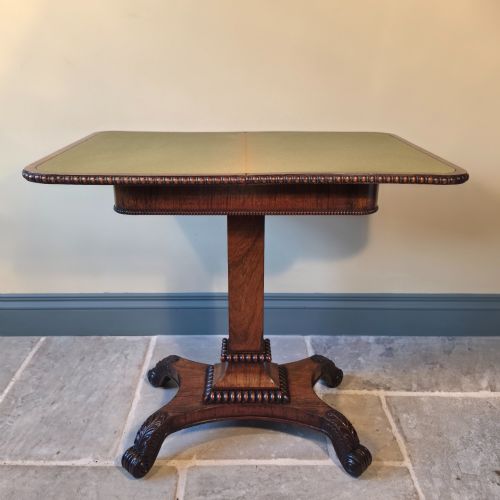
Rosewood Pedestal Tea Table
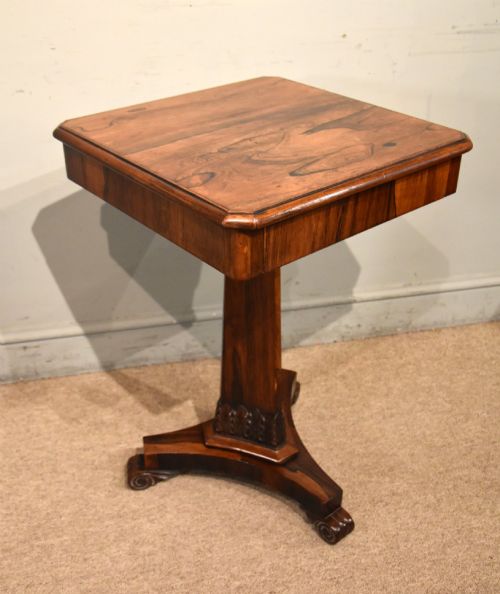
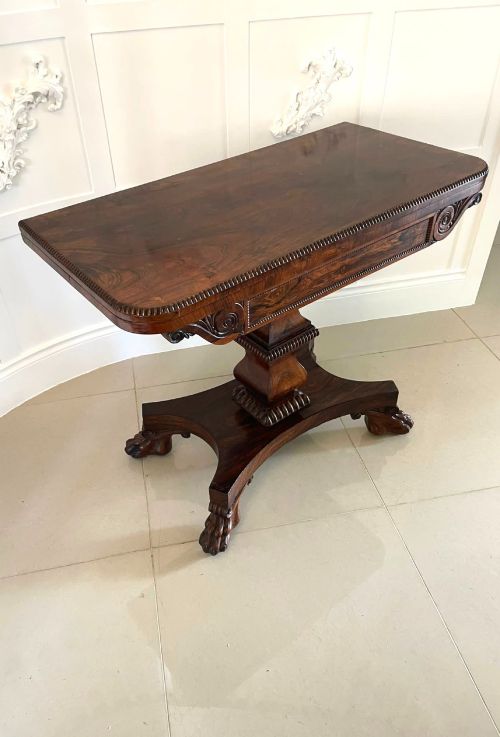
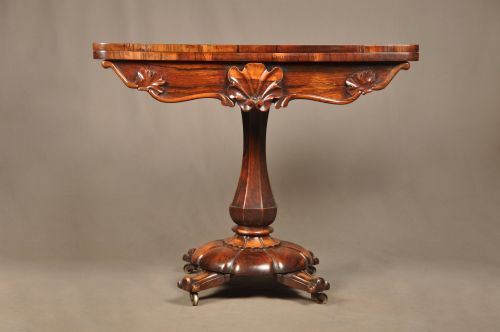
A rosewood pedestal tea table is a substantial piece built for entertaining, combining rich timber with a central support.
Rosewood Pedestal Tea Table
A rosewood pedestal tea table brings together formal entertaining furniture and deep timber grains. Buyers searching for a rosewood pedestal tea table will find examples primarily spanning the Georgian, Regency, William IV, and Victorian periods.
The selection on this page centres heavily on versatile formats, most notably card tables, games tables, and fold-over tea tables supported by central pedestals or column bases.
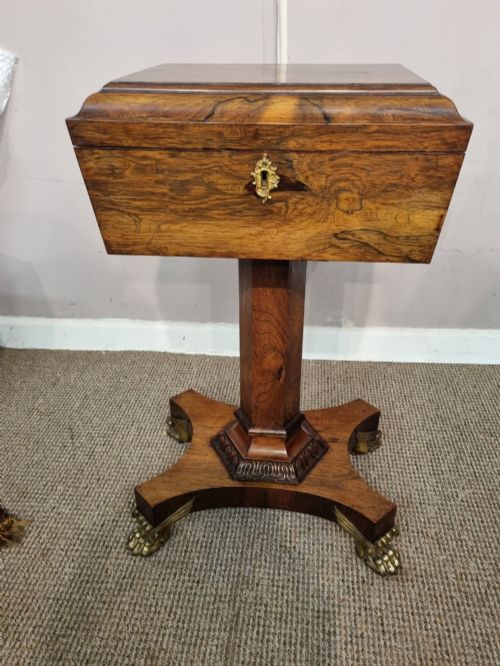
Origins stretch from domestic British workshops to Anglo-Indian colonial production, incorporating related forms such as occasional tables, teapoys, and work tables alongside standard tea tables.
How they were made
Cabinet makers utilised dense rosewood veneers applied to solid secondary timbers, often framing the tops with contrasting satinwood or mahogany crossbanding.
Decoration relied on precision metalwork and carving, integrating brass inlay, ormolu mounts, and intricate scroll or dolphin pedestals.
The listings span multiple decades, incorporating Regency, William IV, and Victorian periods alongside Anglo-Indian colonial pieces.
What varies in quality
Quality rests in the crispness of the carved details on the pedestal base and the precision of the brass inlay across the fold-over top.
Superior execution shows in the balanced proportion of the central pillar to the platform base and the seamless matching of the timber grain.
George Bullock·Gillows
The Rosewood Pedestal Tea Table Glossary
- Rosewood
- A dense, heavily figured dark timber prized for its rich grain patterns and polished finish.
- Pedestal
- A central vertical column supporting the weight of the table top above a platform or footed base.
- Teapoy
- A small stand or box originally designed to store and serve loose tea leaves.
- Crossbanding
- A decorative border of veneer laid around the edge of a table top with the grain running perpendicular to the centre.
- Ormolu
- Gilt bronze ornamentation applied to furniture for decorative accent.
Rosewood Pedestal Tea Table: Frequently Asked Questions
How do I identify a Regency period table?
Regency tables often feature classical architectural motifs, brass stringing, and bold rosewood veneers.
Look for pedestal bases shaped like lyres, scrolls, or carved dolphins that anchor the central column.
What is a fold over tea table?
A fold over tea table is a dual-purpose piece with a hinged top that opens to reveal a larger surface for dining or card games.
When closed, the compact unit functioned as a side table against a drawing room wall.
How should I care for rosewood furniture?
Rosewood requires stable humidity levels to prevent the veneer from drying and cracking over time.
Keep these tables away from direct heat sources and apply a traditional wax polish sparingly to maintain the sheen.
What distinguishes William IV tables?
William IV examples display heavier proportions with bold scrolled pedestals and substantial mahogany or pine framing beneath the rosewood.
Carved details tend to be robust and deeply cut compared to earlier Georgian designs.