


Rosewood Opium Table
A rosewood opium table brings low-profile seating and rich timber grain into a modern room, offering compact surface space rooted in Chinese tradition.
Rosewood Opium Table
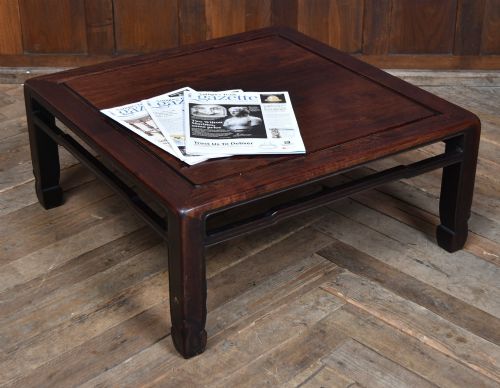
A rosewood opium table is a low form of furniture designed for sitting or resting items near the floor, appearing here in the coffee table and kang table formats. These pieces draw on traditional Chinese designs, spanning the nineteenth century and the early twentieth century.
Buyers will encounter items described through various related terms such as low tables, coffee tables, and kang tables. The examples on this page reflect Qing Dynasty traditions and Chinese Export styles, utilising timber structures suited to low-level placement.
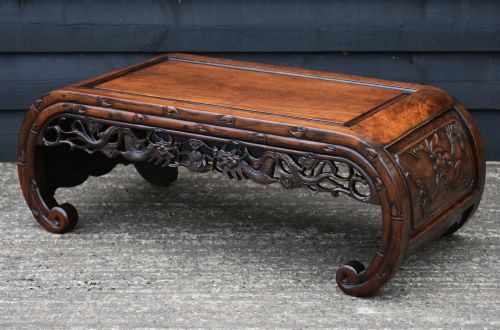
The physical form typically remains compact and rectangular, occasionally featuring scroll ends or dragon details. Such pieces function well in contemporary interiors as low coffee tables while retaining their historic form.
How they were made
Maker workshops utilised dense timbers including rosewood, padouk, huali wood, and general oriental hardwood. These heavy woods provided the structural integrity needed for low tables without requiring thick legs.
Surfaces and edges frequently display carved ornamentation, such as dragon details and scroll ends. Artisans shaped these details directly into the hardwood frame, applying traditional Chinese woodworking methods.
Some tables include dragon details that watch quietly over your evening cup of tea.
What varies in quality
The standard of carving dictates much of the visual distinction among these tables. Crisp, detailed execution on dragon motifs or scroll ends separates standard examples from more refined pieces.
The choice of timber creates further distinction, with figured rosewood, padouk, and huali wood offering richer grain patterns than plain oriental hardwood. The inherent quality of the wood defines the tactile presence of the table.
The Rosewood Opium Table Glossary
- Rosewood
- A dense, heavily grained timber prized for furniture making. Its dark tones and natural polish make it a primary material for traditional Chinese tables.
- Kang table
- A low platform or table traditionally used in northern China on heated brick beds for dining or writing. These forms translate directly into modern low coffee tables.
- Padouk
- A heavy, durable tropical hardwood with reddish or brown hues. It appears frequently in Chinese export furniture alongside rosewood.
- Huali wood
- A traditional Chinese term for fragrant rosewood varieties. It is often associated with Qing Dynasty scholarly and domestic furnishings.
- Scroll end
- A characteristic upturned termination on the short sides of a table top. This architectural detail frames the surface of traditional kang and opium tables.
Rosewood Opium Table: Frequently Asked Questions
What is a rosewood opium table?
A rosewood opium table is a low-level wooden surface originating from Chinese furniture traditions, built for domestic use near the floor.
Today, these tables serve primarily as low coffee tables in contemporary living spaces, retaining their traditional proportions and timber construction.
How do I date a Chinese hardwood table?
Dating relies on stylistic markers such as Qing Dynasty carving conventions, scroll ends, and dragon details alongside timber selection. Nineteenth-century and early twentieth-century examples show specific transitions in joinery and decorative depth.
Examining the wear patterns on the hardwood and the specific nomenclature used by makers helps place the piece within the 1900 to 1920 window or earlier periods.
Where were these tables used originally?
These tables were designed for traditional interiors in China, often placed upon raised platforms, kang beds, or directly on the floor for serving tea or smoking.
Their low height made them versatile for seated activities on mats or low seating arrangements rather than standard chairs.
How do I care for rosewood and padouk furniture?
Hardwood surfaces benefit from regular dusting with a dry cloth and protection from direct sunlight and extreme humidity changes. Avoiding moisture buildup preserves the natural finish of the timber.
Applying specialised wax occasionally helps maintain the lustre of rosewood, huali wood, and padouk without altering the grain.