



Rosewood Open Shelf Cabinet
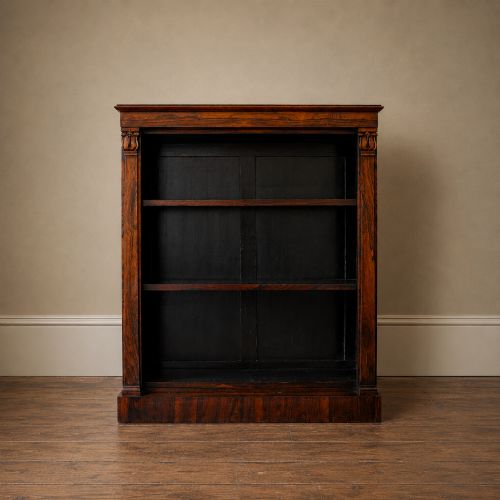
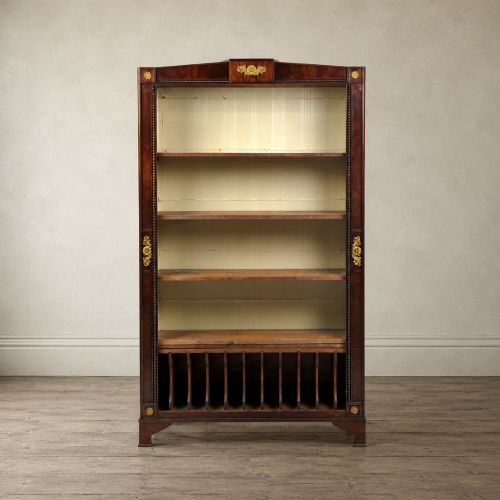
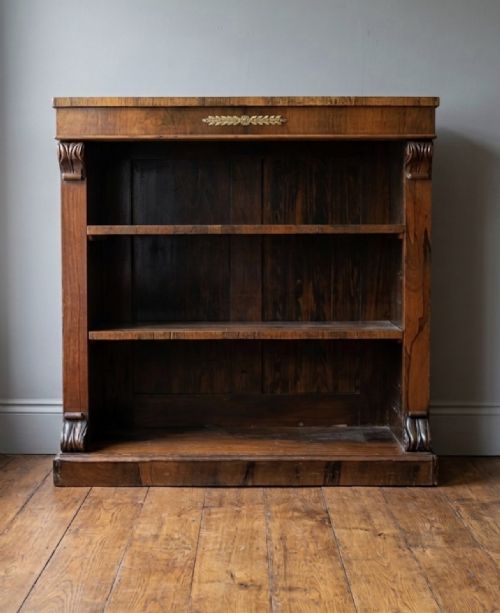
A rosewood open shelf cabinet brings warm timber and accessible display space to a room, drawing on Regency and Victorian forms.
Rosewood Open Shelf Cabinet
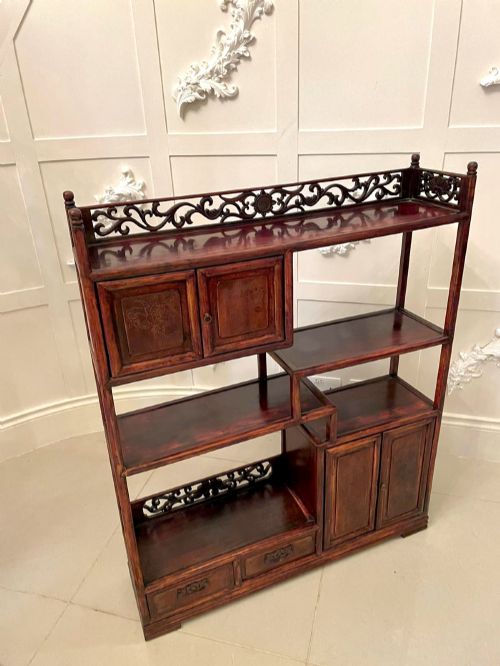
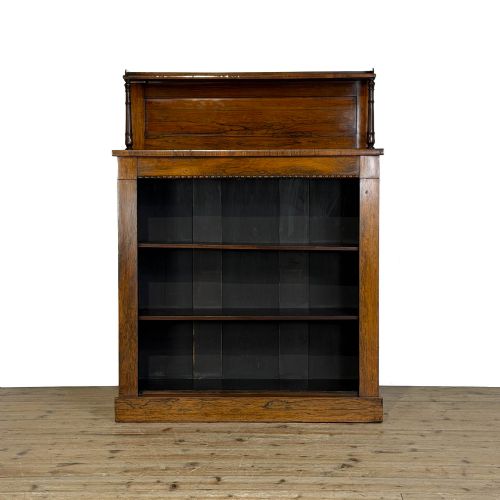
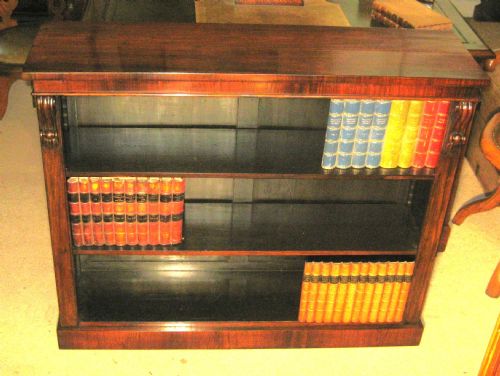
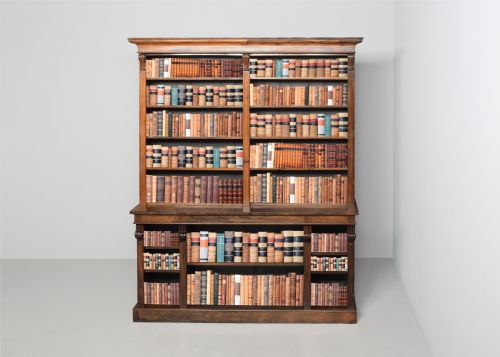
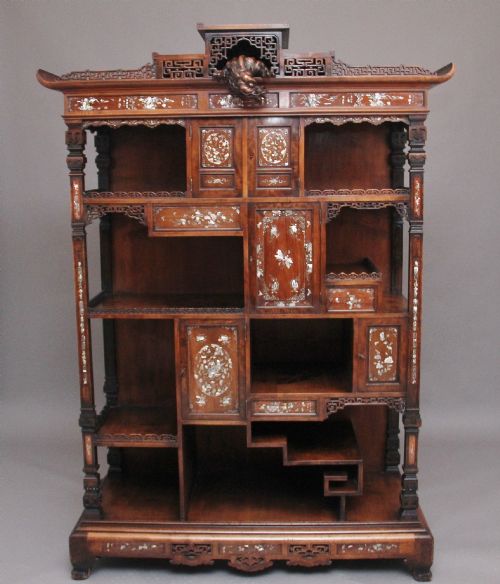
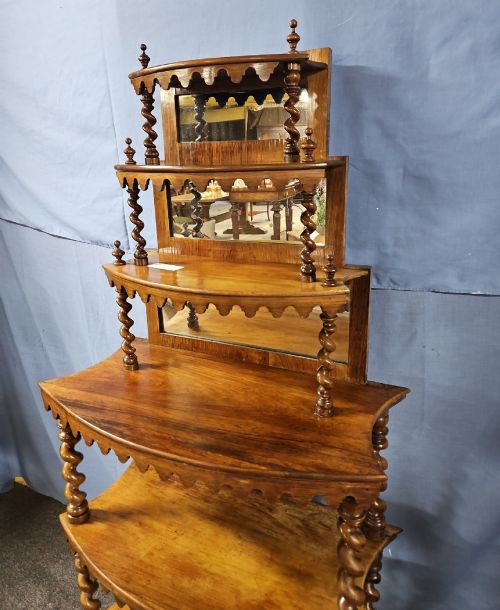
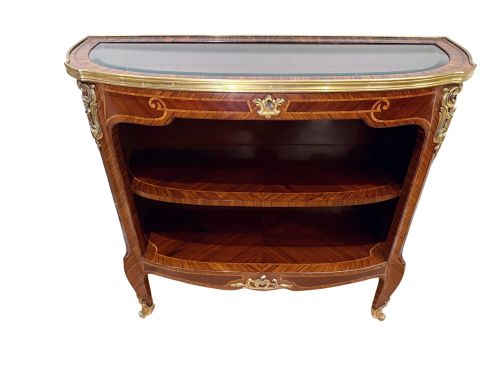
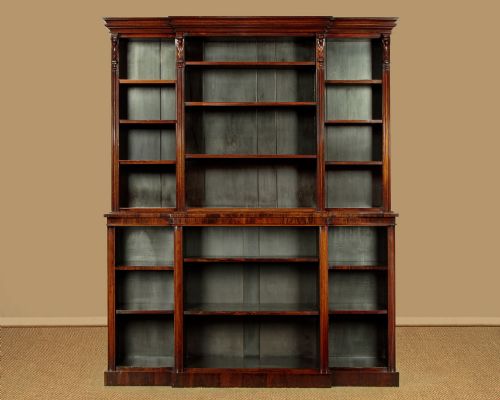
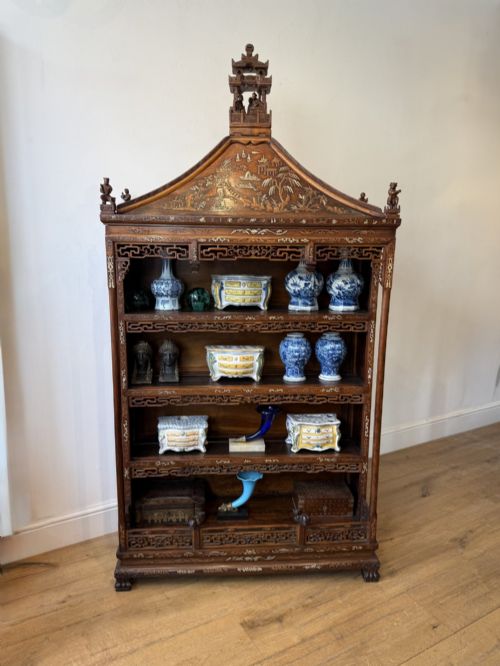
When searching for a rosewood open shelf cabinet, buyers encounter open bookcases, dwarf bookcases, etageres, and side cabinets designed for displaying books and ornaments. These pieces span the Regency, William IV, and Victorian periods, alongside Chinese export and Japanese shodana forms.
The version most commonly met on this page is the nineteenth-century open bookcase, frequently constructed with adjustable shelves and occasionally featuring brass inlay, marble tops, or a breakfront profile.
Makers and craftsmen utilised dense exotic timbers to create low shelving units that served both practical libraries and formal drawing rooms.
How they were made
Cabinetmakers constructed these pieces primarily using solid rosewood and rosewood veneer applied over secondary timbers such as pine or hardwood. The distinct grain and rich deep colour of the timber formed the primary decorative surface.
Many examples incorporate brass inlay, parcel gilding, or marble tops, while Chinese export and Japanese pieces utilise intricate carved hardwood and painted panels. Structural elements often included adjustable shelving systems and breakfront configurations.
At least one Regency cabinet comes complete with a set of leather dummy books, ready to fool guests before they even reach the shelf.
What varies in quality
The standard of a rosewood open shelf cabinet rests upon the selection of timber figures and the precision of cabinet joints. Finer examples display carefully matched veneer grains and solid brass detailing rather than simpler painted or simulated finishes.
Proportion and architectural detailing also divide the range, with well-balanced breakfront profiles and finely turned columns marking the upper tier of nineteenth-century production.
The Rosewood Open Shelf Cabinet Glossary
- Rosewood
- A dense, heavily grained exotic timber prized for its deep brown and reddish hues. It forms the primary material for many formal nineteenth-century library cabinets.
- Breakfront
- A piece of furniture where the central section projects forward from the flanking sides. This layout adds architectural depth to bookcases and side cabinets.
- Shodana
- An asymmetrical Japanese display cabinet featuring multiple tiers of staggered shelves and small cupboards. These were popular during the nineteenth-century interest in Japanese design.
- Waterfall bookcase
- A shelving unit where each successive tier is narrower or shallower than the one below, creating a stepped profile reminiscent of falling water.
- Chiffonier
- A low cabinet derived from the sideboard, often fitted with shelves or a raised superstructure. They frequently served supplementary storage roles in Victorian drawing rooms.
Rosewood Open Shelf Cabinet: Frequently Asked Questions
Where should I place an open shelf cabinet?
These low cabinets suit sitting rooms, studies, or libraries where accessible display space is required for books and decorative objects.
Their reduced height allows them to sit beneath windows or against panelled walls without dominating the floor plan.
How do I adjust the shelves?
Many nineteenth-century examples feature wooden ratchets, brass pegs, or slotted uprights that allow shelves to be repositioned for different book heights.
Care should be taken when moving older shelving boards to avoid disturbing historical interior linings or finishes.
Are these cabinets suitable for heavy books?
Solid rosewood and hardwood variants provide robust support for substantial volumes, though dwarf bookcases are generally proportioned for smaller collections.
Adjustable shelves in period pieces should be assessed individually for thickness and span before loading heavy folios.
How do I distinguish Regency from Victorian examples?
Regency and William IV pieces often display classical architectural motifs, brass inlay, and parcel gilding reflecting earlier nineteenth-century neoclassical tastes.
Victorian cabinets tend toward heavier proportions, varied wood veneers, and distinct display configurations such as tiered etageres or shodanas.