




Rosewood Music Cabinet
A rosewood music cabinet is a dedicated piece of Victorian or Edwardian furniture built to hold sheet music, offering rich timber and refined proportions.
Identifying a rosewood music cabinet
A rosewood music cabinet is a tall and narrow storage piece designed specifically to organise sheet music and scores in the home parlour. These cabinets typically date from the Victorian, Late Victorian, and Edwardian periods, spanning the nineteenth and early twentieth centuries.
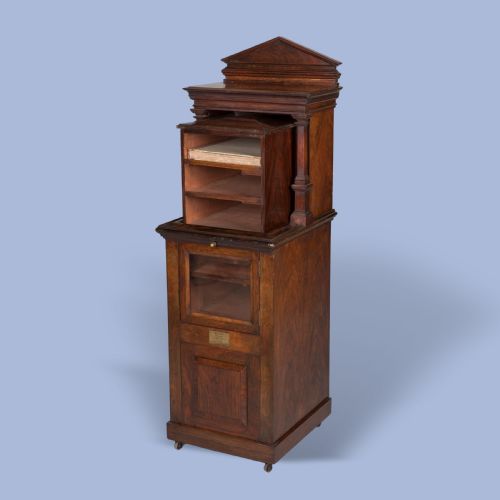
The form appears in various configurations, including tall narrow cupboards, multi-functional side cabinets, and versions featuring glazed doors or mirrored backs. Many examples incorporate specialised internal shelving or shallow drawers tailored for keeping paper documents flat.
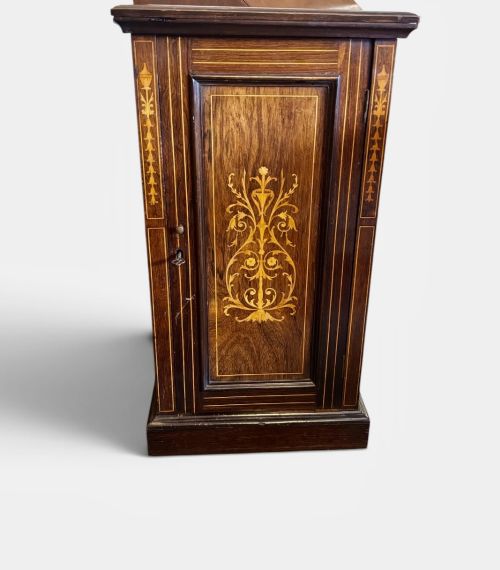
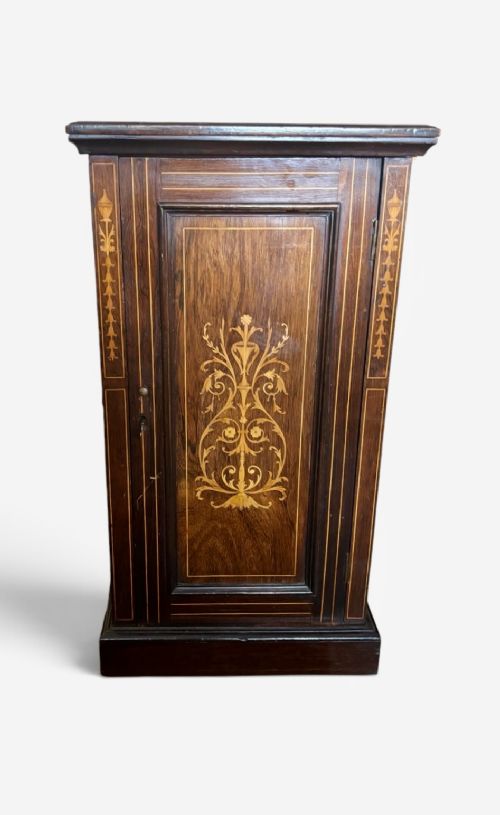
Most pieces encountered follow traditional English furniture patterns in rosewood, frequently enhanced with contrasting timbers or decorative inlay work.
Materials and construction methods
Makers utilised rosewood as the primary timber, often selecting highly figured stock or Rio rosewood to create striking grain patterns across the exterior surfaces. Construction frequently incorporates secondary woods for internal components and drawer linings.
Decoration relies on marquetry inlay and stringing using lighter contrasting materials such as boxwood and satinwood. Brass hardware, glass panels, and mirror plates complete the fittings on glazed and mirrored variations.
Retail Price Guide 2026
Typical UK retail prices for rosewood music cabinet, calculated from the Sellingantiques database of over a million retail prices indexed since 2003. This retail price guide relies exclusively on Sellingantiques data; no external sources or auction records are used, so the figures do not describe the wider market.
Some Edwardian music cabinets doubled as hall stands, proving that Victorian musicians also needed a convenient spot for their hats.
Distinguishing quality in rosewood pieces
Quality rests heavily on the selection of the rosewood timber and the precision of the marquetry inlay work integrated into the carcass. Highly figured grain and intricate satinwood or boxwood details elevate the visual presence of a piece.
Structural refinement in the door hinges, internal dividers, and the integrity of any mirror backs or glazed display sections also divide standard utility cabinets from finer examples.
The Rosewood Music Cabinet Glossary
- Rosewood
- A dense, dark timber prized for its rich natural colour and bold grain patterns. It forms the primary carcase material for these cabinets.
- Marquetry Inlay
- Decorative patterns formed by inserting small pieces of contrasting wood into the rosewood surface. Boxwood and satinwood are common for this detailing.
- Edwardian
- A stylistic period spanning the early twentieth century, characterised by lighter proportions and refined inlay work. Pieces from this era often feature simplified lines compared to earlier Victorian designs.
- Victorian
- The nineteenth-century era covering the reign of Queen Victoria, encompassing diverse cabinet forms from tall narrow cupboards to mirrored display cases.
- Glazed
- Fitted with glass panels, transforming the music cabinet into a display case for visible storage.
Frequently Asked Questions
What were music cabinets used for?
These cabinets served to store and protect unbound sheet music, scores, and songbooks in domestic drawing rooms.
Internal shelving and shallow compartments kept paper collections orderly and accessible for parlour musicians.
How do I date a rosewood music cabinet?
Dating relies on stylistic shifts between the Victorian and Edwardian eras, observed through proportions and decorative motifs.
Earlier Victorian models tend to feature heavier timbers and mirror backs, while Edwardian versions lean towards lighter inlaid designs.
Where should I place a music cabinet at home?
The tall and narrow footprint allows these cabinets to fit easily into smaller alcoves, hallways, or reception rooms.
They function well as side cabinets or display units where floor space is limited.
Are all these cabinets made of solid rosewood?
Most examples combine solid rosewood framing with fine rosewood veneers applied to stable secondary timber carcases.
This traditional method prevented warping while presenting an uninterrupted decorative grain on the exterior.