
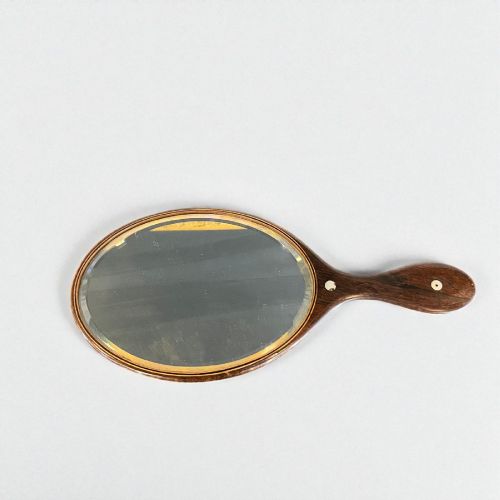

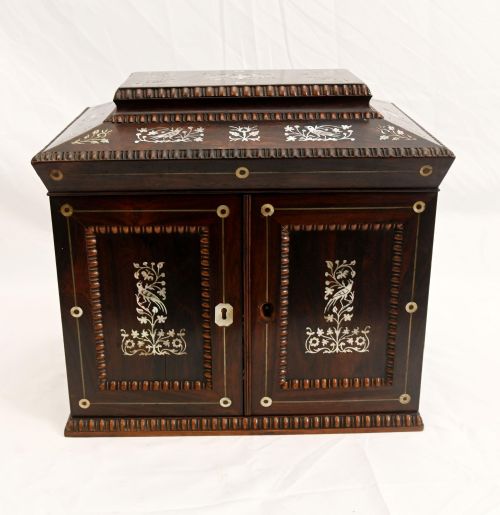


Rosewood Mother of Pearl
Rosewood mother of pearl pieces combine dense tropical timber with iridescent shell inlay to create decorative domestic items that collectors prize for utility and surface shimmer.
Rosewood Mother of Pearl
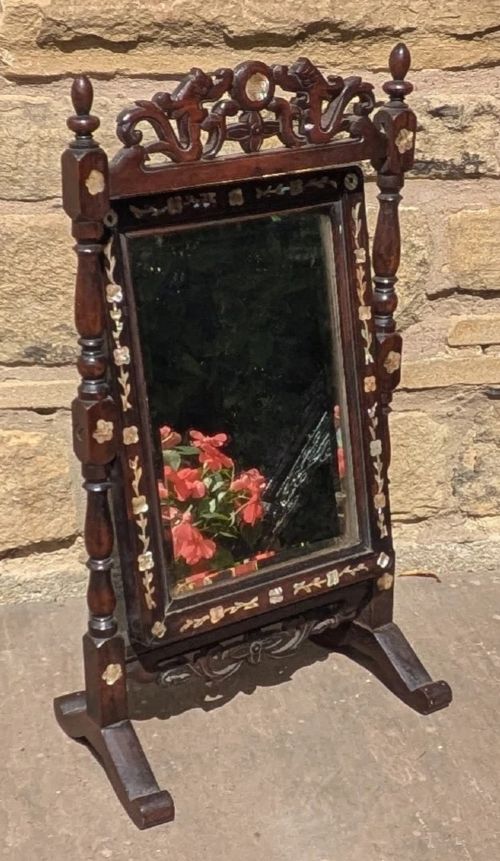
When searching for rosewood mother of pearl, buyers encounter a distinct group of 19th-century portable containers and precision instruments, alongside occasional larger furniture forms.
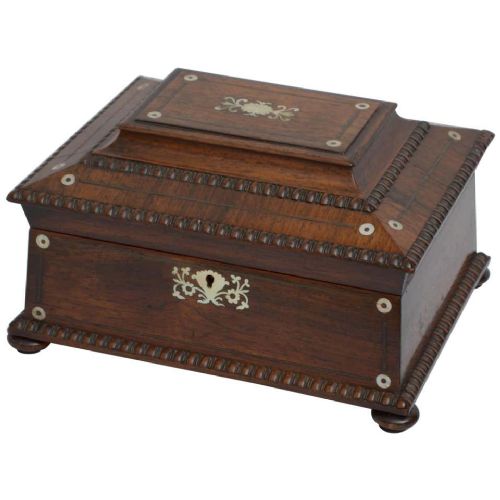
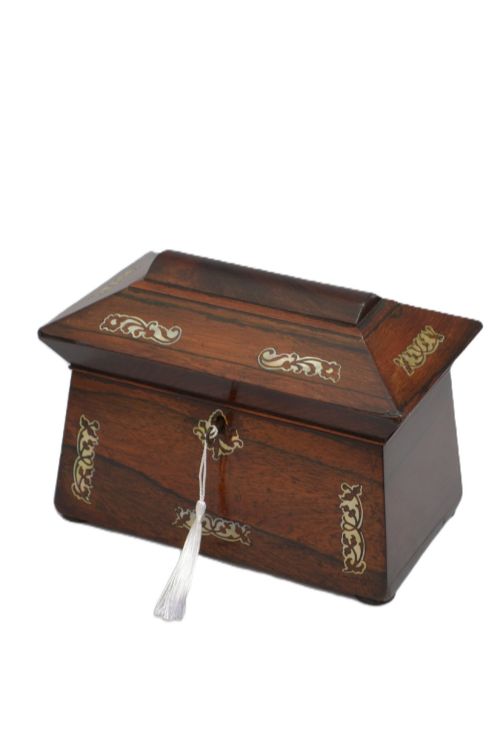
The most common items on this page are compact wooden boxes, including writing slopes, jewellery cases, tea caddies, sewing boxes, and vanity chests from the Victorian and Regency periods.
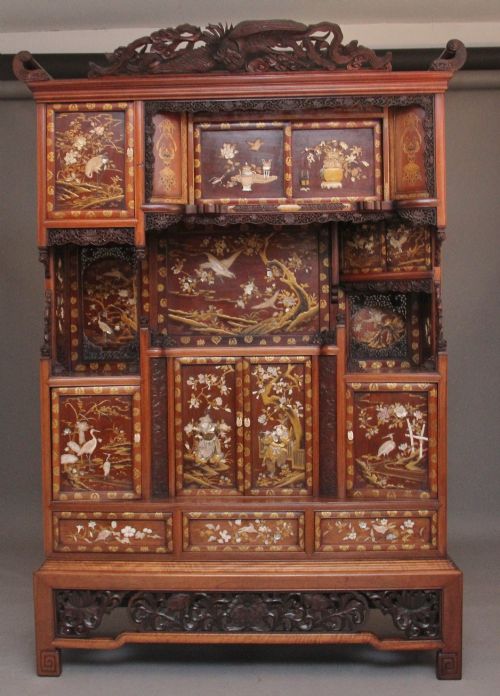
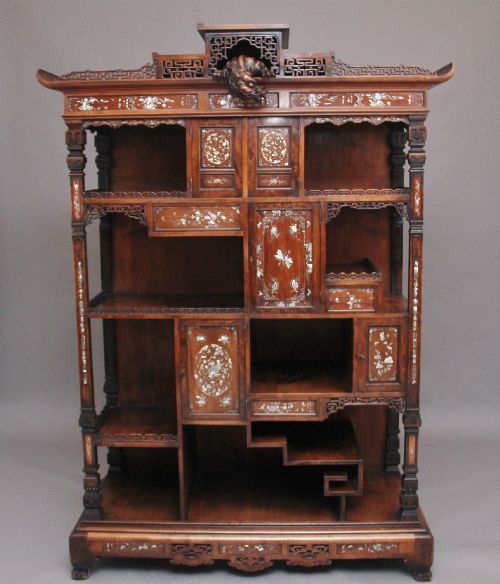
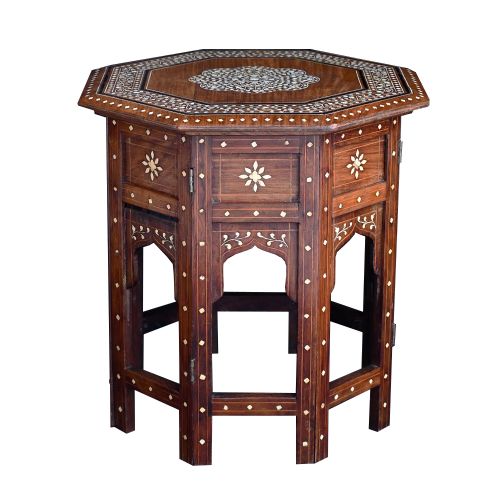
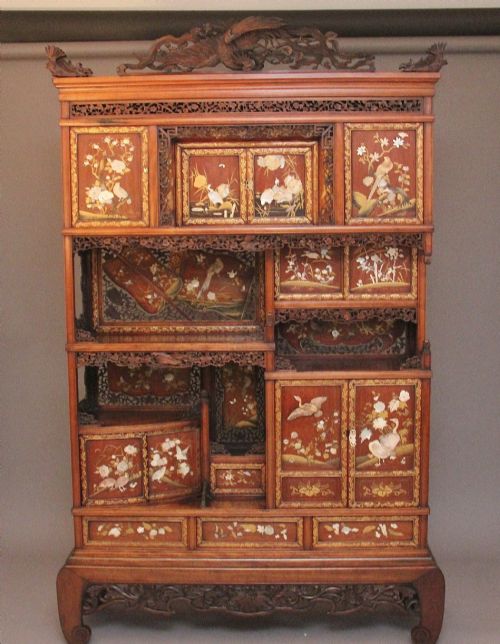
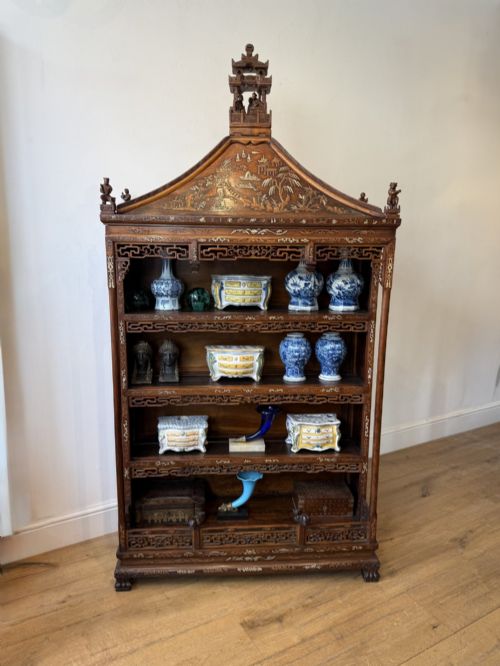
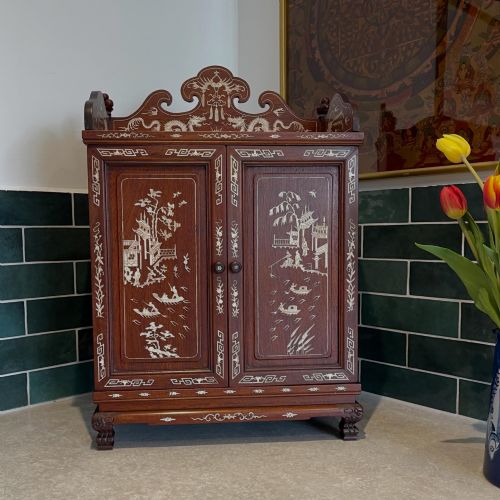
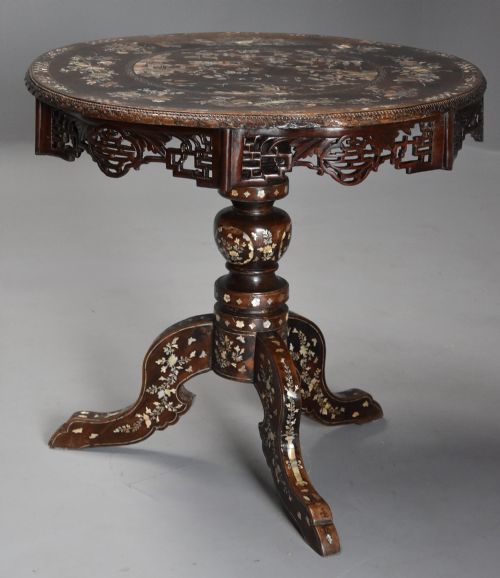
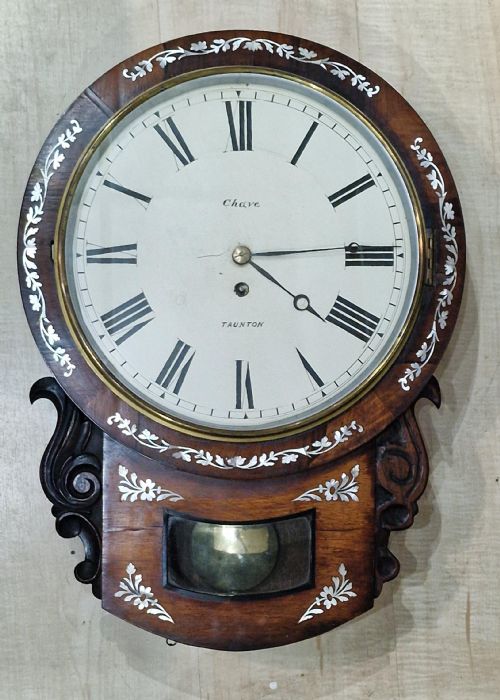
Beyond desk accessories and wall clocks, the category extends to larger imported furnishings such as Chinese export display cabinets, Japanese Meiji period shodana cabinets, and Anglo-Indian tables featuring intricate shell ornament.
How they were made
Maker workshops built the structural carcasses using dense tropical hardwoods, predominantly dark rosewood, sometimes paired with secondary timbers or brass mounts.
Craftspeople cut thin plates of nacreous shell into geometric or floral motifs, then recessed these mother of pearl elements flush into hand-cut channels within the wooden surface.
Engraved lines added fine detail to the shell inlay, while interior fittings utilised velvet linings, glass inkwells, and bone components to organise personal items.
Listings feature Victorian and Regency pieces alongside 19th-century Japanese Meiji period cabinets and Chinese export furniture.
What varies in quality
Quality separates objects by the precision of the inlay work and the structural integrity of the timber carcass over time.
Superior examples display tightly fitted shell sections with minimal filler, deeply figured rosewood grain, and fully intact original interior fitments.
Later or simpler productions rely on coarser cutting and heavier adhesive layers, whereas master workshops achieved sharp definition in both the carved wood and the iridescent shell.
Samuel Chave Taunton·Halliday and Rich·Seller of Reading·George Austin Dublin
The Rosewood Mother of Pearl Glossary
- Writing slope
- A portable desk featuring a slanted hinged lid that opens to reveal a fitted interior for stationery, pens, and inkwells. These pieces often incorporate secret compartments beneath the writing surface.
- Fusée
- A conical pulley mechanism inside clock movements that equalises the diminishing power of the mainspring as it unwinds. This device ensures consistent timekeeping across the duration of the wind.
- Shodana
- A traditional Japanese multi-tiered display cabinet featuring staggered shelving and enclosed cupboards. These pieces frequently showcase elaborate joinery and decorative inlay.
- Sarcophagus
- A box shape characterised by a rounded, domed lid and a tapered body resembling classical stone tombs. This distinctive profile was popular for Regency and Victorian tea caddies.
Rosewood Mother of Pearl: Frequently Asked Questions
What is a rosewood writing slope used for?
A writing slope provided a portable writing desk for travellers and homeowners during the 19th century. The slanted lid created an ergonomic surface for correspondence while keeping paper and ink secure inside.
Interior compartments held nibs, wax seals, and stationery. Many included concealed drawers that opened only when specific internal catches were released.
How do I care for mother of pearl inlay?
Mother of pearl requires gentle cleaning with a dry or barely damp microfiber cloth to remove dust. Avoid harsh chemical cleaners or excessive moisture that can weaken the underlying adhesives.
Keep these items away from direct sunlight and fluctuating humidity to prevent the rosewood timber from shrinking and loosening the delicate shell segments.
How can I tell a Regency box from a Victorian one?
Regency boxes, dating from the early 19th century, frequently exhibit restrained geometric brass or shell stringing alongside clean architectural lines. Their forms often lean towards classical sarcophagus or rectangular proportions.
Victorian pieces, produced after eighteen-thirty-seven, often feature more exuberant floral mother of pearl motifs and elaborate scrolling cartouches set into heavily grained rosewood surfaces.
Were these boxes used for jewellery?
Many lidded containers served multiple domestic roles, transitioning between sewing boxes, correspondence cases, and jewellery chests. Fitted trays and velvet-lined compartments accommodated rings, brooches, and loose trinkets.
Dedicated jewellery cases often included built-in mirrors inside the lid and secure brass lever locks to protect valuable personal possessions.