

Dark Wood Inlaid Box
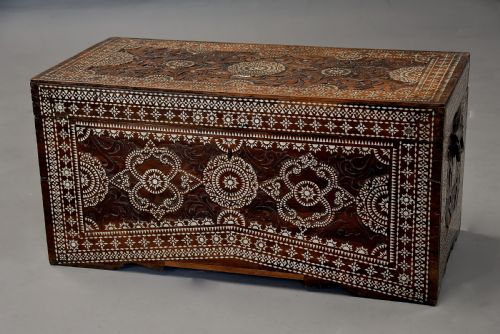
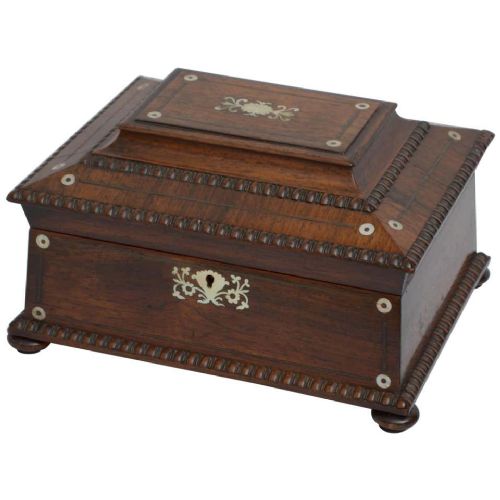
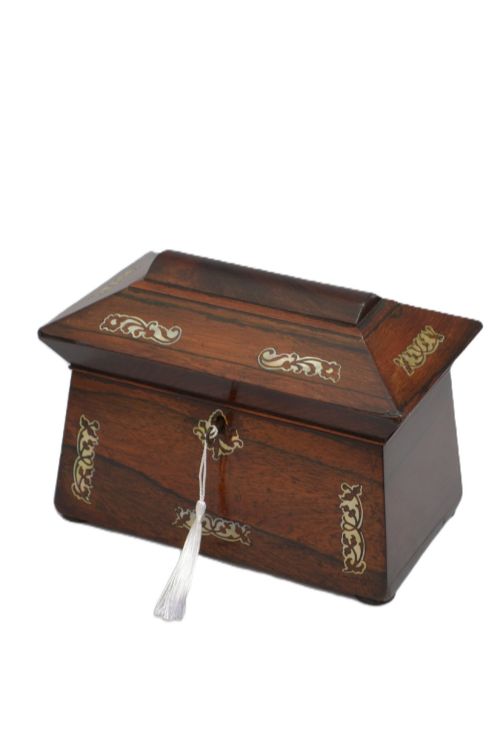
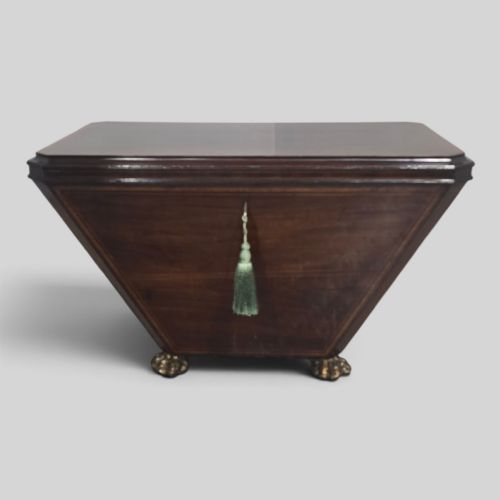
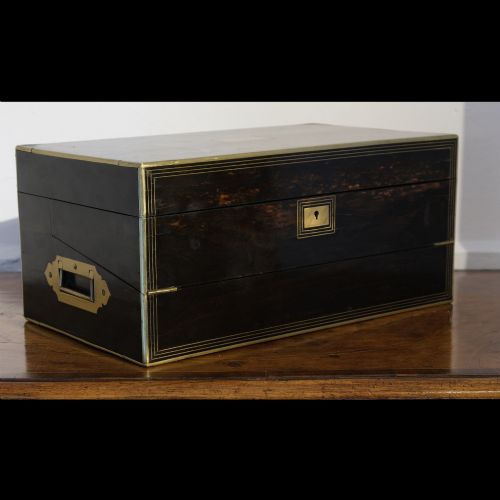
A dark wood inlaid box brings together dense tropical timbers and precise contrasting marquetry to hold letters, tea, or valuables.
Dark Wood Inlaid Box
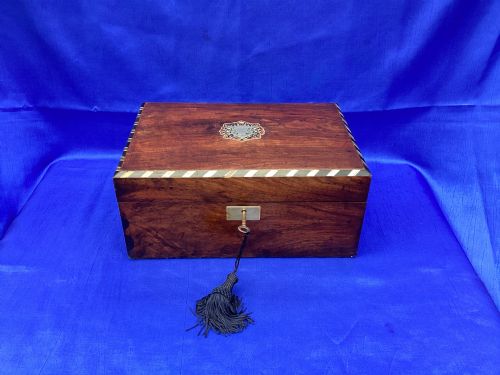
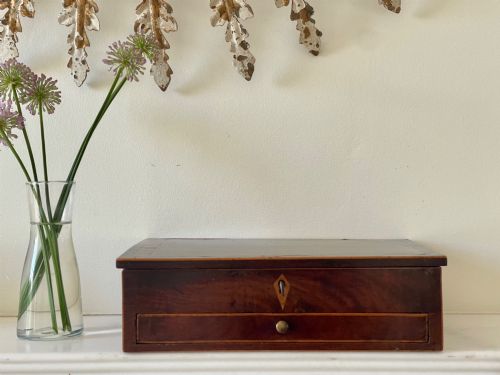
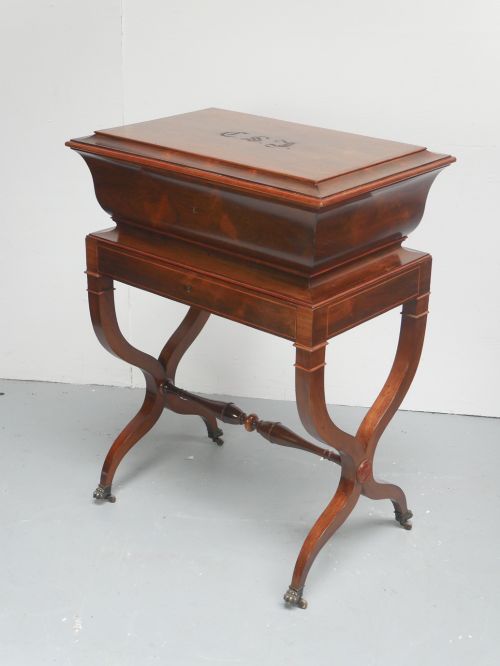
A dark wood inlaid box typically manifests as a tea caddy, writing slope, or jewellery chest originating from the Georgian, Regency, and Victorian periods. These pieces were constructed to house precious commodities and personal documents securely within domestic settings.
Rosewood and mahogany dominate the selection, frequently enhanced by contrasting boxwood, satinwood, and mother-of-pearl details. Buyers frequently encounter sarcophagus tea caddies and brass-bound writing boxes from the nineteenth century on this page.
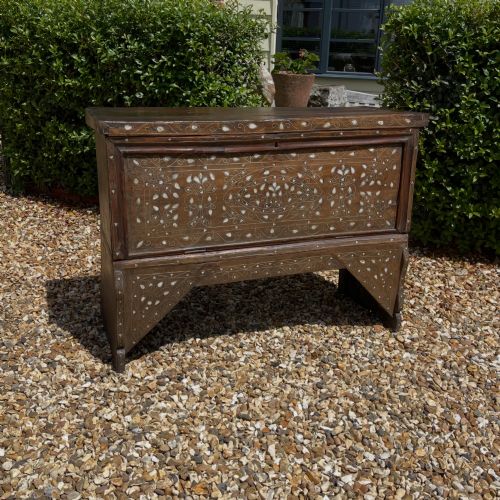
The assortment extends from small pocket snuff boxes to large floor-standing trunks, reflecting both British workshop production and global trade influences including Middle Eastern and Anglo-Indian designs.
Materials and Technique
Cabinet makers built the primary carcase using dense hardwoods such as rosewood, mahogany, and walnut, providing a dark, stable foundation for ornamentation. These timbers were selected for their rich grain patterns and durability under handling.
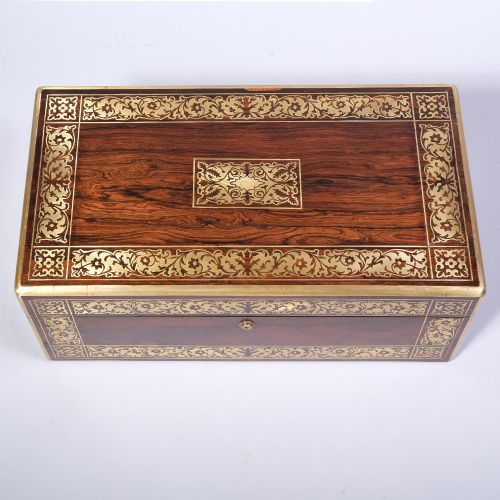
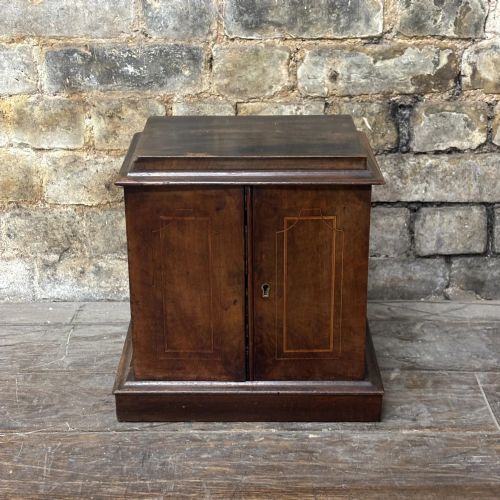
Decoration relied on precision cutting of contrasting materials, embedding fine lines of boxwood, satinwood, and brass directly into the wood surface. Artisans also utilised mother-of-pearl and bone to create pictorial marquetry and geometric parquetry panels.
Internal fittings required delicate joinery to create removable trays, secret compartments, and bespoke slots for cutlery, bottles, or writing implements. Silk linings and fitted velvet cushions completed the interior architecture of the finer receptacles.
The inventory records brass inlay predominantly on Regency and early Victorian writing boxes and tea caddies.
Assessment of Quality
The standard of a dark wood inlaid box rests on the precision of its contrasting marquetry and the tightness of its mitred joints. Superior examples display seamless integration where brass and light veneers meet the dark ground timber without visible gaps or excessive filler.
Internal execution distinguishes workshop tiers, with better boxes retaining original fitted velvet trays, working locks with keys, and secret compartments that operate smoothly. Inferior or later assembled pieces often show mismatched interior timbers and replacement hardware.
The choice of timber grain significantly influences the visual weight of the piece, particularly in flame mahogany and richly figured rosewood veneers. Master makers arranged grain directions deliberately to create symmetrical patterns across the lid and front panels.
Edwards and Roberts·Edmund Nye·James Shoolbred and Co·H Mitchell
The Dark Wood Inlaid Box Glossary
- Marquetry
- The art of forming decorative patterns by fitting together veneers of different woods, metals, or shells. This technique creates pictorial scenes or geometric designs across the lid and sides.
- Sarcophagus form
- A box shape featuring a domed or sloping lid resting on a rectangular base, reminiscent of a stone coffin. This profile was particularly popular for Regency tea caddies.
- Parquetry
- A geometric mosaic of wood pieces used for decorative floors and box surfaces. It differs from marquetry by relying strictly on repeating angular shapes rather than pictorial motifs.
- Writing slope
- A portable desk with a hinged sloping lid that opens to reveal a writing surface, inkwell compartments, and storage for paper. These boxes were essential for correspondence during the Georgian and Victorian eras.
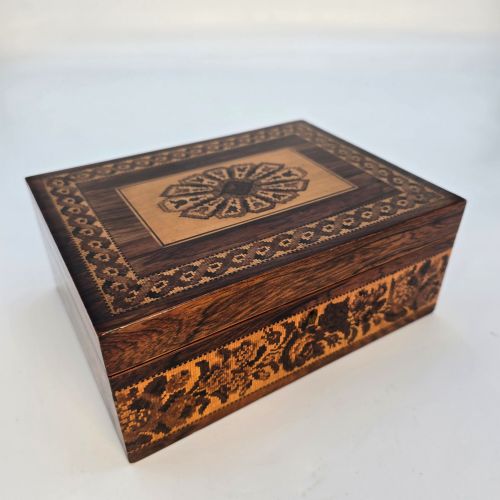
- Tunbridge ware
- A specific type of woodwork characterised by minute mosaic decoration made from thousands of differently coloured wood strips. Named after the English town where the craft flourished.
Dark Wood Inlaid Box: Frequently Asked Questions
What were tea caddies used for?
Tea caddies served as secure storage containers for expensive imported tea leaves during the eighteenth and nineteenth centuries. Because tea was a costly commodity, these boxes featured lockable lids to prevent household theft.
Inside, compartmentalised canisters kept different varieties of black and green tea fresh and separated. Wealthy households displayed them prominently in the parlour or dining room.
How do I date a rosewood box?
Dating relies on examining construction methods, hardware styles, and the species of wood used in the secondary framing. Regency and Georgian examples often feature concealed brass hinges, lion mask ring handles, and heavier carcass construction.
Later Victorian versions frequently incorporate mother-of-pearl inlay and more standardised lock mechanisms. Comparing the interior lining remnants and paper labels also helps narrow the decade of manufacture.
Can I use a writing slope for modern writing?
A writing slope provides a firm, angled surface suited for paper correspondence and fountain pen use. The internal compartments accommodate modern stationery, stamps, and small desktop accessories.
Care should be taken to protect antique leather or velvet writing surfaces from modern ink spills and moisture. Regular waxing helps maintain the exterior timber against dry indoor environments.
What is Tunbridge ware?
Tunbridge ware consists of intricate mosaic decoration created by gluing together tiny geometric wood blocks to form a picture. Artisans sliced these bundled rods thinly and applied them as veneer to small boxes and household items.
Most pieces originate from nineteenth-century Kent and frequently depict local castles, butterflies, or floral motifs. The resulting surface feels smooth despite being composed of thousands of individual wood pieces.