




Hardwood Jewellery Box
A hardwood jewellery box offers a solid and decorative home for valuables, drawing on global craftsmanship from the nineteenth and early twentieth centuries.
Hardwood Jewellery Box
A hardwood jewellery box encompasses a rich variety of caskets, chests, and table cabinets fashioned from dense timbers during the nineteenth and early twentieth centuries. These pieces serve as secure containers and decorative furnishings, originating from diverse traditions including Anglo-Indian, Chinese, Dutch Colonial, and Qajar workshops.
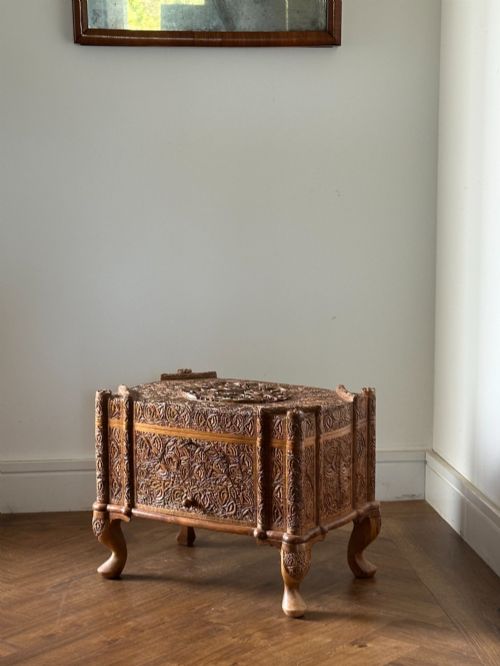
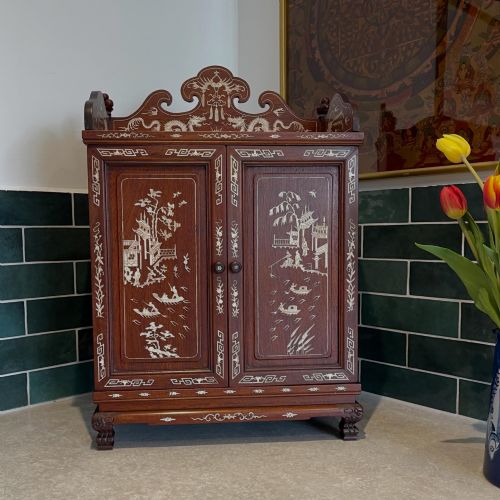
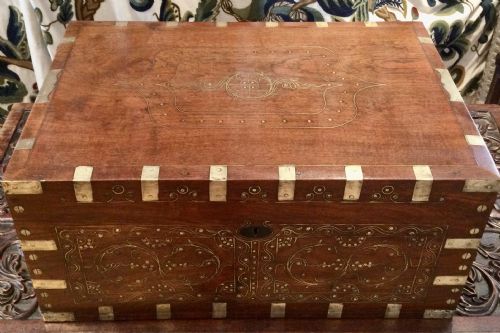
The versions most frequently met on this page are carved wooden caskets and travelling boxes from periods such as the Victorian era and the early twentieth century. Examples range from sandalwood sarcophagus-shaped boxes to inlaid collector chests and Hongmu travelling boxes.
Buyers seek out a hardwood jewellery box for its tangible connection to historical global trade and fine regional craftsmanship. Each object brings distinct cultural motifs and robust construction into a modern interior.
How they were made
Maker-artisans built these boxes using dense timbers such as rosewood, teak, walnut, and Hongmu, often selecting sandalwood for its aromatic qualities. These woods provide a heavy, durable carcase capable of enduring intricate hand-carving.
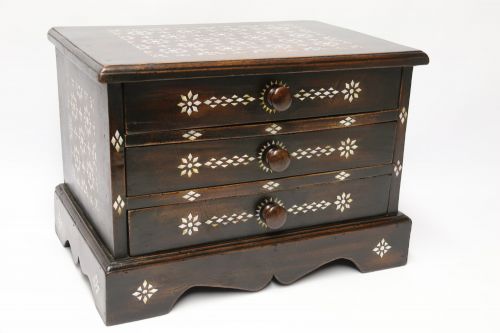
Decoration relies heavily on contrasting inlays of bone, brass, and mother of pearl set flush into the wooden surfaces. Surface enrichment also takes the form of deep relief carving depicting figurative and floral scenes characteristic of regional styles.
Internal arrangements frequently feature clever engineering, such as swing-out cases and compartmentalised trays designed for travel or desk use. Brass mounts, hinges, and campaign-style handles reinforce corners and secure lids for transport.
What varies in quality
The standard of a hardwood jewellery box is defined by the precision of its joinery and the depth of its carving. Superior pieces display crisp, deep relief work where motifs remain sharp and well-defined across dense grain.
Materials also dictate the tier of an object, with finely matched mother of pearl, bone, and brass inlays marking out finer examples. The sophistication of internal mechanics, such as smooth-operating swing-out trays and original locks, separates standard containers from exceptional ones.
The Hardwood Jewellery Box Glossary
- Hardwood
- Timber derived from broad-leaved trees, prized for density and rich grain. It forms the durable structural foundation of these boxes.
- Hongmu
- A traditional Chinese term for dense, heavy hardwoods. It is frequently utilised in fine travelling boxes and cabinets.
- Sarcophagus-shaped
- A form featuring a sloping lid and flared base mirroring classical stone coffins. This silhouette provides generous internal volume for storage.
- Qing
- Referring to the final imperial dynasty of China. Pieces from this period often incorporate intricate joinery and specialised compartment layouts.
- Anglo-Indian
- A style blending British furniture forms with traditional Indian carving techniques. These items typically feature dense floral and foliage motifs carved into sandalwood or teak.
Hardwood Jewellery Box: Frequently Asked Questions
What is a hardwood jewellery box used for?
These boxes serve as secure, decorative vessels for storing personal valuables, rings, and keepsakes. Historically, many functioned as portable travelling chests or tabletop cabinets for gentlemen and ladies.
Today, they add historical character to a dressing table or living space while fulfilling their original storage purpose.
How do I care for my box?
Keep the wood conditioned by avoiding direct sunlight and sudden temperature changes that can cause timber to split. Dust gently with a dry cloth and occasionally apply a suitable wax to maintain the finish.
Protect inlaid materials like mother of pearl and bone by avoiding harsh chemical cleaners and excessive moisture.
How can I tell the period?
Dating relies on examining the construction methods, regional art styles, and materials characteristic of eras like the Victorian period or early twentieth century. Details such as brass campaign mounts and carved motifs often point to specific cultural workshops.
Comparing the fixings and internal lining materials with known historical examples helps narrow down the decade of creation.
Are these boxes suitable for travel?
Many examples on this page, including campaign and travelling boxes, were originally built for transit by military officers and merchants. They feature sturdy brass corners and secure latches designed to withstand movement.
While robust, antique timbers and delicate inlays benefit from careful handling during modern transit.