
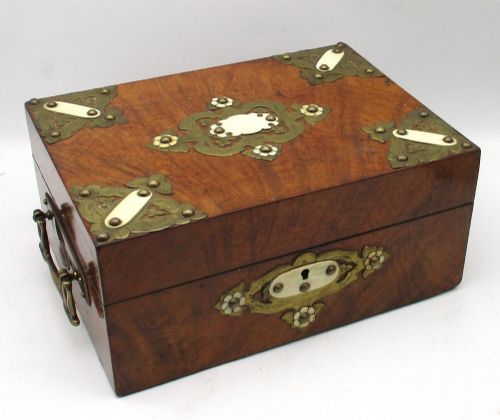


Bone Inlaid Casket
A bone inlaid casket is a decorative box built to hold precious small items, prized for its intricate geometric surface patterns and exotic materials.
Bone Inlaid Casket
When you search for a bone inlaid casket, you encounter a variety of decorative boxes designed for storage, writing equipment, or personal ornaments. The items available span multiple decades and regions, showcasing distinct regional craft traditions.
Originating across different global workshops, these caskets display styles from the Arts and Crafts movement to Italian Renaissance revival and Ottoman influences. Each piece brings a specific decorative vocabulary and historical context to a room.
Materials and construction
Construction relies heavily on dense exotic timbers such as rosewood, walnut, ebony, and sandalwood, which provide a dark, stable foundation for light-coloured surface decoration. Artisans shaped these woods into sarcophagus forms, domed boxes, and rectangular caskets.
Surface ornament is achieved through precision-cut bone, horn, and occasionally ivory or porcupine quill, adhered to the wooden carcass in elaborate geometric or floral patterns. Metal fittings, brass elements, and specialised mosaic techniques like Sadeli further complete the construction.
One porcupine managed to contribute its quills to a nineteenth-century box that somehow still looks entirely dignified.
Assessing quality
Quality in these pieces is dictated by the complexity and precision of the surface decoration, particularly the fineness of the mosaic work and the tightness of the fitted veneers. Examples with dense, undisturbed geometric tile patterns display superior craftsmanship compared to simpler linear designs.
The choice of secondary materials and the condition of the wooden carcase also separate standard items from exceptional ones. Intact hinges, original linings, and richly grained timbers like rosewood or ebony elevate the overall standard of the object.
The Bone Inlaid Casket Glossary
- Sadeli mosaic
- A complex micro-mosaic technique originating in India, utilising tiny geometric sections of bone, metal, and coloured materials set into patterns. This intricate work requires immense patience and skill.
- Sarcophagus shaped
- A box profile featuring a sloping lid and a stepped or inverted plinth base, mimicking classical architecture. This form became particularly popular during the Victorian period for high-end sewing and jewellery boxes.
- Porcupine quill box
- A specialised container decorated with alternating bands of porcupine quills and bone spacers, commonly associated with nineteenth-century Sri Lankan craftsmanship. The natural striations of the quills create a striking striped texture.
- Dutch Colonial
- A design style blending European cabinet-making forms with indigenous materials and motifs from regions under Dutch influence. These items often feature robust hardwood construction and careful inlay work.
- Vizagapatam
- A coastal Indian city renowned for luxury export boxes decorated in ivory, bone, and sandalwood. Pieces from this tradition often incorporate elaborate carved panels and contrasting banding.
Bone Inlaid Casket: Frequently Asked Questions
What were bone inlaid caskets used for?
These boxes served primarily to secure valuable personal effects, jewellery, stationery, or sewing supplies on dressing tables and writing desks. Their ornate exteriors meant they were displayed openly as status objects in domestic interiors.
Over time, they evolved from functional storage into purely decorative display pieces, prized by collectors for their intricate surface patterns and exotic material composition.
How do I date a bone inlaid box?
Dating relies on examining the underlying wood species, construction methods, hardware, and stylistic indicators such as Victorian Gothic revival or Arts and Crafts influences. Secondary woods and interior linings offer further clues to the period of manufacture.
Comparative analysis with documented regional pieces helps narrow down the origin, whether nineteenth-century Anglo-Indian or later twentieth-century production.
How do I care for inlaid wood?
Maintain stable humidity and temperature levels in the room to prevent the timber from warping and the tiny bone tesserae from lifting out of their adhesive beds. Avoid placing the box in direct sunlight, which can bleach dark hardwoods and discolour delicate materials.
Dust gently with a dry, soft cloth, avoiding commercial furniture polishes or moisture that could seep into the micro-mosaic joints and cause damage.
Are these boxes fragile?
Due to the multitude of individual bone pieces, quills, or veneers applied to a wooden base, these caskets require careful handling during relocation. Changes in environmental moisture can cause organic materials to expand or contract at different rates than the timber.
While structurally sound for normal display and light use, they should be lifted with both hands and protected from impacts that could dislodge tiny surface elements.