


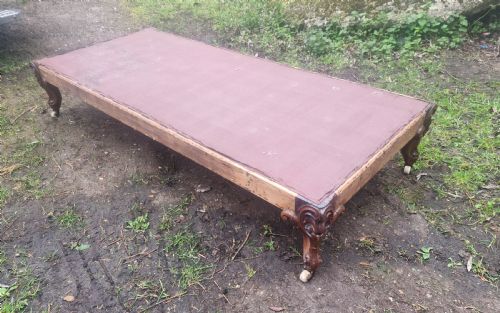
Rosewood Low Table
A rosewood low table brings grounded proportion and dense, rich timber grain to a room, drawing on centuries of English, colonial and Asian cabinet-making traditions.
Rosewood Low Table
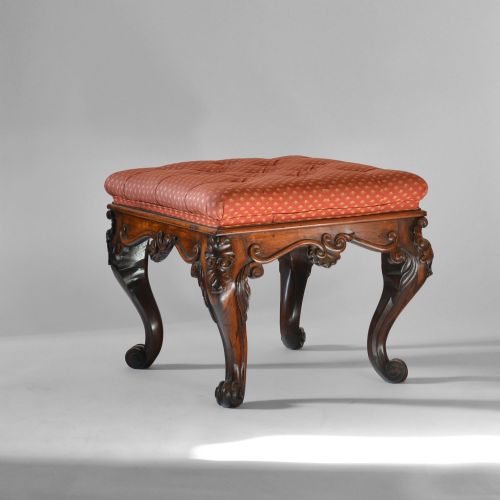
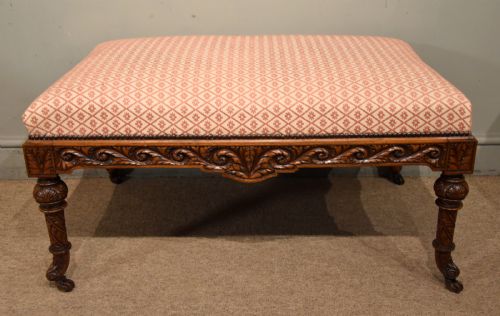
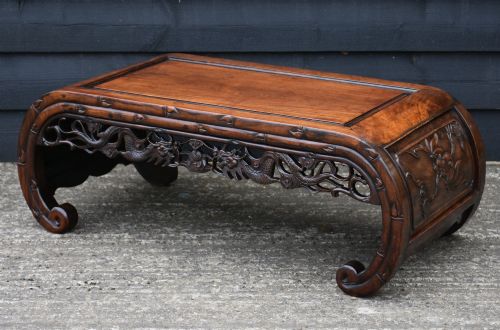
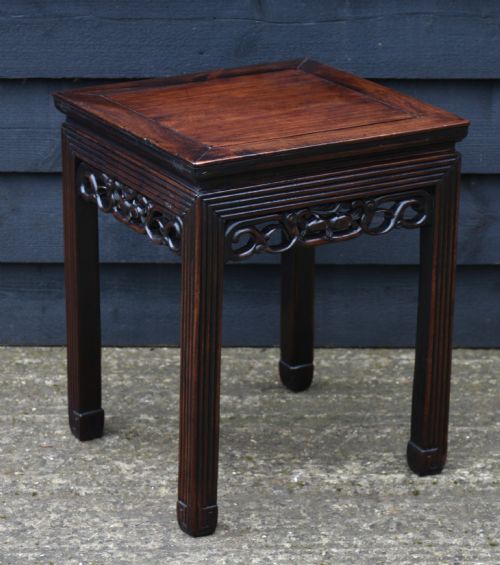
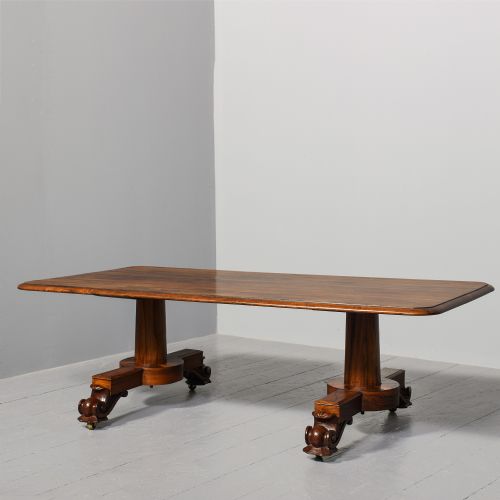
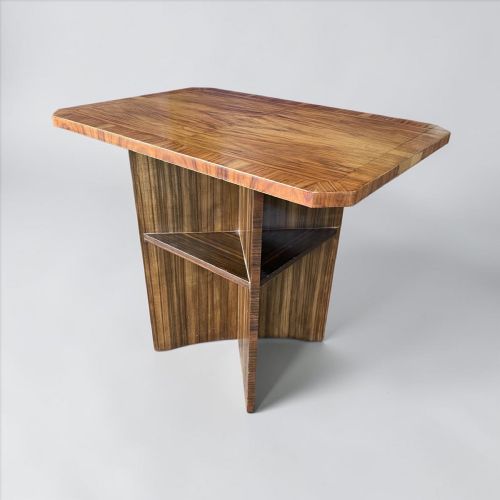
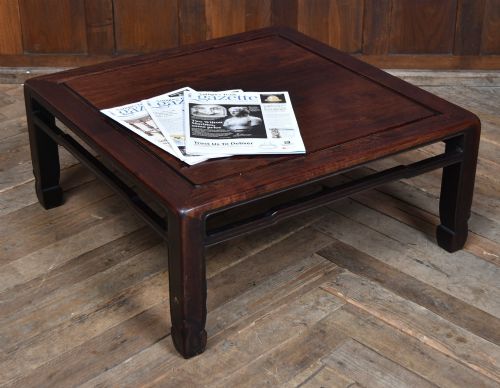
A rosewood low table encompasses a diverse group of low-set surfaces, ranging from compact Chinese kang and opium tables to Regency coffee tables and Anglo-Indian variants. The selection frequently includes pieces originating from the nineteenth century through the early decades of the twentieth century, reflecting varied global cabinet-making traditions adapted for lower surface use.
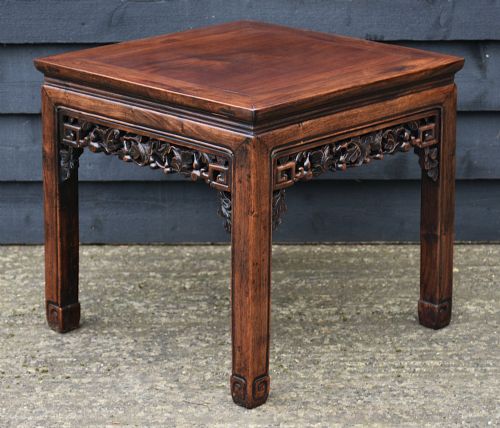
Buyers will encounter distinct regional typologies on this page, particularly traditional Chinese scholar's tables and scroll-end low tables alongside British and European occasional tables modified to lower heights. These items often feature low profiles designed originally for floor-level seating or compact domestic spaces.
Materials and Construction
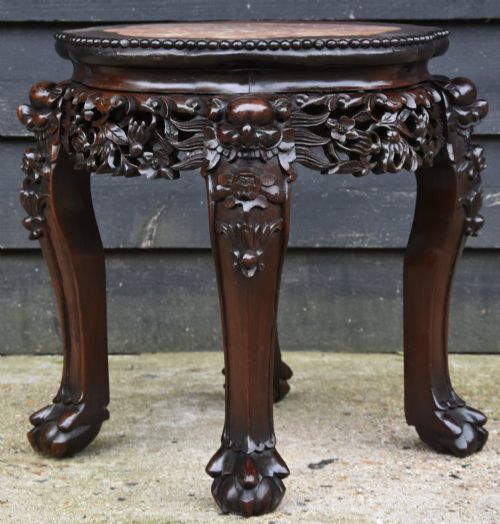
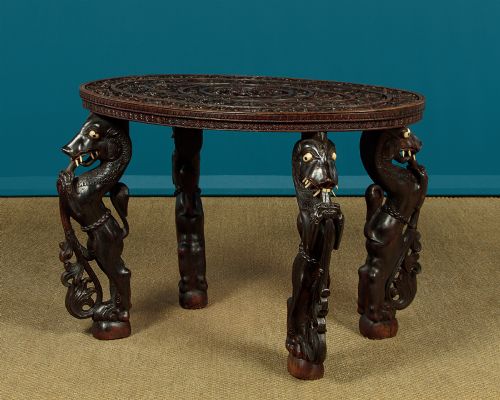
Construction relies heavily on dense tropical hardwoods, primarily rosewood, alongside related timbers such as padouk, huali, hongmu and huanghuali, complemented occasionally by inserts of marble, porcelain or glass. Artisans utilised traditional joinery techniques, frequently combining robust mortise and tenon frames with intricate hand-carved dragon details or clean geometric lines.
Surface treatments vary according to origin, featuring hand-rubbed finishes that highlight the deep reddish-brown tones and complex grain patterns characteristic of seasoned rosewood and allied exotic timbers. Brass mounts, inlaid marquetry and ebonised detailing appear on European and Anglo-Indian examples, contrasting with the fluid, unadorned timber work found on many traditional Chinese forms.
The inventory combines traditional Chinese Qing Dynasty scholar's tables with Western Regency and Victorian occasional forms.
Markers of Distinction
Quality in these low tables rests on the selection and matching of the timber, where dense, evenly figured rosewood and well-preserved natural grain elevate a piece far above simpler, plain hardwood construction. The depth and crispness of hand-carved elements, such as scroll ends or dragon motifs, distinguish skilled artisan workshops from mass-produced output.
Structural integrity also separates the upper tier from standard examples, evident in tight, enduring joinery and the careful integration of inset materials like marble or porcelain panels. Original patination and minimal structural intervention preserve the integrity of the piece over time.
Gillows·Majorelle
The Rosewood Low Table Glossary
- Kang table
- A low domestic platform table traditionally used in northern China for sitting, dining or serving tea on a heated brick bed or floor.
- Opium table
- A common Western descriptor for a low Chinese table, usually featuring scroll-end legs or modest proportions, historically associated with domestic relaxation.
- Hongmu
- A Chinese term translating to red wood, applied to dense, durable tropical hardwoods including various species of rosewood.
- Scroll-end
- A decorative terminal detail where the leg or frame end curls inward in a formal scroll shape, frequently seen on Qing Dynasty low tables.
- Regency
- An English stylistic period spanning the early nineteenth century, characterised by classical restraint, influence from antiquity and the frequent use of dark timbers.
Rosewood Low Table: Frequently Asked Questions
What is a rosewood low table used for?
These low surfaces function well as modern coffee tables, display stands or side tables in contemporary living spaces, offering a compact footprint combined with strong visual presence.
Their low elevation allows them to sit comfortably beneath standard sightlines, making them practical for informal seating arrangements and centring a room without blocking light.
How do I care for rosewood furniture?
Maintain the timber by dusting regularly with a soft, dry cloth and avoiding placement near direct heat sources or strong sunlight that can dry out the natural oils.
Occasional treatment with appropriate wax helps nourish the wood grain and preserves the original hand-rubbed finish without building up heavy residue.
How do I tell Chinese low tables from European ones?
Chinese examples typically employ traditional joinery methods, scroll-end feet and indigenous hardwoods like huali or hongmu, often reflecting Qing Dynasty aesthetic principles.
European tables from the nineteenth century generally incorporate Western decorative idioms such as brass mounts, marquetry or stylistic references to Regency and Art Deco periods.
Are marble-top low tables original?
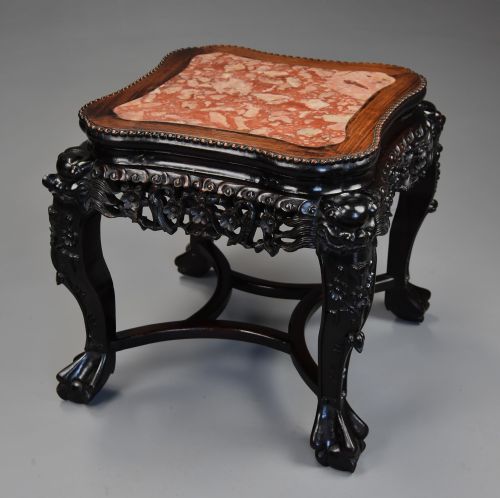
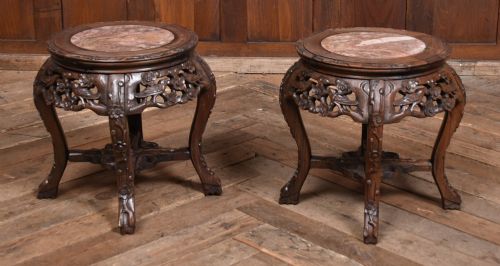
Many nineteenth-century plant stands and low tables were built specifically to accommodate inset marble or porcelain panels to provide a durable, heat-resistant surface for objects.
Examining the underside and surrounding frame reveals whether the inset panel was integrated during the initial construction phase by the cabinet-maker.