
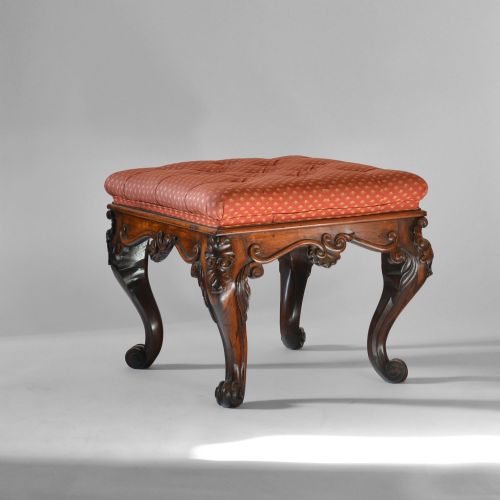
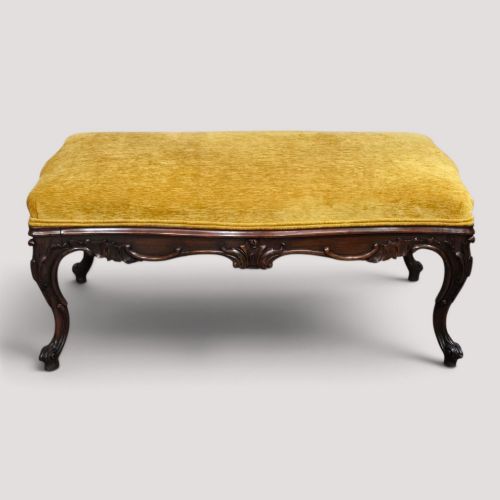
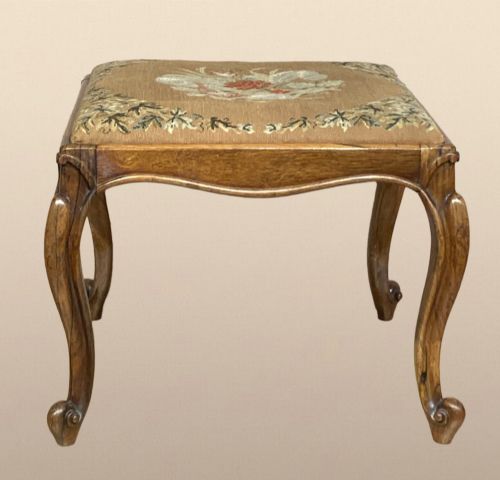


Rosewood Low Seat
These rosewood low seat pieces offer compact comfort and rich timber grain, bringing traditional seating to dressing rooms and firesides alike.
Rosewood Low Seat
A rosewood low seat typically encompasses compact stools, nursing chairs, slipper chairs, and dressing seats designed for lower seating positions. These items emerge primarily from the Victorian and Regency periods, alongside Anglo-Indian and Qing Dynasty workshops.
The most common formats on this page are Victorian cabriole leg dressing stools and low-backed nursing or slipper chairs. Buyers also encounter window seats and occasional benches framed in dense tropical hardwoods.
Makers shaped these low seats for specific nineteenth-century domestic tasks, including dressing hair, playing the harp, or nursing infants near the hearth. Their reduced stature makes them practical for modern bedrooms and secondary seating areas.
Factors separating standard examples from the finest work
Quality rests heavily on the crispness of the timber carving and the integrity of the rosewood frame. Superior examples display fluent hand-carved details along cabriole legs or chair rails rather than soft or mechanical shaping.
Proportion and original upholstery support also dictate standard. Pieces retaining well-balanced frames and appropriate period textile choices command greater appreciation than altered or overly restored specimens.
Listings span Victorian, Regency, and Qing Dynasty periods, uniting European revival styles with Anglo-Indian and Chinese hardwood traditions.
Gillows
The Rosewood Low Seat Glossary
- Cabriole leg
- A furniture leg that curves outward at the knee and tapers inward to an ankle, mimicking an animal limb. This form appears frequently on mid-nineteenth-century stools and chairs.
- Nursing chair
- A low-seated chair designed originally for feeding infants or assisting with personal attire. They typically feature low seats and supportive high backs.
- Huali
- A prized Chinese hardwood utilised in Qing Dynasty seating and stands. It exhibits distinctive figuring and dense physical weight.
- Prie Dieu
- A devotional prayer chair featuring a low seat and an upper rest for the arms or knees. Victorian examples often incorporate rosewood frames and rich upholstery.
- Hongmu
- A translation meaning red wood used to describe dense, dark Asian timber species. Makers applied it to traditional stools and low tables.
Rosewood Low Seat: Frequently Asked Questions
What is a rosewood low seat used for?
These low seats function primarily as dressing stools, nursing chairs, or bedroom seating where a reduced height is practical. Their compact proportions suit placement beside beds or low tables.
They also serve as decorative accent pieces in living rooms and hallways, bringing rich timber tones and period upholstery into interior spaces.
How do I identify a Victorian rosewood stool?
Victorian examples typically display dense rosewood grain paired with styles like Gothic Revival, cabriole leg supports, or heavy carved frames. Examining the timber weight and joinery helps confirm the nineteenth-century origin.
Many pieces also feature period textiles like velvet, damask, or needlework tapestry fixed over traditional webbing and stuffing.
How do I care for antique rosewood furniture?
Protect antique rosewood by placing pieces away from direct sunlight and rapid temperature changes, which can dry out the dense timber. Regular dusting with a soft, dry cloth preserves the polished surface.
Avoid chemical polishes and keep delicate upholstery fabrics clean by using gentle professional maintenance suited to historic textiles.