
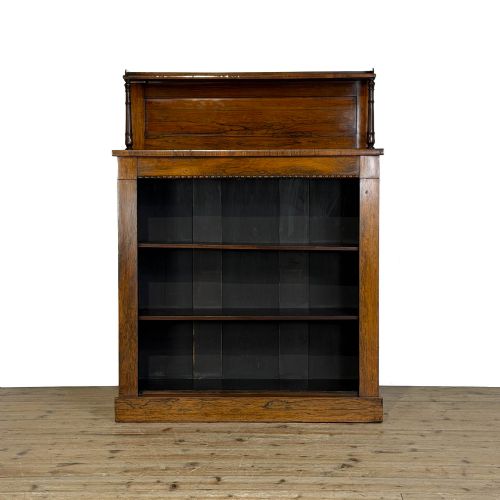
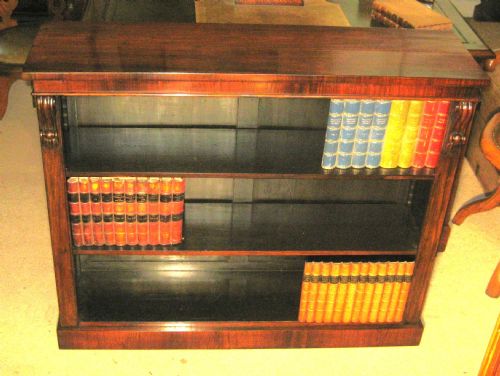
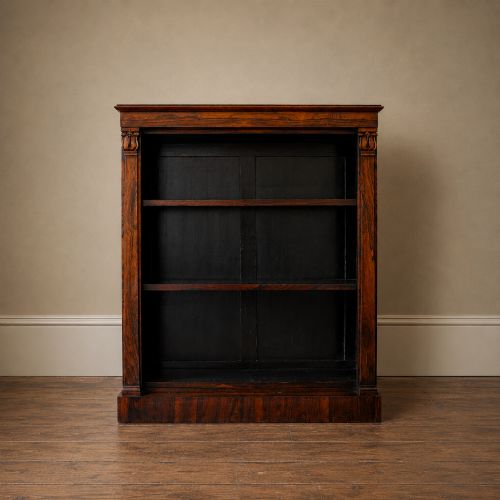
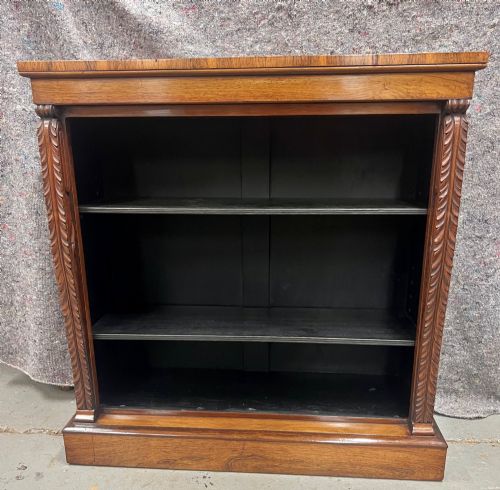

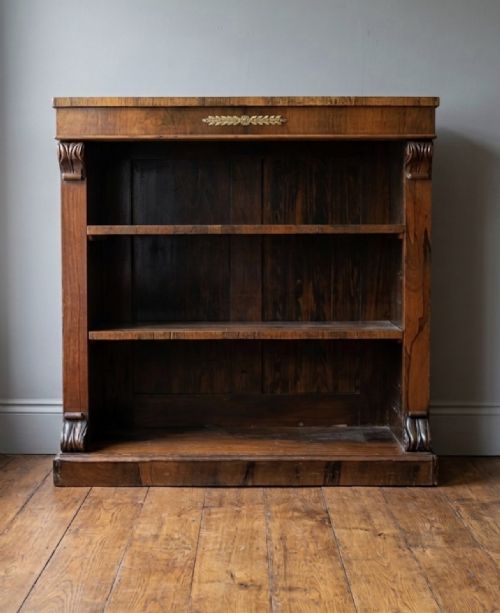


Rosewood Low Book Cabinet
A rosewood low book cabinet brings rich, dark grain and low-slung proportions to a room, offering open display alongside compact storage.
Rosewood Low Book Cabinet
When you search for a rosewood low book cabinet, you encounter low-slung pieces designed to hold books and display objects without dominating the height of a wall. The selection ranges from compact Regency and William IV examples to later Victorian pieces, alongside versatile dwarf bookcases and side cabinets.
Open bookcases predominate on this page, offering adjustable shelves for practical storage of volumes alongside a few glazed and side cabinet variations. These items combine the utility of shelving with the presence of fine timber furniture suited to drawing rooms and studies.
How they were made
Cabinetmakers built these pieces using solid rosewood and rosewood veneer over secondary timbers such as pine, oak, and mahogany. Selected grain patterns were applied carefully to flat surfaces to create visual depth and rich contrast.
Metal and stone details frequently supplemented the woodwork. Brass inlay, parcel gilt highlights, leather dummy books, and marble tops appear across Regency and mid-nineteenth-century examples.
Listings feature rosewood, mahogany, and oak combined with marble, brass, and glass across the Regency and Victorian periods.
What varies in quality
Quality rests on the selection of the timber and the precision of the cabinetwork. Pieces featuring highly figured rosewood veneer, balanced proportions, and careful detailing stand apart from standard production.
Integrated decorative elements such as brass inlay, marble tops, and parcel gilding elevate certain cabinets, while simpler open shelf configurations focus attention purely on the grain of the wood.
The Rosewood Low Book Cabinet Glossary
- Rosewood
- A dense, heavily figured timber prized for its dark purple-brown colour and contrasting grain patterns. It forms the primary surface material for these low cabinets.
- Veneer
- A thin layer of superior wood applied over a secondary timber substrate such as pine or mahogany. This technique allowed makers to utilise striking grain figures efficiently.
- Regency
- An architectural and decorative style spanning the early nineteenth century. Pieces from this period often display classical restraint and refined proportions.
- Waterfall bookcase
- A tiered shelving unit featuring stepped sides that narrow towards the top. This form provides graduated display space for books and small objects.
Rosewood Low Book Cabinet: Frequently Asked Questions
What is a low book cabinet?
A low book cabinet is a compact, waist-height piece of furniture designed to hold books while leaving the wall space above unobstructed for pictures or mirrors.
These pieces function well in studies and sitting rooms where standard tall bookcases would overwhelm the proportions of the space.
How do I date a rosewood cabinet?
Dating relies on observing structural characteristics, hardware, and stylistic details associated with periods like the Regency or Victorian eras. Cabinet construction methods and secondary timbers also provide clues to age.
Comparing the specific proportions and decorative motifs against documented examples helps narrow down the decade of manufacture.
Can shelves be adjusted?
Many nineteenth-century open bookcases feature adjustable shelving systems supported by wooden ratchets or brass pegs. This allowed owners to alter shelf heights to accommodate volumes of varying sizes.
Checking the interior walls reveals the mechanism used to support the shelves at different intervals.
Where should I place a low bookcase?
These cabinets suit living rooms, hallways, and studies where their low profile allows them to sit beneath windows or artwork. Their finished backs and compact depths make them versatile for placement against various wall spaces.
Positioning them away from direct sunlight and heat sources protects the rosewood veneer from drying out.