


Rosewood Library Armchair
These rosewood library armchairs are substantial seating pieces designed for reading rooms and studies, offering rich timber grain and solid construction for daily use.
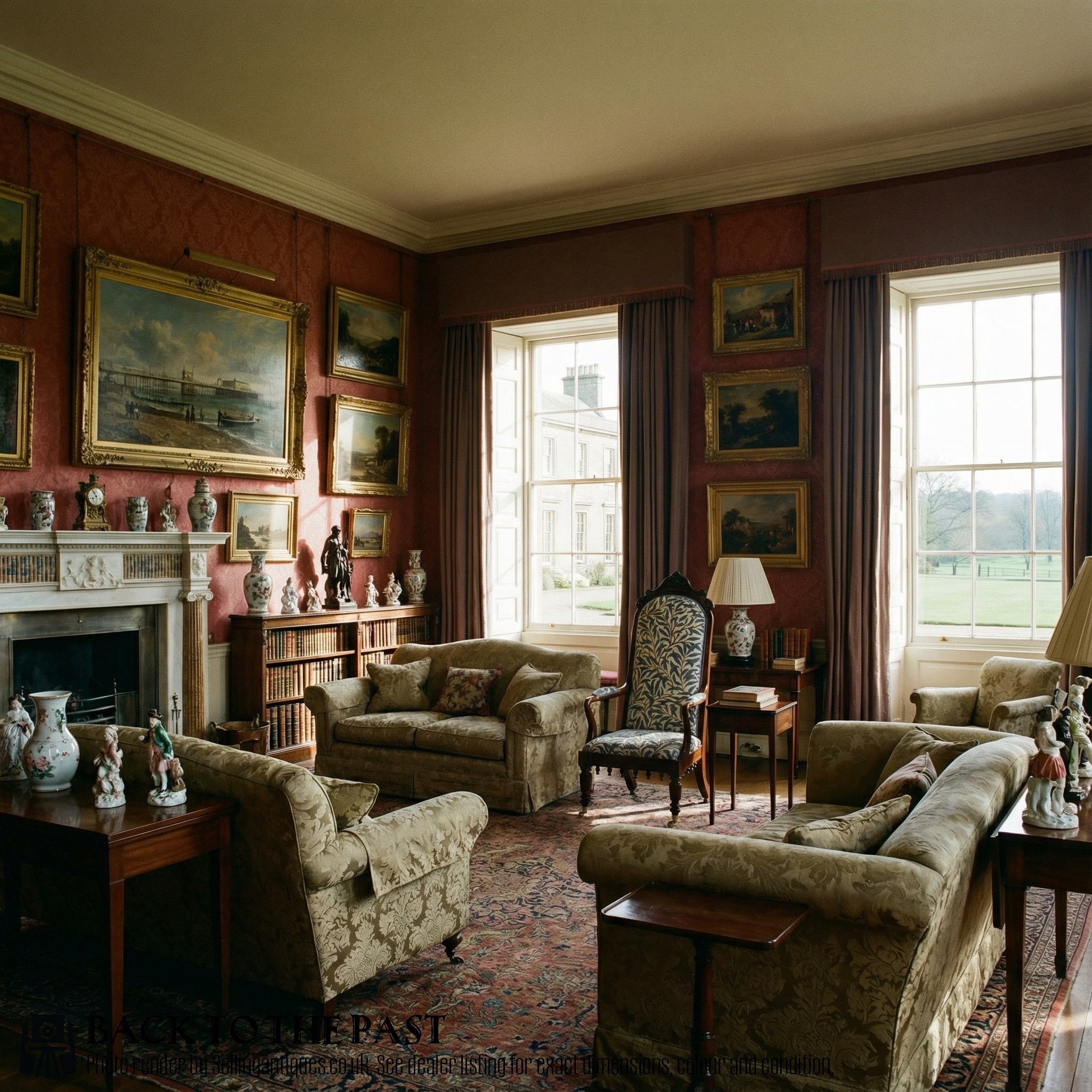
Rosewood Library Armchair
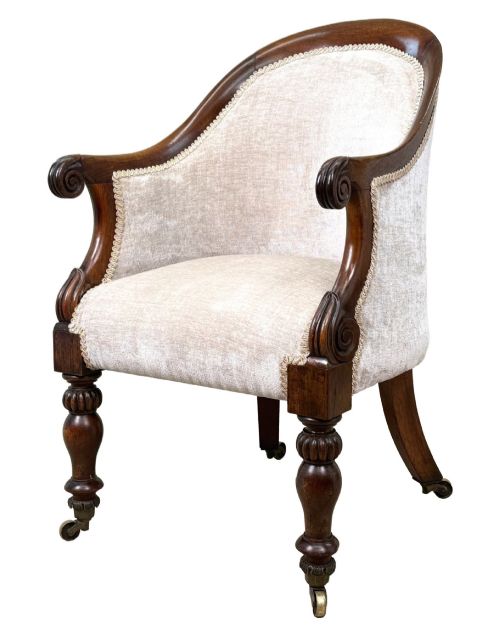
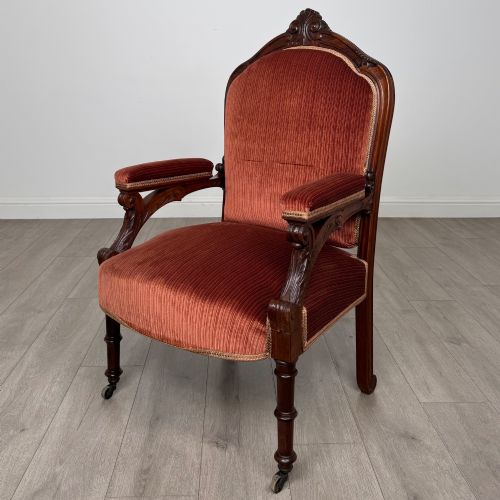
A rosewood library armchair is a heavy, supportive seat designed for long hours of reading at a desk or in a study, often featuring upholstered armrests and a deep, comfortable seat.
The pieces on this page span several distinct periods, with Regency, William IV, and Victorian examples appearing frequently alongside Anglo-Indian and George IV variations.
Makers utilised solid rosewood, simulated or faux finishes, and parcel gilt techniques to produce these desk chairs, tub chairs, and bergère forms.
How they were made
Cabinet makers built these chairs using solid rosewood or pine frames finished with simulated grain, incorporating brass castors and brass inlay for mobility and decoration.
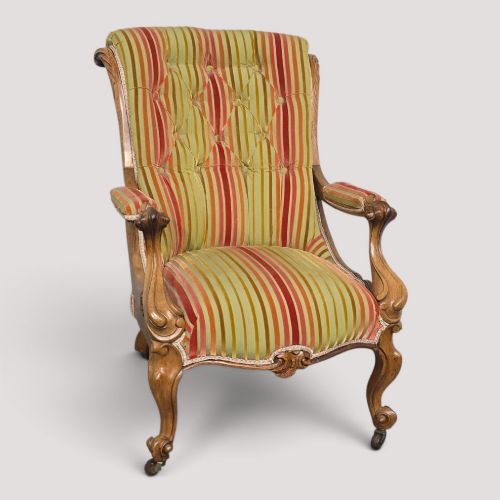
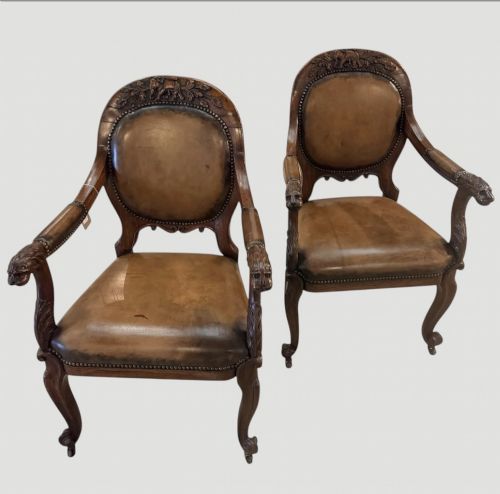
Upholstery materials range from plain leather and buttoned velvet to cane panels and woven textile fabrics, secured over sturdy webbing and stuffing.
Several chairs include brass castors, allowing nineteenth-century readers to glide effortlessly across the library floor without standing up.
What varies in quality
The calibre of a rosewood library armchair rests upon the crispness of its carved details, the choice of solid timber over simulated finishes, and the integrity of the original frame construction.
Superior examples demonstrate careful proportioning in the cabriole or turned legs, well-fitted cane work or buttoned leather upholstery, and stable brass castors that support the weight of the chair.
ROBERT DAWS·GILLOWS
The Rosewood Library Armchair Glossary
- Bergère
- An enclosed armchair with cane or upholstered sides and back. This French-derived form offers a lighter visual profile while retaining sturdy support.
- Faux rosewood
- A painted or stained finish imitating the distinctive dark grain of true rosewood. Makers often applied this technique to standard timbers during the Regency period.
- Parcel gilt
- Partially gilded decoration applied to highlight specific carved motifs or mouldings on the wooden frame. It adds a subtle metallic contrast to the dark timber.
- Tub chair
- An upholstered seat with a continuous curved back and arms forming a rounded enclosure. This form provides wrap-around comfort for reading rooms.
- Brass castor
- A small swivelling wheel attached to the base of each leg to allow easy movement across floor coverings. These fittings often show period-specific casting methods.
Rosewood Library Armchair: Frequently Asked Questions
What is a rosewood library armchair?
A rosewood library armchair is a sturdy, decorative seat built for studies, libraries, and offices during the Georgian, Regency, and Victorian eras. These chairs combine dark, dense timber with comfortable upholstery or cane panels.
They served readers and scholars who needed proper back support and armrests while working at large desks or reading in private rooms.
How do I tell Regency from Victorian chairs?
Regency and George IV chairs often display cleaner classical lines, simulated rosewood finishes, brass inlay, and lighter frames. Victorian examples tend to feature heavier proportions, darker solid rosewood, button-backed leather, and cabriole legs.
Looking at the turning on the legs and the style of the carving helps separate the early nineteenth-century pieces from later decades.
What is simulated rosewood?
Simulated or faux rosewood is a decorative paint or stain finish applied to a lighter wood base to mimic the rich grain of genuine rosewood timber. Cabinet makers used this method during periods when exotic hardwoods were scarce or expensive.
Examining the surface closely reveals brushwork or grain patterns designed to deceive the eye while providing the same visual weight.
Can I use these chairs at a modern desk?
Many of these pieces function well as desk chairs due to their supportive arms and ergonomic proportions. Buyers frequently place them in home offices alongside contemporary furnishings.
Checking the seat height and depth ensures the chair matches standard desk dimensions for daily writing and reading tasks.