




Rosewood Keepsake Chest
A rosewood keepsake chest offers a dense, richly figured home for small treasures, usually meeting us in Victorian or Regency guises.
Rosewood Keepsake Chest
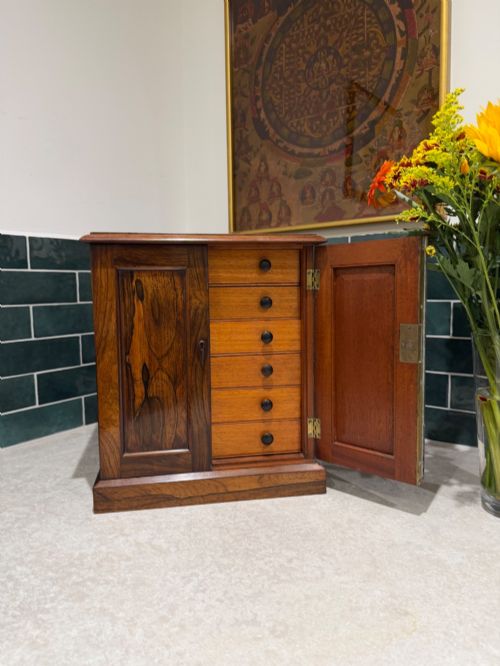
A rosewood keepsake chest encompasses various small caskets designed to secure personal valuables, letters, and ornaments. When searching for a rosewood keepsake chest, buyers encounter items designated variously as jewellery boxes, trinket boxes, tea caddies, and table cabinets. Most examples on this page hail from the Victorian and Regency periods, spanning the nineteenth century.
The forms range from compact trinket boxes and glove boxes to fitted dressing boxes and table cabinets. Makers constructed these containers to sit on dressing tables, writing desks, or sideboards as both functional storage and decorative objects. The presence of fitted trays, compartments, and lined interiors demonstrates their original purpose for housing precious trinkets.
Materials and construction
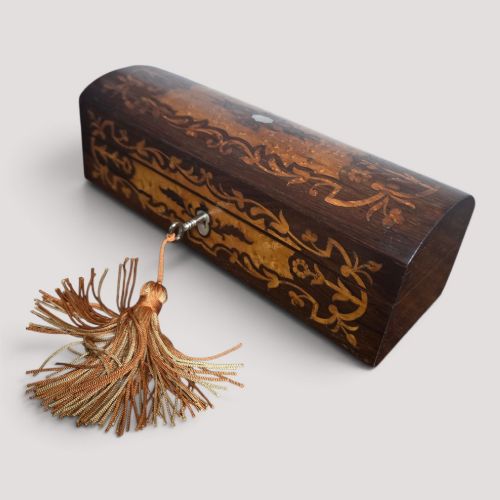
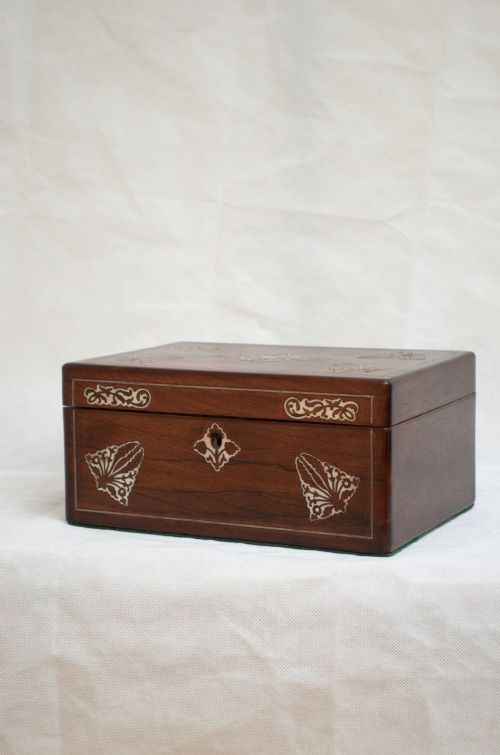
The foundation of these pieces relies on solid wood and timber veneers, with rosewood supplying a dark, heavily figured grain. Craftsmen enhanced the exterior surfaces using contrasting materials such as mother-of-pearl, boxwood, walnut, and brass for inlay work and stringing. Tunbridge Ware examples display intricate mosaic patterns assembled from tiny pieces of natural coloured woods.
Internal arrangements often incorporate fabric linings, removable trays, and fitted compartments designed to hold specific items like gloves, tea, or jewellery. Metal hardware, including brass escutcheons and campaign mounts, provides structural reinforcement and secure closure for the lids.
Rosewood Keepsake Chest Retail Price Guide 2026
Typical asking prices for rosewood keepsake chest among the pieces listed under this phrase on Sellingantiques today, from the lower quarter to the upper quarter. They describe what is for sale here now, not the wider market.
Some Victorian boxes hide secret compartments beneath removable trays, designed to outsmart prying eyes.
Distinctions in quality
Quality in a rosewood keepsake chest rests upon the precision of its decorative inlays and the integrity of the timber. Pieces featuring intricate Tunbridge Ware mosaics or detailed mother-of-pearl work demonstrate a higher degree of artisan skill than plain veneered carcases. The complexity of the internal fittings, such as multi-tiered trays and secret compartments, further separates standard containers from finer productions.
The preservation of the original rosewood surface and the crispness of brass stringing or silver stringing dictate the standing of an individual piece. Superior examples maintain their structural joinery and functional lids without warping, while later restorations or replacement interiors alter the original character.
Henry Hollamby
The Rosewood Keepsake Chest Glossary
- Tunbridge Ware
- A type of woodwork produced in Kent featuring microscopic mosaic tesserae made from various natural woods to form pictorial or geometric designs. These geometric motifs often decorate the lids of nineteenth-century boxes.
- Stringing
- Thin inlay lines of a contrasting wood or metal set flush into the surface of the primary timber. Brass and boxwood stringing frequently outlines the panels of Victorian keepsake boxes.
- Escutcheon
- A protective plate surrounding a keyhole, usually fashioned from brass. This hardware prevents the wood around the lock from splitting during daily use.
- Campaign box
- Portable furniture or storage fitted with recessed brass handles and corner brackets designed for travel. These sturdy containers were built to withstand movement.
- Tea caddy
- A container originally constructed to store loose tea leaves, often featuring internal lidded compartments. Many surviving caddies now serve as general keepsake boxes.
Rosewood Keepsake Chest: Frequently Asked Questions
What were rosewood keepsake chests used for?
These containers served to safeguard jewellery, letters, gloves, and small personal valuables in nineteenth-century domestic interiors. Their fitted interiors kept delicate items organised and protected from dust.
Over time, owners repurposed tea caddies and workboxes to hold modern trinkets and keepsakes, maintaining their role as secure tabletop storage.
How do I date a rosewood keepsake chest?
Dating relies on examining the construction methods, wood types, hardware, and decorative styles present in the piece. Regency and Victorian examples show distinct shifts in inlay preferences, from subtle brass stringing to elaborate mother-of-pearl and Tunbridge Ware mosaics.
Internal fittings and lining materials also provide clues regarding the manufacturing decade, helping to distinguish between early nineteenth-century work and later Victorian production.
How do I care for rosewood furniture?
Rosewood benefits from stable environmental conditions away from direct sunlight and rapid temperature fluctuations to prevent timber movement. Keeping the room at a moderate humidity preserves the wood and prevents the delicate veneers from lifting.
Dusting with a dry, soft cloth is generally sufficient, avoiding harsh chemical polishes that can damage historic finishes and delicate fabric linings.
What is Tunbridge Ware?
Tunbridge Ware refers to woodworking craftsmanship involving tiny coloured wood prisms assembled into mosaic patterns. Artisans created detailed geometric and floral scenes to decorate the lids and panels of boxes.
This meticulous technique flourished in nineteenth-century England, producing highly collectible decorative containers that remain distinct within antique markets.