


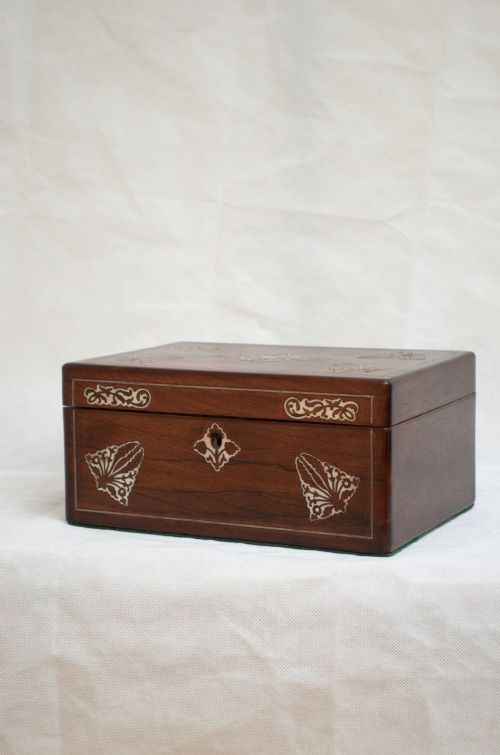


Victorian Rosewood Jewellery Chest
These Victorian rosewood jewellery chest examples are robust tabletop containers built to house precious ornaments and keepsakes with formal British elegance.
Victorian Rosewood Jewellery Chest
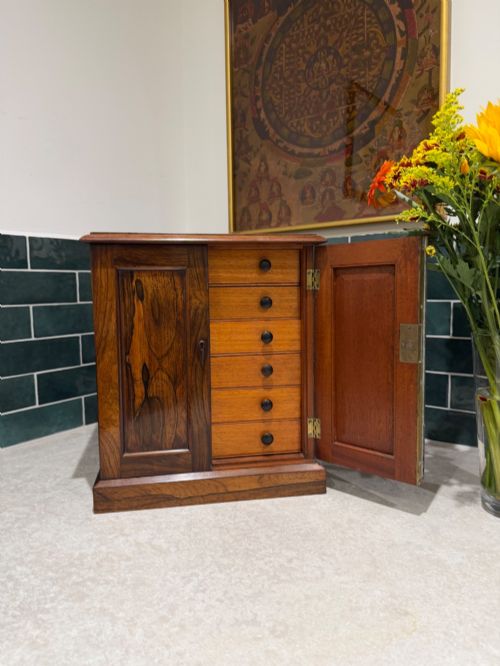
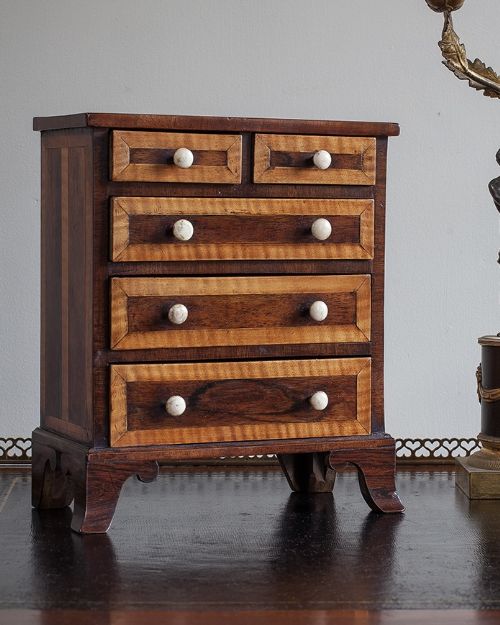
A victorian rosewood jewellery chest represents the pinnacle of nineteenth-century tabletop storage, designed to protect valuable trinkets and personal effects. Pieces appearing on this page encompass various configurations, from miniature chests of drawers and table cabinets to fitted boxes with internal trays.
The objects stem from the Victorian period, with specific dates clustering around the middle and latter half of the nineteenth century. Makers constructed these forms to sit on dressing tables or sideboards in well-appointed parlours.
Construction and materials
Cabinet makers utilised dense rosewood as the primary timber, often selecting stock with rich natural grain patterns. This dark wood provided a stable foundation for intricate decorative embellishments.
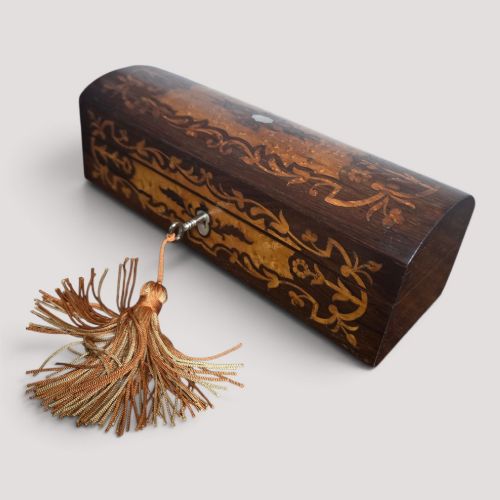
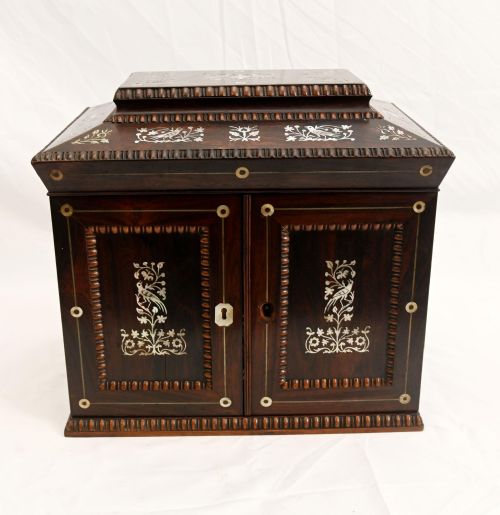
Craftsmen enriched the exterior surfaces using contrasting materials such as mother-of-pearl, brass, and boxwood. Techniques like marquetry, silver stringing, and mosaic inlay added geometric or floral patterns to the lids and facades.
Victorian Rosewood Jewellery Chest Retail Price Guide 2026
Typical asking prices for victorian rosewood jewellery chest among the pieces listed under this phrase on Sellingantiques today, from the lower quarter to the upper quarter. They describe what is for sale here now, not the wider market.
Materials recorded across current listings include solid rosewood, walnut, brass, mother-of-pearl, bone, and boxwood.
Assessing quality and craftsmanship
Superior examples display precise joinery and meticulous inlay work where brass, bone, or mother-of-pearl sit completely flush with the surrounding timber. Lesser pieces show gaps in the decorative motifs or rely on stamped metal rather than hand-fitted elements.
Internal organisation dictates the sophistication of a piece. Fully fitted compartments, removable velvet-lined trays, and working locks with original keys elevate the utility and desirability of a chest above simple unpartitioned boxes.
The Victorian Rosewood Jewellery Chest Glossary
- Tunbridge Ware
- A form of woodworking where small pieces of naturally coloured woods are assembled to create mosaic pictures. This technique decorated the lids of specialised trinket boxes.
- Marquetry
- The art of applying thin veneers of wood to a structure to form decorative patterns. Craftsmen utilised this method to render floral or geometric scenes on rosewood surfaces.
- Stringing
- A narrow inlay of contrasting wood or metal set into the surface of furniture. It creates delicate linear borders around panels.
- Table cabinet
- A small freestanding piece of furniture with doors or drawers designed to sit upon a table. These function similarly to larger jewellery chests.
- Workbox
- A container specifically built for sewing implements and needlework materials. These share many internal fitting styles with standard jewellery boxes.
Victorian Rosewood Jewellery Chest: Frequently Asked Questions
What did they store inside?
These chests held precious rings, necklaces, and brooches belonging to Victorian ladies and gentlemen. The velvet linings protected delicate metals and gemstones from scratching during daily use.
Compartments also accommodated letters, keepsakes, and personal documents. Many included secret drawers for particularly valuable items.
How do I care for the wood?
Keep rosewood pieces away from direct sunlight and sudden temperature changes to prevent the timber from splitting. Dust regularly with a dry cloth and avoid modern aerosol polishes.
Condition the wood occasionally with traditional wax to maintain the natural lustre. Ensure the interior linings remain dry to protect historical fabrics.
Are keys usually included?
Original working keys remain uncommon because locks were easily jammed or misplaced over generations. Many surviving boxes retain the escutcheon plate even if the matching key is absent.
Specialist locksmiths can sometimes fit replacement keys if the mechanism remains intact. The presence of a working lock adds historical completeness to the piece.
How do I date these pieces?
Dating relies upon examining construction methods, hinge types, and internal paper linings. Mid-century examples often feature different hardware styles compared to pieces from the eighteen-eighties.
Stylistic shifts in mother-of-pearl inlay and Tunbridge mosaic work also provide chronological clues. Comparing the joinery inside the box helps confirm the manufacturing era.