





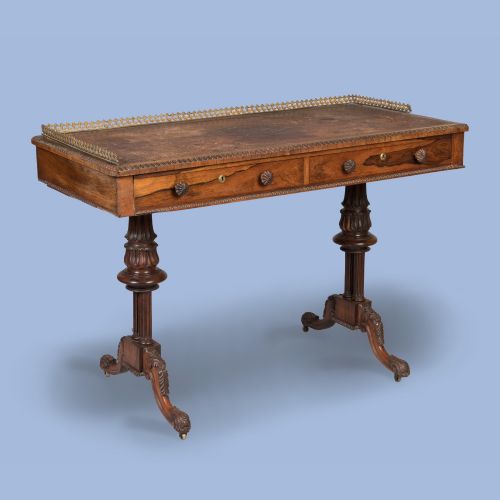

Rosewood Gallery Top Table
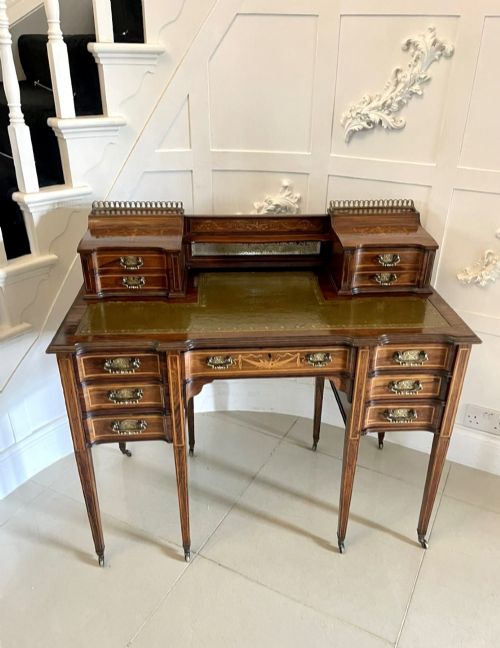
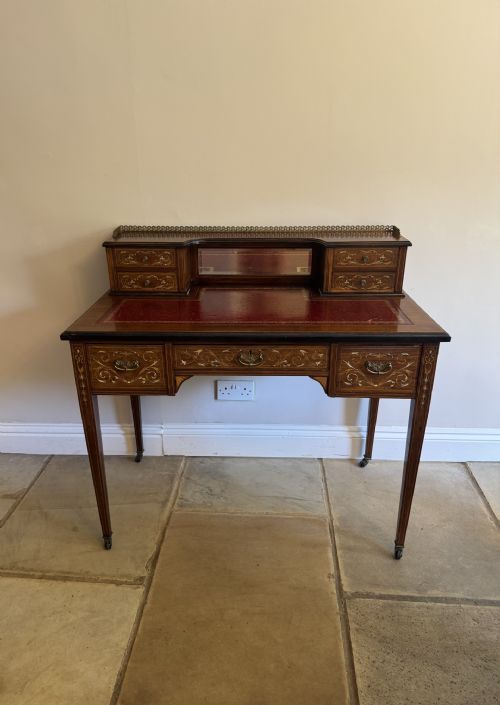
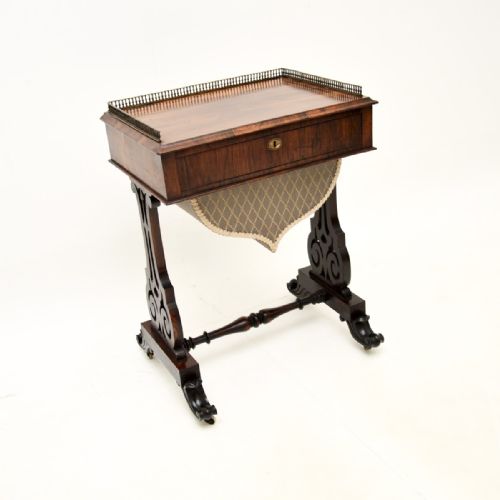
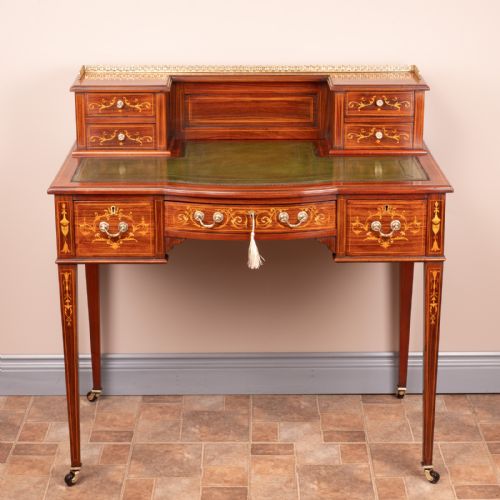
These rosewood gallery top table pieces offer distinctive surfaces defined by raised borders, prized by collectors seeking refined timberwork and functional elegance.
Rosewood Gallery Top Table
A rosewood gallery top table combines rich timber grain with a raised edge or surround, appearing primarily in nineteenth century forms such as writing desks, side tables, and games tables. These items reflect periods spanning the Regency, Georgian, and Victorian eras, alongside Sheraton Revival interpretations.
The most typical examples on this page are Victorian and Regency pieces, utilising dense tropical hardwoods alongside satinwood and brass details. Buyers encounter various functional types, from small wine tables to larger writing desks and occasional tables.
Makers and workshops of the nineteenth century produced these pieces to serve domestic writing, display, and sewing needs. The presence of a gallery rim distinguishes them from flat-topped surfaces, securing small objects while accentuating the silhouette.
How they were made
Cabinet makers utilised dense rosewood veneers and solid timbers, frequently incorporating contrasting satinwood inlay and brass mounts to embellish the framework. Surface decoration often involved delicate stringing and marquetry across the top and drawer fronts.
Structural integrity relied on traditional joinery methods combined with turned or carved supports, sometimes augmented by ormolu or fabric inserts such as leather and velvet on writing surfaces. Glass and velvet occasionally feature in specialised display variants.
Rosewood Gallery Top Table Retail Price Guide 2026
Typical asking prices for rosewood gallery top table among the pieces listed under this phrase on Sellingantiques today, from the lower quarter to the upper quarter. They describe what is for sale here now, not the wider market.
The inventory records diverse specialised forms including games tables, sewing tables, writing desks, and delicate wine tables.
What varies in quality
The sophistication of the timber figure and the precision of the inlaid satinwood establish the visual hierarchy between standard production and superior craftsmanship. Rich colour variation and deep grain patterning in the rosewood distinguish the finer examples.
Structural refinement shows in the crispness of the gallery fretwork and the integration of brass or ormolu elements. Harmonious proportions and intact original surfaces elevate a piece far above simpler utilitarian counterparts.
Maple and Co
The Rosewood Gallery Top Table Glossary
- Gallery
- A raised ornamental border or railing surrounding the edge of a tabletop or shelf. It prevents small items from rolling off while adding a decorative architectural profile.
- Regency
- An English design period spanning the early nineteenth century. Furniture from this era often draws inspiration from classical Greek and Roman motifs, utilising dark exotic woods.
- Victorian
- Spanning the reign of Queen Victoria, this period encompasses diverse revivals including Sheraton and French styles. Pieces range from austere functional forms to richly inlaid exuberant designs.
- Sheraton Revival
- A late nineteenth century movement replicating the lighter, neoclassical furniture forms associated with eighteenth century designer Thomas Sheraton. It relies heavily on satinwood banding and subtle inlay.
- Ormolu
- Gilt bronze ornamentation applied to furniture and decorative objects. It provides bright metallic contrast against dark timbers like rosewood.
Rosewood Gallery Top Table: Frequently Asked Questions
What is a gallery top table used for?
These tables served various domestic purposes depending on their specific form, functioning as writing desks, side tables, games tables, or small display surfaces. The raised rim allowed them to securely hold books, writing implements, or decorative objects.
In daily use, the surrounding border kept delicate items from sliding off the edge. This made them particularly popular as portable or occasional furniture in reception rooms and parlours.
How do I identify a Regency table?
Regency pieces typically date from the early nineteenth century and exhibit classical restraint with clean architectural lines. They frequently employ dark rosewood timber, sometimes accented with brass inlay or carved supports.
Examinations of the timber density and construction methods help confirm the period. Unlike later Victorian revivals, Regency furniture generally avoids excessive ornamentation in favour of balanced proportions.
How do I care for antique rosewood?
Maintenance requires keeping the timber away from direct sunlight and extreme temperature fluctuations to prevent veneer splitting. Gentle dusting with a dry cloth preserves the polished surface.
Applying occasional appropriate wax feeds the dry wood without building up heavy residue. Avoiding synthetic cleaning sprays protects the historic finish.
What distinguishes Victorian Sheraton Revival pieces?
Victorian Sheraton Revival pieces imitate the lighter furniture styles of the late eighteenth century. They frequently feature contrasting satinwood inlay, stringing, and elegant tapered legs.
While made during the Victorian era, these items look back to earlier neoclassical designs. The craftsmanship combines nineteenth century manufacturing precision with eighteenth century aesthetic lightness.