

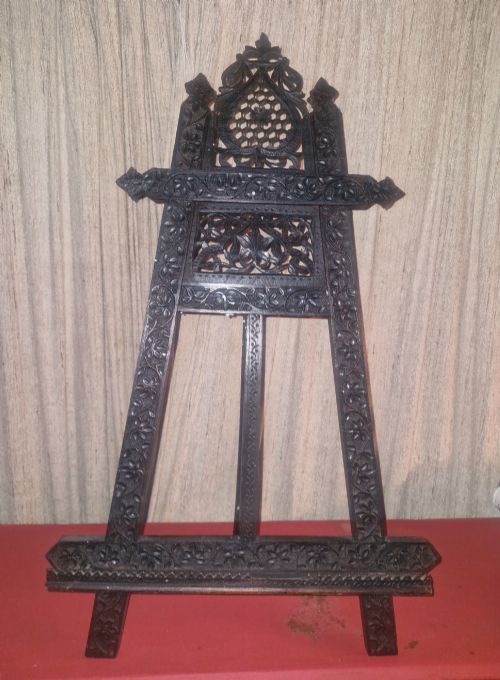


Rosewood Folding Stand
These rosewood folding stand pieces offer portable elegance and rich surface detail, combining practical collapses with striking timber grain.
Rosewood Folding Stand
A rosewood folding stand encompasses varied collapsible furniture including side tables, cake stands, and display easels. These items emerge across the Victorian, Edwardian, and 19th Century periods, alongside pieces dated through the early twentieth century.
Most examples lean towards Anglo-Indian origins, featuring carved details and octagonal tops alongside campaign styles. Alongside these, traditional British butler trays and music stands complete the core forms available.
Materials and Construction
Makers utilised dense rosewood paired with supporting hardwoods, creating sturdy collapsible frames. Brass hinges and fittings facilitate the folding mechanism without sacrificing structural integrity.
Surface decoration frequently incorporates intricate bone inlay, bone, and detailed hand carving. Some items combine these techniques with traditional campaign styling or Tunbridgeware elements.
Rosewood Folding Stand Retail Price Guide 2026
Typical asking prices for rosewood folding stand among the pieces listed under this phrase on Sellingantiques today, from the lower quarter to the upper quarter. They describe what is for sale here now, not the wider market.
Even a spare luggage stand received barley twist turned legs and fine rosewood polish for guests.
Quality Variations
The standard of carving and inlay work dictates the distinction between standard items and superior examples. Crisp execution in bone inlay and deep relief carving marks out pieces produced by skilled regional workshops.
Stability in the folding mechanism and the richness of the timber grain determine overall desirability. Well-preserved joints and intact inlay elevate an example above simpler utilitarian versions.
The Rosewood Folding Stand Glossary
- Rosewood
- A heavy, durable timber prized for its dark grain and reddish-brown coloration. It provides a robust foundation for intricate carving and polishing.
- Campaign style
- Portable furniture designed for easy transport and rapid assembly. These pieces typically feature folding elements and brass hardware.
- Bone inlay
- Decorative fragments set flush into the timber surface to create geometric or floral patterns. This technique is prominent in Anglo-Indian pieces.
- Butler tray
- A removable tray top resting upon a folding X-frame stand. It originated for serving purposes before becoming a staple occasional table.
Rosewood Folding Stand: Frequently Asked Questions
How were these stands used?
These pieces served versatile domestic functions depending on their specific form. Cake stands held afternoon tea, while butler trays transported and presented refreshments.
Other variants acted as display surfaces for books, sheet music, or decorative pictures in nineteenth-century drawing rooms.
Are they sturdy when unfolded?
The structural stability depends on the precision of the folding hinges and the condition of the wooden frame. Well-engineered joints lock securely into position to support normal daily weights.
Wear in the pivot points can introduce wobble, so proper alignment of the legs remains essential for safe usage.
How do I identify an Anglo-Indian piece?
Anglo-Indian stands typically display dense, intricate hand-carved foliage across the entire surface rather than restrained British classical motifs. Many incorporate octagonal tops and contrasting bone inlay.
Regional production centres like Hoshiarpur generated distinctive carved patterns that differ visibly from standard Victorian domestic furniture.