



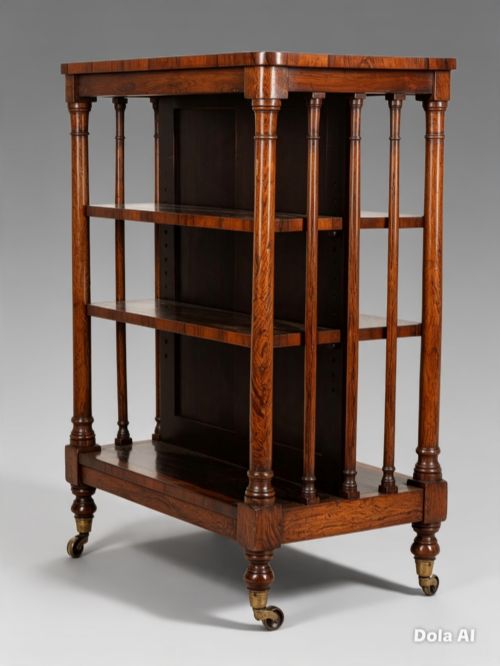


Rosewood Etagere Unit
A rosewood etagere unit provides tiered display space in rich, dark timber, bringing elegance and practical surface area to any interior.
Rosewood Etagere Unit
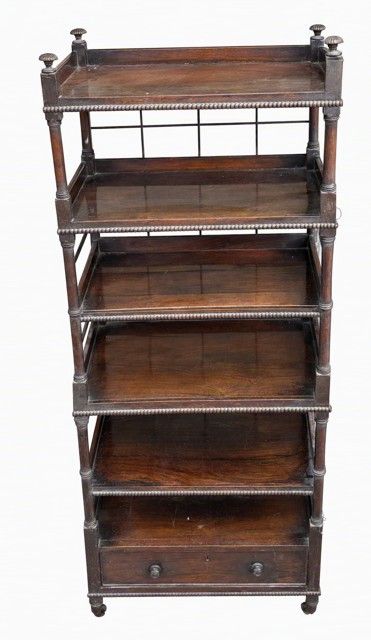
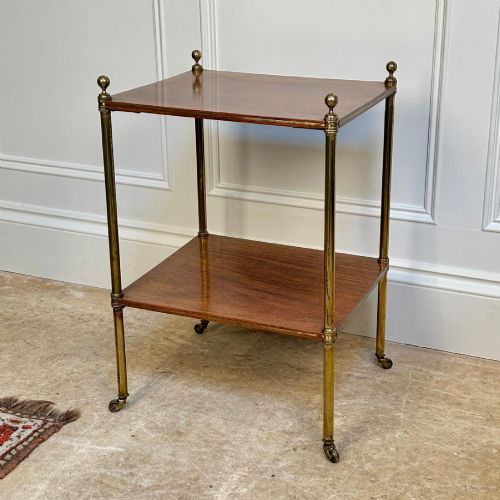
A rosewood etagere unit brings together open tiered shelving and fine timber, functioning as a display stand or freestanding whatnot for ornaments and books. When searching for a rosewood etagere unit, buyers encounter multi-tiered shelving pieces dating across the nineteenth century, including Regency, Victorian, and Edwardian examples.
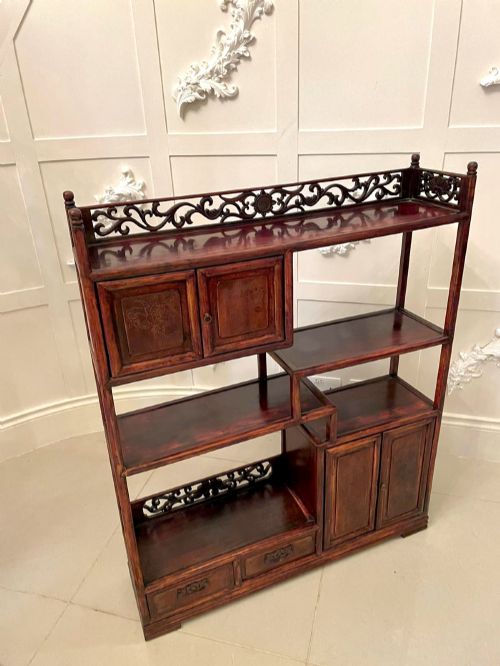
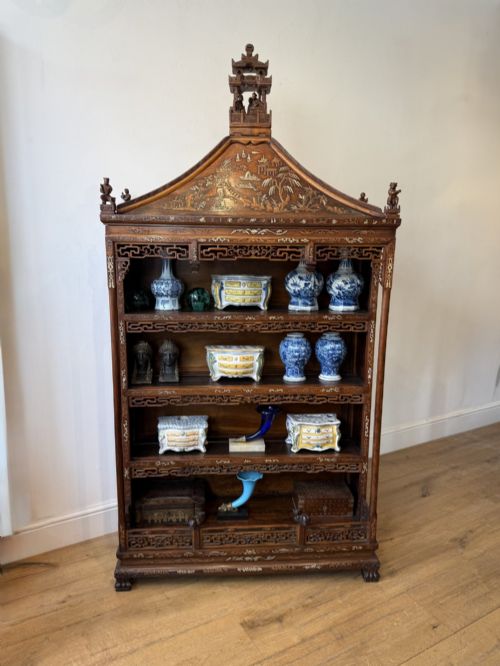
The form ranges from compact three-tier stands to substantial six-tier shelving units and double-sided bookcases. Alongside standard English cabinet-making, pieces frequently cross into Chinese Qing style, Chinoiserie, and Anglo-Indian aesthetic traditions, demonstrating diverse regional interpretations of tiered display furniture.
Materials and construction
Makers utilised dense rosewood timber as the primary medium, often pairing the dark grain with brass supports, bone inlay, or mother-of-pearl details. Structural joints relied on traditional cabinet-making methods to support multiple stacked shelves without losing stability.
Surface decoration extended to intricate carved motifs, notably seen in Anglo-Indian and Chinese Qing pieces, alongside delicate marquetry work on Victorian tops. Brass elements such as castors and gallery rails completed the hardware for freestanding and movable examples.
Even the tiniest bedside whatnot demands a sturdy stance, proving that even a towering stack of shelves needs good posture.
Qualities that set pieces apart
The refinement of the timber grain and the precision of the shelf supports dictate the standing of a piece. Pieces with profuse hand-carving or complex marquetry display a higher level of workshop skill than plain utility shelving.
Structural integrity across multiple tiers remains vital, as tall units require robust uprights to prevent wobble. The inclusion of integrated drawers or specialised brass fittings elevates the utility and overall execution of the design.
The Rosewood Etagere Unit Glossary
- Etagere
- A set of open shelves used for displaying small objects and ornaments. This French form became popular in English interiors during the nineteenth century.
- Whatnot
- A freestanding piece of furniture consisting of several superposed shelves for books or ornaments. The name reflects its versatile utility in period parlance.
- Marquetry
- Decorative veneer work forming geometric or pictorial patterns on a timber surface. Skilled craftspeople cut contrasting woods and shell to fit flush into the primary ground.
- Shodana
- A traditional Japanese or Chinese tiered display cabinet with asymmetrical shelving. These pieces often feature elaborate openwork carving and small cupboards.
- Regency
- A British design period spanning the early nineteenth century defined by classical restraint and rich mahogany or rosewood surfaces.
Rosewood Etagere Unit: Frequently Asked Questions
What is an etagere used for?
An etagere is designed for displaying porcelain, silver, and decorative objects in principal rooms. The open tiers allow items to be viewed from multiple angles.
In period interiors, these units served as decorative focal points rather than heavy storage furniture. They filled drawing room corners or stood between windows to catch the light.
How do I date a rosewood whatnot?
Dating relies on examining the timber preparation, turning style of the upright supports, and overall design vocabulary. Regency pieces tend to show cleaner classical lines, while Victorian examples often incorporate heavier turned pillars or applied carving.
Secondary woods at the back or underneath the shelves offer further clues to age. Machine-cut components usually point toward the later nineteenth century, whereas hand-finished joinery suggests an earlier origin.
Are these units stable enough for daily use?
Period shelving units are generally sturdy if the upright joints remain tight and uncompromised. Taller pieces with four to six tiers benefit from placement against a wall or in a low-traffic corner to prevent tipping.
Moving a tiered unit requires lifting it bodily rather than dragging it across the floor. This protects the lower joints and any attached brass castors from undue strain.
What distinguishes Chinese Qing style units?
Chinese Qing style and shodana pieces feature asymmetrical shelving arrangements and deeply carved hardwood structures. Artisans utilised intricate pierced work and dense timber rather than veneered surfaces.
These units bring a distinct architectural presence to a room compared to British Regency or Victorian designs. They reflect global trade influences on nineteenth-century cabinet-making.