




Rosewood Cupboard Bookcase
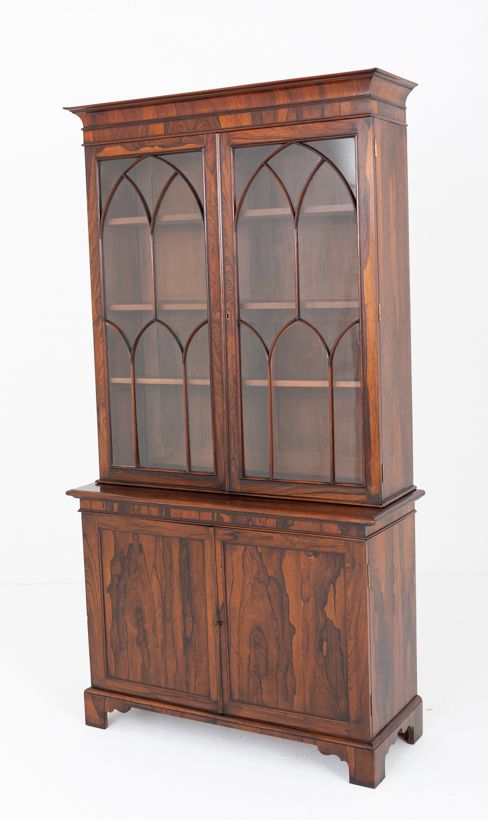
These rosewood cupboard bookcase designs combine upper display shelving with enclosed lower storage in rich dark timber.
Rosewood Cupboard Bookcase
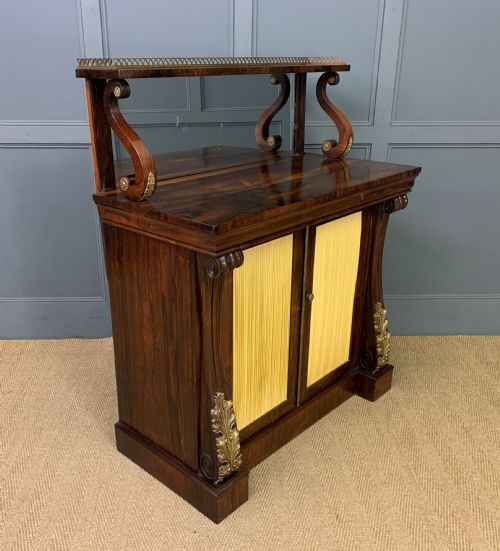
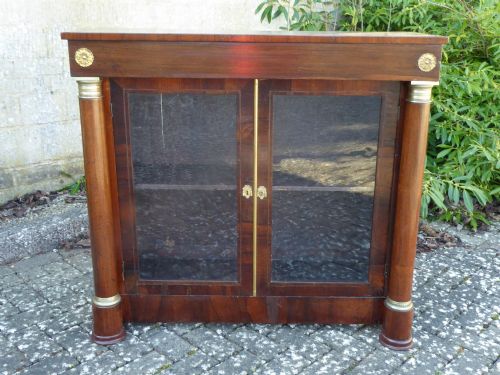
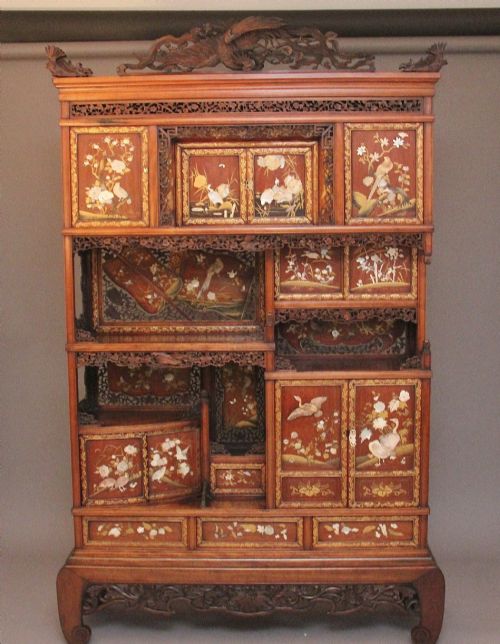
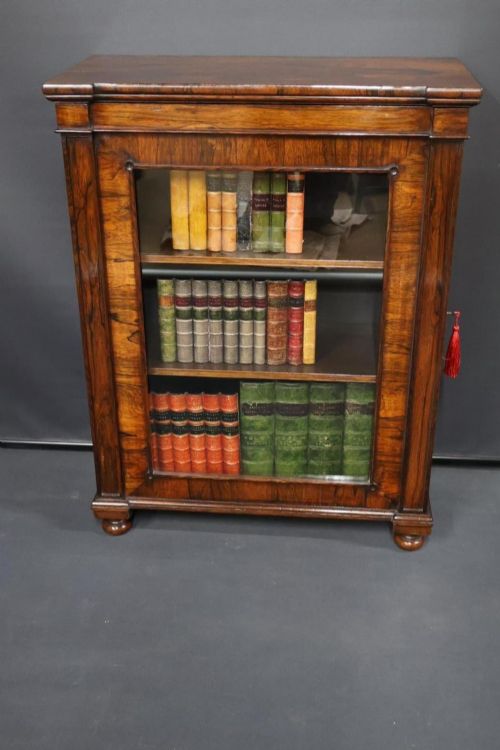
A rosewood cupboard bookcase unites open or glazed shelving above with panelled doors below, creating a dual-purpose piece for books and display. The form bridges the library and the parlour, offering concealed storage alongside visible space for volumes or objects.
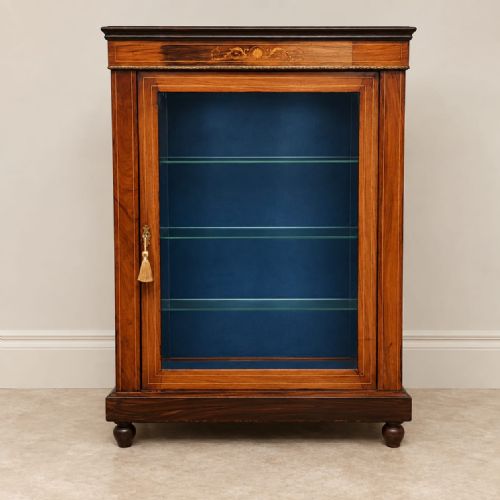
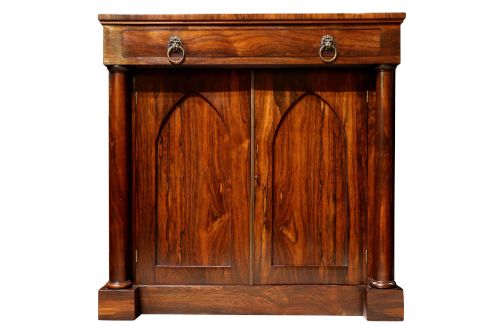
Most examples found here date from the Regency and Victorian periods, often taking the form of side cabinets, chiffoniers, or breakfront bookcases. Makers adapted the genre through various revivals, producing both towering library pieces and neat pier cabinets.
How they were made
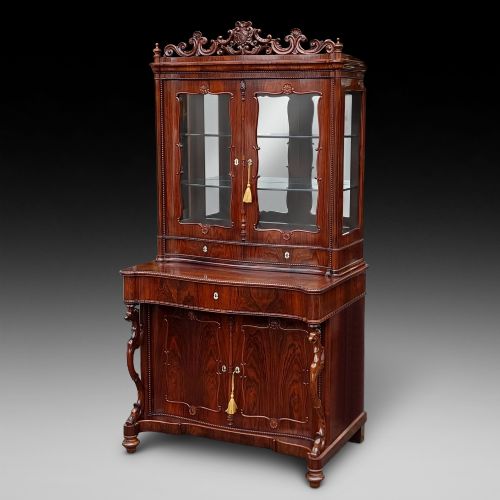
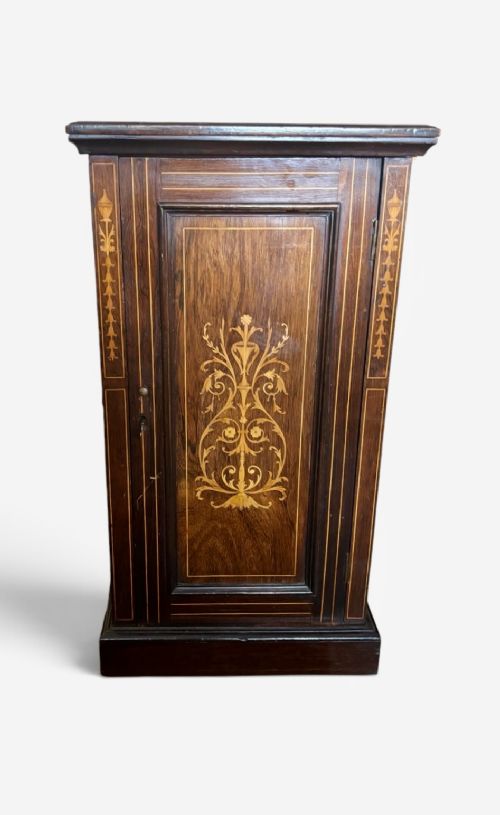
Cabinet makers utilised dense hardwoods, applying fine rosewood veneers over firmer carcases or working in solid timber where proportions demanded. Surfaces frequently incorporated brass inlay, satinwood stringing, or painted panels to articulate the grain.
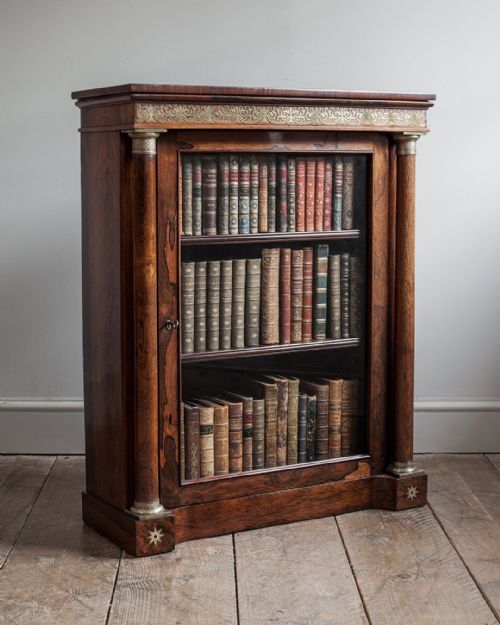
Glazing bars divided upper bookcase doors into geometric panes, whilst lower cupboards often featured wooden panels, fabric backing behind glass, or Gothic tracery. Brass mounts and grilles added structural edge protection and reflective contrast to the dark wood.
Certain Victorian library cupboards feature carved green man masks keeping watch over the book collection from the pediment.
What varies in quality
Quality rests upon the selection of the timber figure and the precision of the brass or satinwood inlay work across the doors and friezes. Finer pieces demonstrate seamless veneer matching and architectural restraint in their proportion and carving.
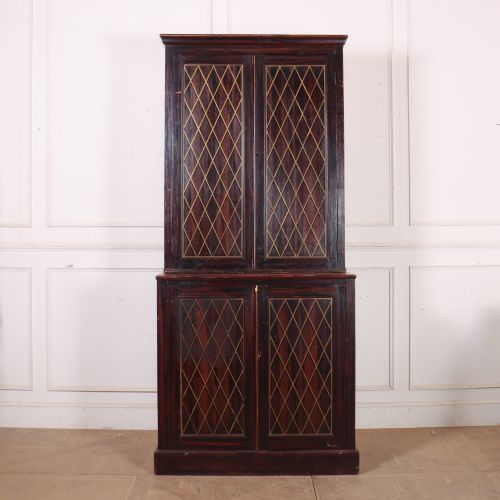
Lesser examples rely on painted or simulated rosewood finishes rather than true veneer, or exhibit heavier proportions that lack the neatness found in disciplined Regency and William IV workshop output.
The Rosewood Cupboard Bookcase Glossary
- Chiffonier
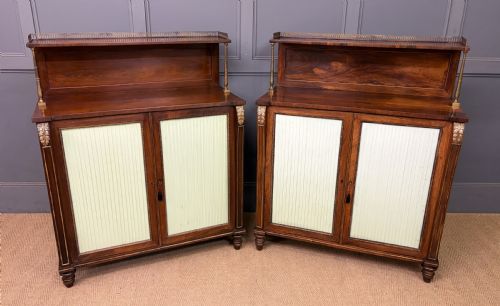
- A low cabinet featuring a cupboard base beneath a drawer and shelf tier, frequently fitted with fabric panels behind doors.
- Pier cabinet
- A narrow cabinet designed specifically to stand against the wall space between windows.
- Breakfront
- A cabinet front where the central section projects forward from the flanking outer bays.
- Satinwood
- A pale yellow exotic timber utilised primarily for contrasting stringing and inlay work against darker ground woods.
- Biedermeier
- A Central European style characterised by clean lines and unadorned surfaces that highlight natural wood grain.
Rosewood Cupboard Bookcase: Frequently Asked Questions
How do I date a rosewood bookcase?
Dating relies on architectural styling, construction methods, and timber characteristics. Regency and William IV pieces often display crisp brass inlay and classical proportions, whilst Victorian examples tend toward heavier frames and satinwood highlights.
Examining the interior secondary woods and backboards provides further confirmation of the period. Older pieces typically show hand-planed surfaces and older fixing methods inside the cupboard base.
What is the difference between a chiffonier and a bookcase?
A chiffonier is traditionally a lower piece of furniture combining a cupboard base with a smaller tier or shelf superstructure. A bookcase prioritises extensive vertical shelving for books above the enclosed lower storage.
Many variations bridge these categories, such as pier cabinet bookcases that integrate both display shelving and lower doors within a narrower footprint.
Where should I place a rosewood cupboard bookcase?
These pieces suit reception rooms, studies, and libraries where their dual function for storage and display can be utilised. Their enclosed lower cupboards keep items dust-free while upper shelves present books or collections.
Direct sunlight should be avoided to prevent the rosewood veneer from fading or drying out over time.
Are these bookcases made of solid rosewood?
Most antique pieces utilise rosewood veneers applied over stable secondary hardwoods to prevent warping across wide panels. Solid rosewood does appear in specific formats, but veneer was standard practice for large surfaces.
The quality of the construction lies in how expertly the veneer was chosen and laid rather than whether the entire carcase is solid timber.