


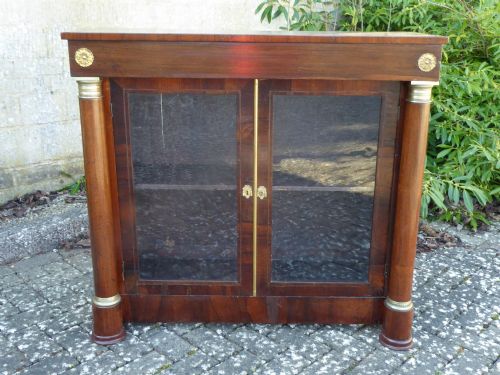
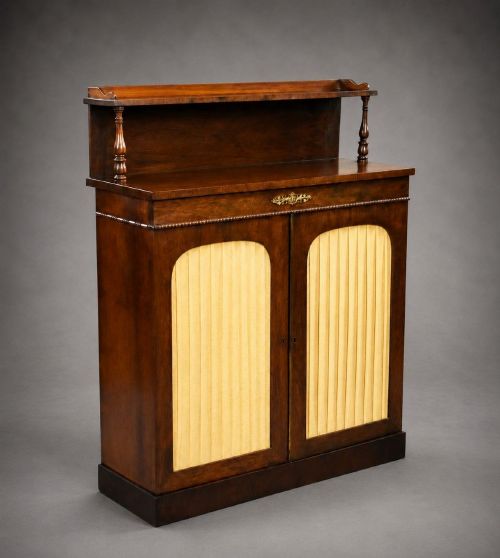
Rosewood Credenza Cupboard
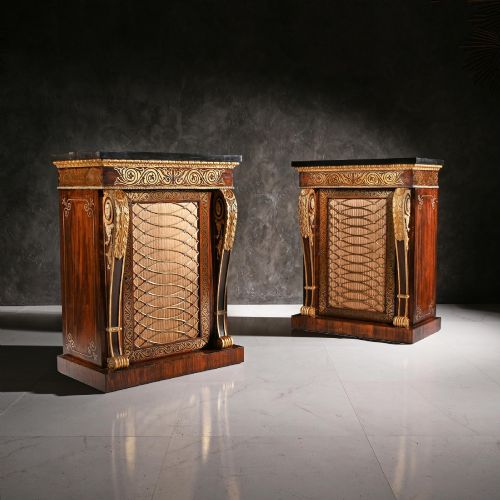
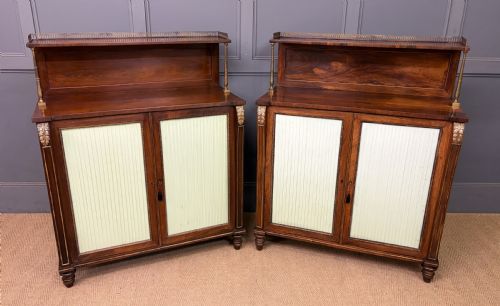
A rosewood credenza cupboard brings rich grain and substantial presence to a room, offering both display space and concealed storage.
Rosewood Credenza Cupboard
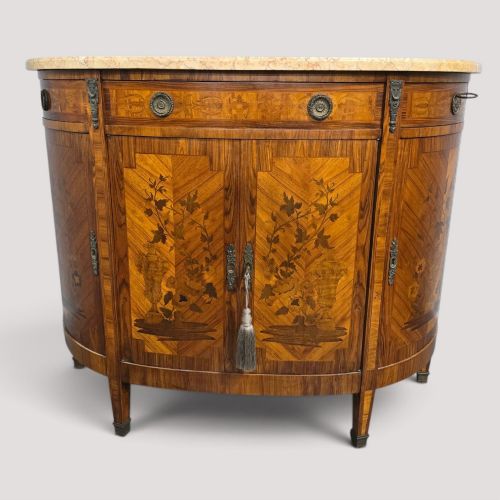
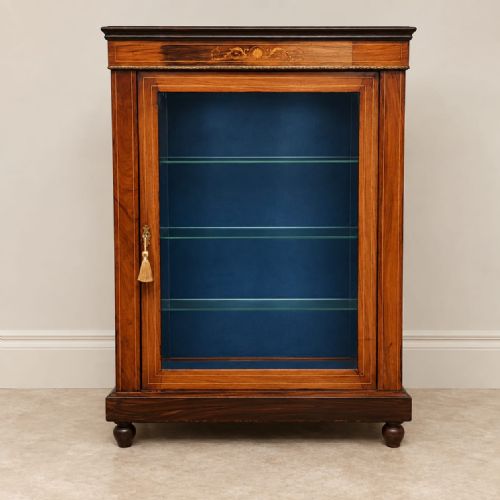
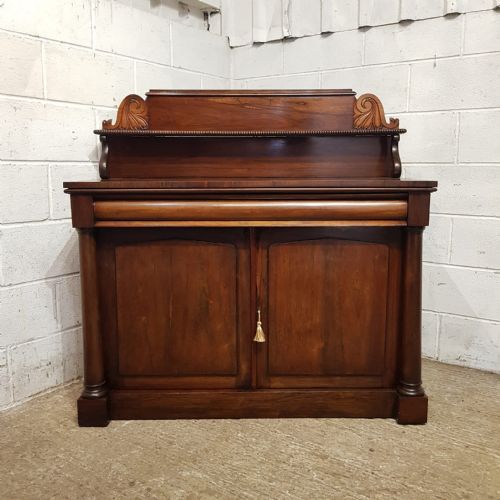
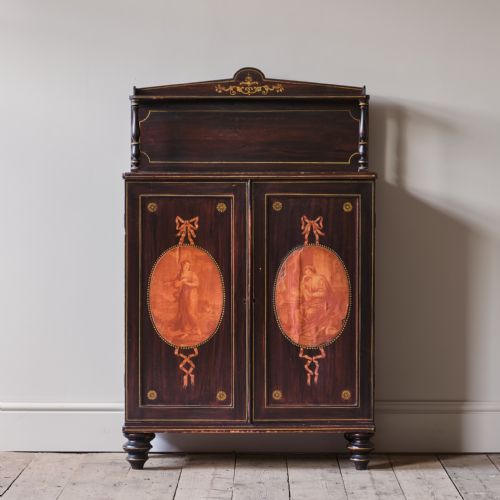
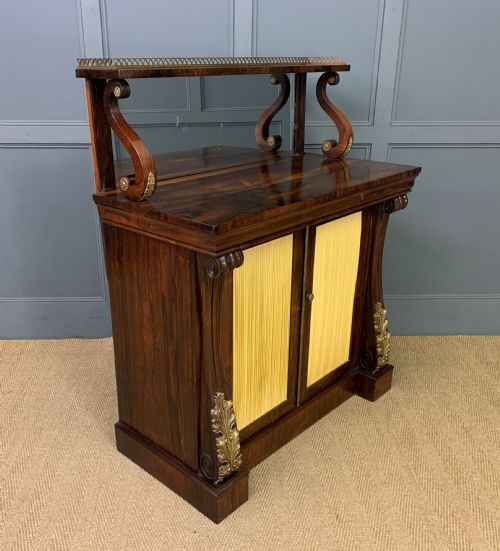
When searching for a rosewood credenza cupboard, buyers encounter low-slung side cabinets, chiffoniers, and display pieces originating primarily from the Regency and Victorian eras. These items served as focal points in nineteenth-century drawing rooms, designed to hold books, china, or linens while displaying decorative objects on their upper surfaces.
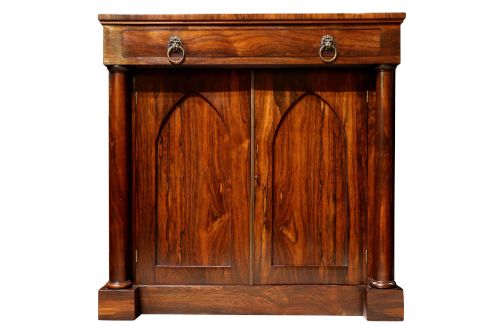
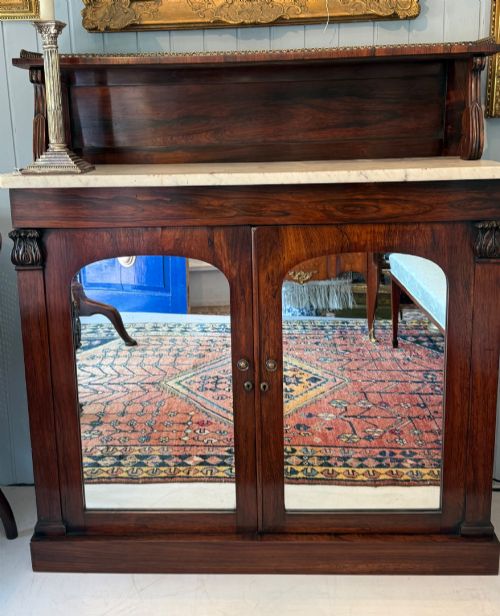
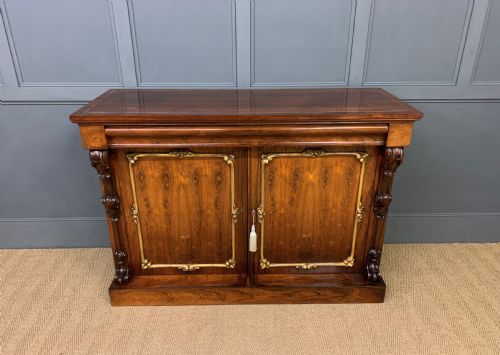
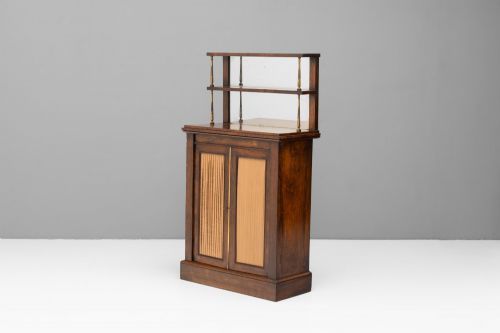
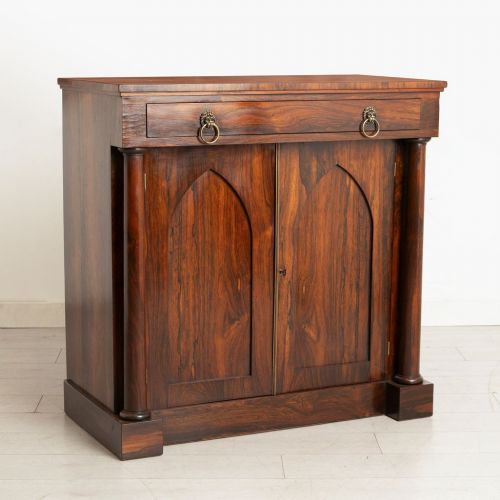
The pieces on this page lean heavily toward Regency and Victorian designs, alongside William IV and early Victorian examples. Common formats include chiffoniers with shelved backs, two-door side cabinets, and breakfront arrangements.
Makers such as Holland & Sons and Louis Constantin Le Gaigneur appear in the record, showing that workshops of high repute turned their hand to these forms. Simpler country iterations also exist, sometimes utilising simulated rosewood paint on pine bases.
Materials and construction methods
Cabinet makers utilised dense tropical rosewood veneers laid over secondary timbers, often accentuating the striking grain patterns on door panels and drawer fronts. Solid rosewood was used selectively for mouldings and turned supports.
Metal inlay in brass, alongside ormolu mounts and ebony details, added linear contrast to the dark timber surfaces. Interiors frequently incorporated oak or pine drawer linings, while some variations included marble tops or glass doors.
Specialised techniques such as marquetry inlay and painted simulation of rosewood on pine demonstrate the range of workshop capabilities across the periods represented.
Some nineteenth-century workshops ingeniously painted pine to mimic expensive rosewood grain when the real timber was in short supply.
Factors that distinguish quality
The standard of a rosewood credenza cupboard rests on the depth of the timber grain, the precision of brass or marquetry inlay, and the integrity of the structural carcase. Pieces with crisp carving and well-matched veneer flitches sit clearly above plain utility items.
The quality of secondary woods inside the drawers, the smoothness of door action, and the original state of glass or brass grilles indicate the care taken during initial production in nineteenth-century workshops.
Holland & Sons·Louis Constantin Le Gaigneur
The Rosewood Credenza Cupboard Glossary
- Chiffonier
- A low sideboard or cabinet, typically featuring a raised shelf back supported by small columns, popular during the Regency and Victorian periods.
- Marquetry
- Decorative patterns formed by fitting together small pieces of coloured wood veneer onto a structural surface.
- Ormolu
- Gilt bronze mounts applied to furniture for decorative effect, common in mid-nineteenth-century cabinet work.
- Breakfront
- A piece of furniture where the central section projects forward from the flanking outer sections.
- Goncalo Alves
- A dense exotic hardwood sometimes utilised in place of rosewood for high-status nineteenth-century cabinet framing.
Rosewood Credenza Cupboard: Frequently Asked Questions
What is the difference between a chiffonier and a credenza?
A chiffonier typically includes a raised superstructure with shelves above a low cabinet, whereas traditional credenzas and side cabinets offer a flat top surface for display.
Both forms utilise rosewood and similar interior capacities, but their silhouettes suit different placement within a nineteenth-century interior scheme.
How do I identify a Regency period piece?
Regency cabinets often display classical restraint, featuring brass inlay, rosewood veneers, and clean architectural lines dating roughly between eighteen hundred and eighteen thirty.
Look for proportion, neatness of scale, and characteristic motifs such as Egyptian revival details or Gothic panelled doors.
Were these cabinets used for dining rooms?
While many served in drawing rooms for holding books and writing materials, larger side cabinets and four-door units functioned well in dining spaces for storing service items.
The inclusion of marble tops on certain examples provided a durable surface for serving food or displaying heavy ceramics.
How should I care for rosewood furniture?
Keep these pieces away from direct sunlight and steady heat sources to prevent the rosewood veneer from drying or splitting over time.
Dust with a soft, dry cloth and apply specialist furniture wax sparingly to maintain the natural lustre of the timber.