



Rosewood Bedside Tables
Rosewood bedside tables bring rich grain and compact utility to a bedroom, spanning formal Regency forms and ornate Victorian marquetry.
Rosewood Bedside Tables
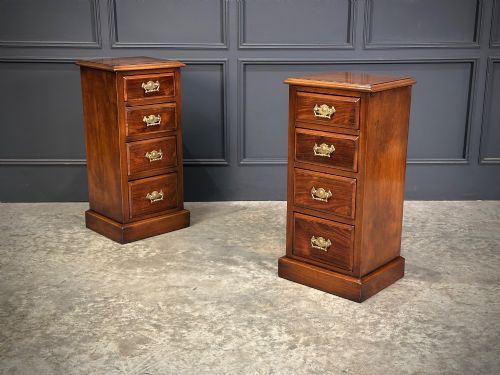
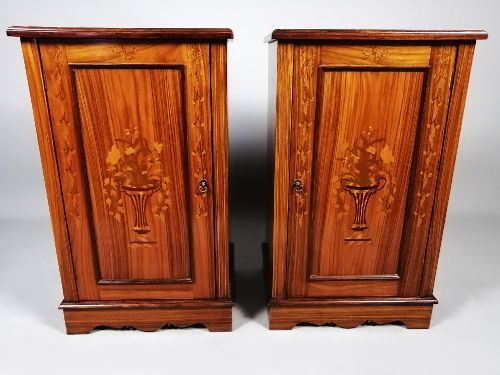
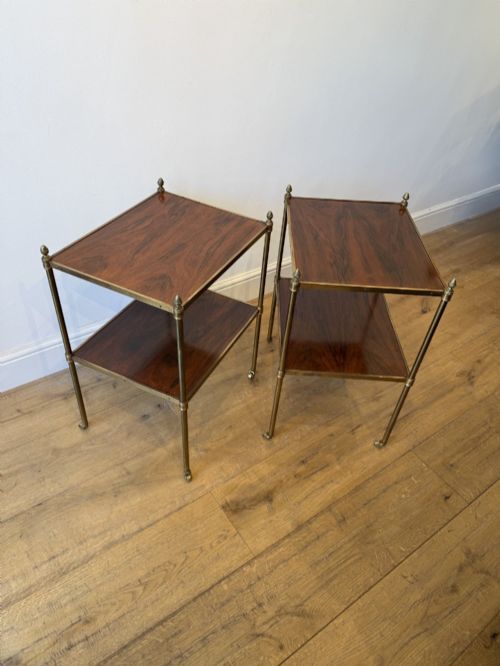
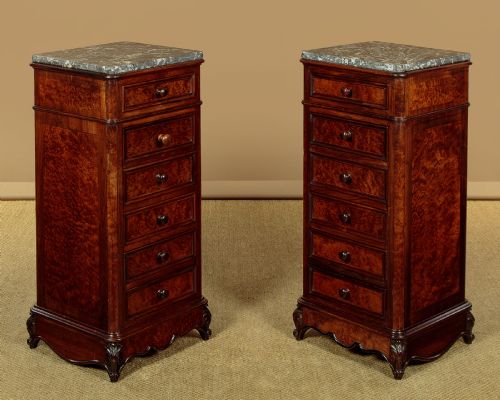
When you search for rosewood bedside tables, you encounter a selection spanning the nineteenth century through the early twentieth century. The primary forms include enclosed bedside cabinets, open two-tier etageres, and small drawer pedestals designed to sit beside a bed. Pieces frequently appear as matched pairs, reflecting the traditional arrangement of twin beds in larger rooms.
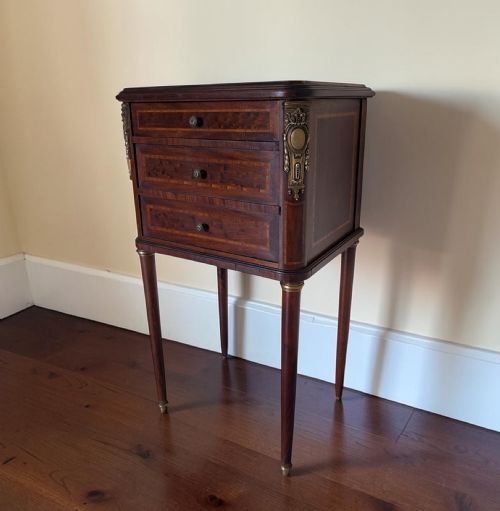
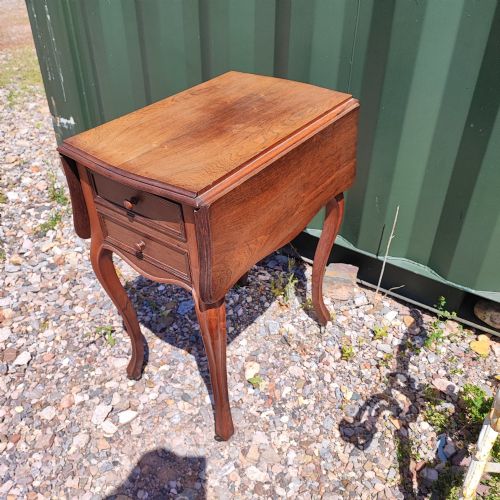
Beyond standard cupboards, the selection embraces side tables, what-nots, and drop-leaf work tables adapted for bedside use. Styles range from restrained Regency designs to elaborate French Louis XV and Louis XVI revivals featuring marquetry and gilt mounts. Materials extend beyond primary rosewood to incorporate kingwood, mahogany, and marble tops.
How they were made
Cabinet makers utilised dense exotic hardwoods, pairing solid rosewood and structural mahogany with decorative veneers. Marquetry and wood inlay appear frequently, combining contrasting timbers like satinwood and amboyna to create intricate floral or geometric patterns across door panels and table tops.
Construction details include brass handles, ormolu mounts, and fitted marble tops on French-influenced pieces. Artisans employed traditional joinery techniques to build durable pedestals, cabinets, and multi-tiered stands capable of supporting lamps and night-time accessories.
Several diminutive tables manage to squeeze three tiers of display space into a footprint smaller than a dinner plate.
What varies in quality
Quality reveals itself in the precision of the veneer work and the complexity of the wood inlay. Refined marquetry requires careful selection of contrasting timbers to maintain crisp lines and subtle tonal shifts across the surface.
The choice of secondary materials marks the distinction between standard production and top-tier execution. Heavy marble slabs, finely chased brass handles, ormolu mounts, and secondary woods like kingwood distinguish exceptional nineteenth-century commissions from simpler utilitarian cupboards.
Mallett·Collinson and Lock·Gillows
The Rosewood Bedside Tables Glossary
- Marquetry
- Decorative veneer work arranged in pictorial or geometric patterns using various coloured woods. It transforms plain cabinet surfaces into elaborate decorative panels.
- Ormolu
- Gilded bronze mounts applied to furniture edges and corners for ornamentation. This technique is particularly common on French revival pieces.
- Kingwood
- A dense, richly grained exotic timber often used for contrasting borders and banding in high-end cabinet making. It complements the deep tones of rosewood.
- Etagere
- An open set of small shelves or tiers used for displaying small items or holding bedside essentials. These pieces often feature slender upright supports.
- Pedestal cabinet
- A tall, narrow freestanding cupboard enclosing storage space behind a single door. They are designed to occupy minimal floor area beside a bed.
Rosewood Bedside Tables: Frequently Asked Questions
Are these tables sturdy enough for daily use?
These pieces were built using dense hardwoods like rosewood and mahogany, resulting in robust construction designed for regular household utility.
Their solid joinery and stable pedestal forms easily support bedside lamps, books, and decorative objects without wobble.
Do rosewood bedside tables usually come in pairs?
Many examples on the market are offered as matched pairs, reflecting historical bedroom layouts that required symmetrical bedside storage.
Single cabinets also appear frequently for tighter spaces or asymmetric room arrangements.
How do I identify French revival styles?
French revival pieces typically display curved cabriole legs, elaborate floral marquetry, and decorative marble tops or ormolu mounts.
These design cues draw directly on eighteenth-century Louis XV and Louis XVI aesthetics.