



Rosewood Accent Armchair
A rosewood accent armchair brings rich grain and distinct nineteenth-century character to a room, offering both a comfortable seat and a striking visual anchor.
Rosewood Accent Armchair
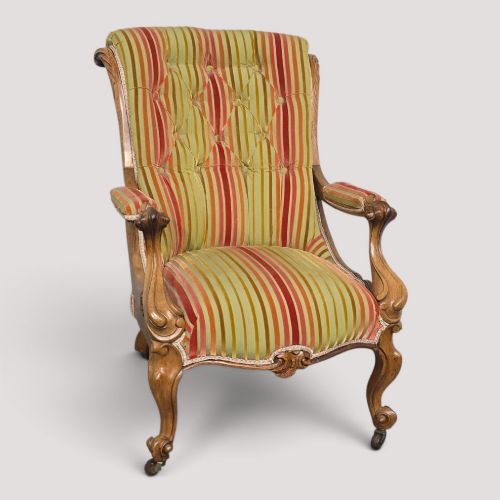
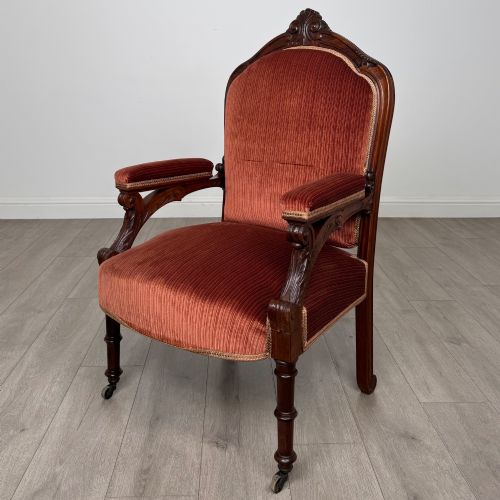
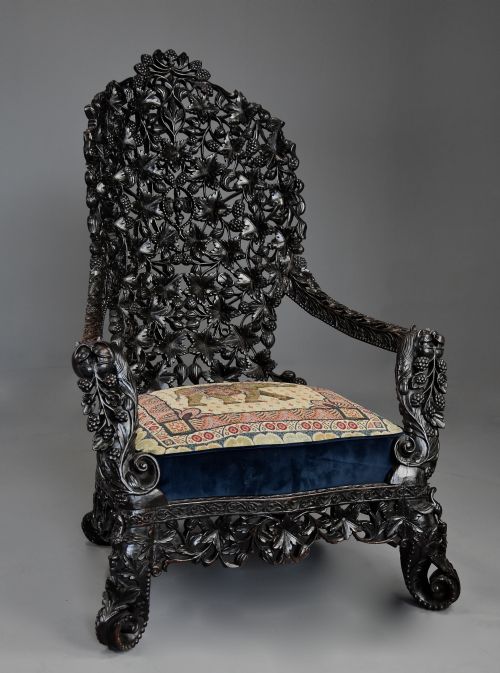
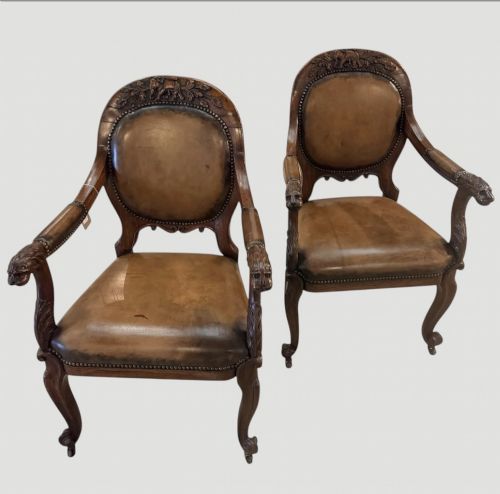
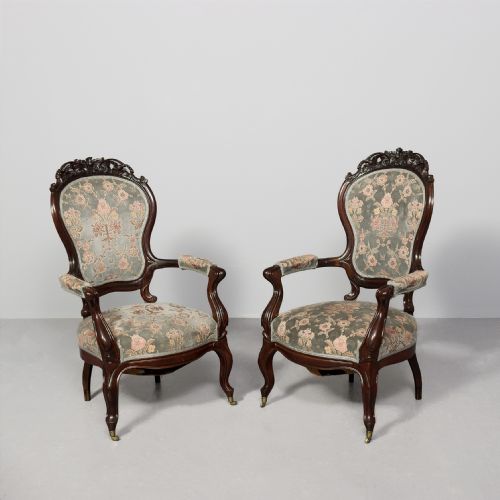
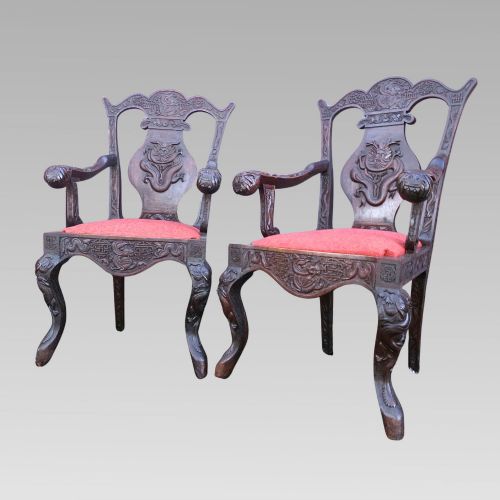
A rosewood accent armchair is a seating piece defined by its dark, dense timber and prominent placement within a room. When exploring this selection, buyers encounter various nineteenth-century forms ranging from Victorian library chairs to Regency library models and Anglo-Indian elbow chairs.
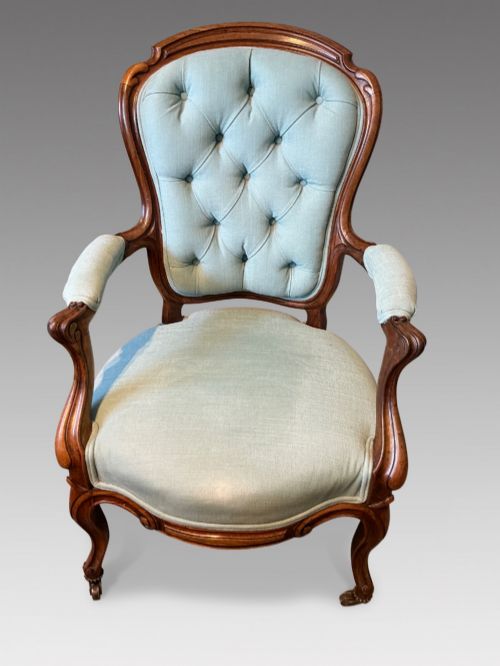
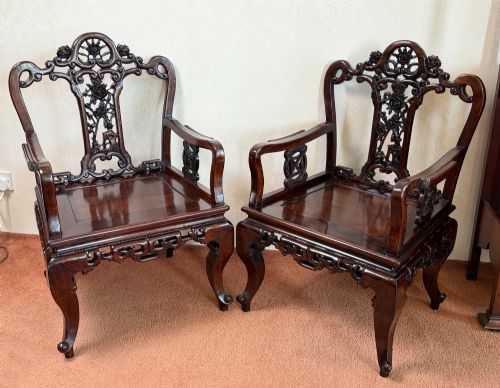
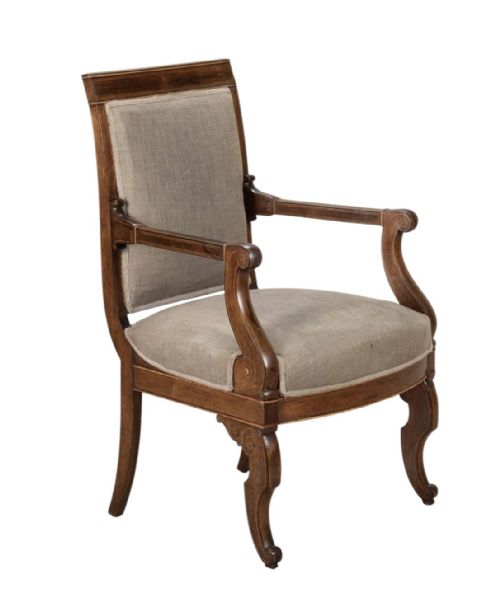
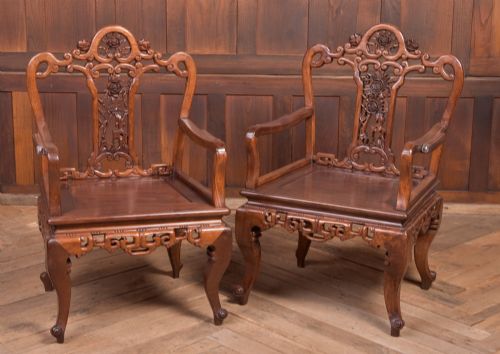
The assortment spans diverse regional interpretations, including French fauteuils, Chinese Qing dynasty hardwood chairs, and English button-back easy chairs. Victorian open armchairs and low nursing chairs appear frequently alongside pairs designed for parlours and drawing rooms.
Makers across different traditions utilised rosewood and similar dense hardwoods like hongmu to create showwood frames, often incorporating cabriole legs, carved details, and upholstered seats in velvet, damask, or leather.
Construction materials and techniques
Cabinetmakers utilised solid rosewood and hardwoods for structural frames, sometimes employing parcel gilding or faux rosewood finishes to achieve particular visual effects. Carved showwood elements demonstrate hand-chiselled details, particularly on Victorian and Qing dynasty examples.
Upholstery techniques involve traditional stuffing secured within frames, finished with materials such as leather, silk damask, and velvet. Button-back padding appears on several nineteenth-century library and easy chairs, requiring precise tension across the rosewood framework.
Listings feature pieces from the Regency, Victorian, and Edwardian periods, constructed in solid rosewood, brass, leather, and damask fabric.
Distinctions in craftsmanship and condition
Quality separates through the crispness of carved wooden details and the structural integrity of the rosewood frame. Pieces with deeply carved foliage, clean joinery, and well-preserved showwood sit at the upper end of the scale.
The preservation of original upholstery materials, whether button-backed leather or damask fabric, influences the character of each chair. Harmony between the timber frame and its textile covering defines the success of the design.
The Rosewood Accent Armchair Glossary
- Rosewood
- A dense, heavily figured timber prized for its dark reddish-brown colour and distinct grain patterns. It provides the primary structural and visual medium for these armchairs.
- Showwood
- The exposed timber portions of an upholstered chair frame that remain visible around the cushions and backrest. Carving and polishing are concentrated on these areas.
- Fauteuil
- An open-framed armchair originating in France, characterised by upholstered back and seat panels with wooden armrests left uncovered. These pieces often feature carved cabriole legs.
- Hongmu
- A traditional Chinese term translating to red wood, used to describe dense tropical hardwoods utilised in Qing dynasty throne chairs and armchairs. It shares the heavy weight and dark tone of rosewood.
- Nursing chair
- A low-seated Victorian chair designed originally for comfort while nursing infants, typically featuring an upholstered back without high arms. These compact seats serve well as low accent chairs.
Rosewood Accent Armchair: Frequently Asked Questions
How do I date a rosewood armchair?
Dating relies on observing structural proportions, carving styles, and the specific characteristics of the wood finish. Regency and William IV pieces often display classical restraint, whereas Victorian examples tend toward heavier carving and button-back upholstery.
Examining the underside and joinery offers further clues regarding the manufacturing period. Changes in upholstery techniques from the early nineteenth century to the Edwardian era help narrow down the decade of production.
Where should I place an accent armchair?
An accent armchair suits corners of bedrooms, drawing rooms, or reading spaces where its timber grain adds texture and warmth. Pairing chairs together creates a balanced focal point in larger reception rooms.
Because rosewood possesses a deep, dark tone, these chairs contrast effectively against lighter walls and neutral interiors. Placing them away from direct sunlight protects the polished wood and delicate fabric from fading.
How should I care for antique rosewood furniture?
Maintaining rosewood requires keeping the timber away from extreme temperature fluctuations and direct heat sources. Gentle dusting with a dry cloth preserves the polished surface without stripping the natural oils.
Avoid using modern silicone sprays or harsh chemical polishes on antique finishes. Professional conservation advice is recommended if the timber requires deep cleaning or structural repairs.