

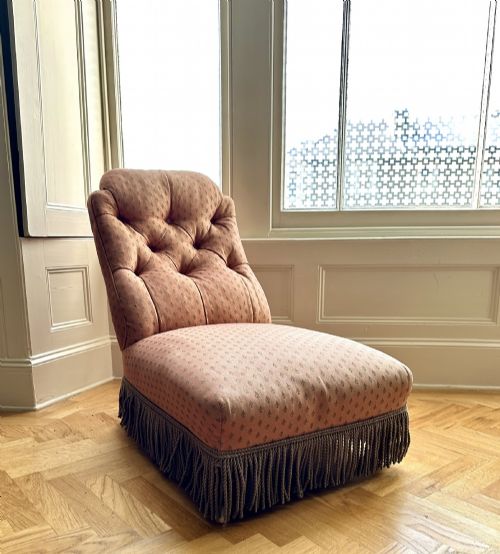


Rose Pink Lounge Chair
These rose pink lounge chair selections bring classic upholstery and comfortable seating into a room with distinct historical character.
Rose Pink Lounge Chair
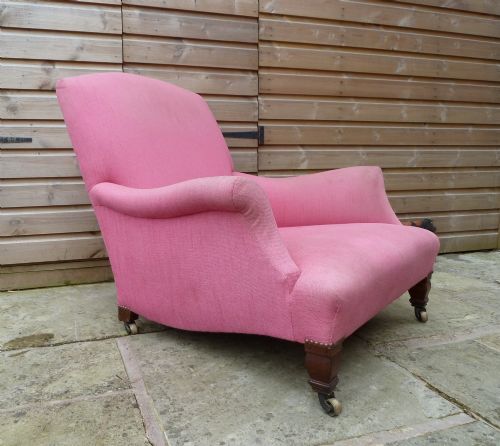
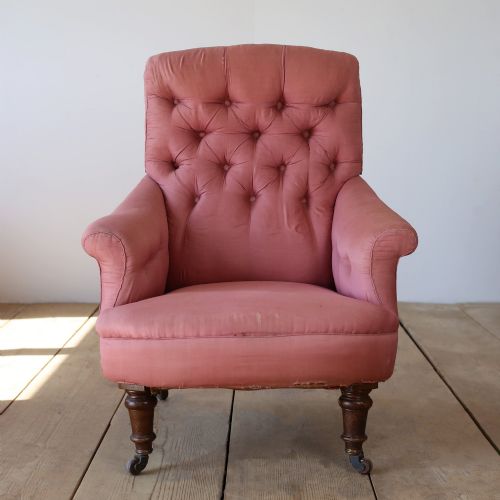
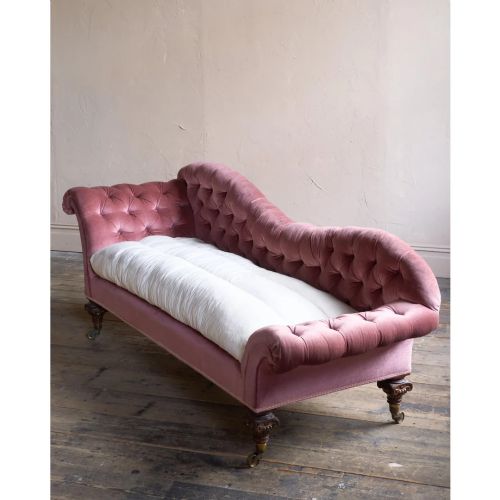
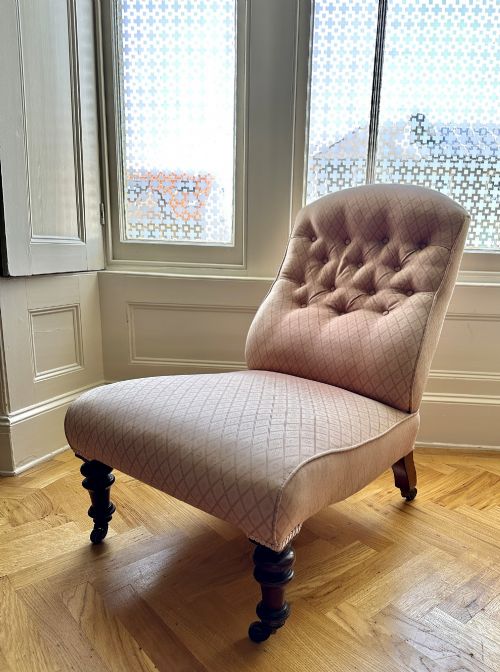
A rose pink lounge chair encompasses various seating forms designed for comfort, appearing primarily across nineteenth-century and early twentieth-century periods. These pieces span standard armchairs, slipper chairs, and chaise longues.
Materials and construction
Frames are built using traditional hardwoods such as mahogany and walnut, paired with visible metal elements like brass and iron back supports. Upholstery relies heavily on velvet and various woven fabrics.
Joinery and carving techniques reflect the period of origin, incorporating structural elements such as ionic column legs and carved wooden details alongside deep button back upholstery.
Listings incorporate nineteenth-century Victorian pieces alongside Edwardian and 1930s designs, utilising walnut, mahogany, velvet, and brass.
Assessing quality and craftsmanship
Quality rests in the integrity of the hardwood frame and the depth of the carved woodwork. Superior examples exhibit refined proportions and careful joinery beneath the upholstery.
The execution of traditional details, from button backs to carved walnut supports, distinguishes standard production pieces from finer workshop outputs.
Howard and Sons·Holland and Sons
The Rose Pink Lounge Chair Glossary
- Slipper chair
- A low-seated upholstered chair originally designed for a bedroom or dressing room. These chairs lack arms and sit close to the floor.
- Chaise longue
- An upholstered sofa shaped like a chair with a long seat large enough to support the legs. Originating in French furniture, it combines seating and reclining functions.
- Button back
- An upholstery style where depressions are formed in the padding by pulling buttons tight through to the frame. This creates a tufted geometric pattern.
- Spoonback
- A chair back shaped like the bowl of a spoon, featuring a padded centre surrounded by a carved wooden rim typical of mid-nineteenth-century seating.
Rose Pink Lounge Chair: Frequently Asked Questions
What periods do these chairs represent?
The available seating spans the nineteenth century, including Victorian and Edwardian eras, alongside early twentieth-century decades like the 1920s and 1930s.
Craftsmanship and frame styles shift subtly across these decades, moving from ornate carved walnut frames to simpler upholstered forms.
How do slipper chairs differ from armchairs?
Slipper chairs sit lower to the ground and typically feature armless designs intended originally for dressing rooms. Standard armchairs offer higher seats and enclosed sides designed for general living spaces.
Both forms utilise similar textile coverings and padding techniques depending on their manufacturing date.
What woods were used for the frames?
Cabinet makers utilised hardwoods such as mahogany and walnut for structural stability and visible decorative elements. Iron and brass also appear in specific supportive components.
These materials ensure the structural longevity of the seating across generations of use.
What is a chaise longue sofa?
A chaise longue combines an armchair with an extended seat, creating a piece intended for reclining. Historical examples often incorporate decorative woodwork like ionic column legs.
They serve as statement pieces in larger drawing rooms and studies.