
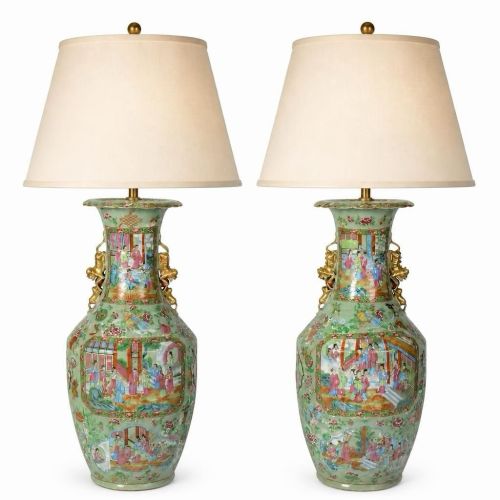
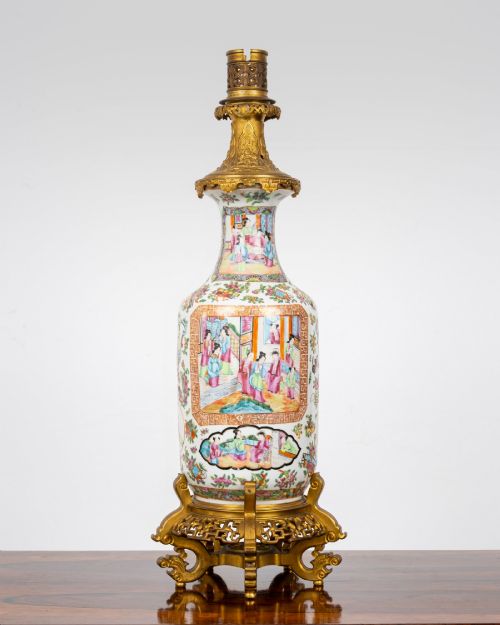


Rose Medallion Vase Lamps
Rose medallion vase lamps bring vibrant Canton porcelain and ornate mounts together, lighting a room with rich nineteenth-century colour.
Rose Medallion Vase Lamps
Rose medallion vase lamps combine nineteenth-century Chinese export porcelain with functional lighting forms. These pieces typically take the shape of table lamps created from decorative vases.
The objects stem from the nineteenth century, including Qing dynasty periods and early twentieth-century examples. Most available pieces originate from Canton or Japanese workshops.
Buyers encounter single lamps alongside balanced pairs suited for placement on side tables or consoles. The forms range from standard decorative vases to large mounted table lamps.
Materials and Techniques
Potters shaped these bodies from fine porcelain before applying intricate enamel decoration by hand. Artisans utilised rich palettes dominated by pinks and greens alongside gilt detailing.
Metalworkers fitted many porcelain bodies with brass, ormolu, or gilt bronze mounts to secure electrical fittings and stability. Selected examples incorporate hardwood elements into their structural design.
Listings feature porcelain, brass, ormolu, and gilt bronze across nineteenth-century and early twentieth-century periods.
Variations in Quality
Quality rests upon the precision of the hand-painted enamel work and the complexity of the figural panels. Finer examples display meticulous brushwork across every medallion without crowding.
The character of the metal mounts influences the overall standard of the piece. Heavy cast ormolu and solid brass mountings indicate superior workmanship compared to simpler hardware.
The Rose Medallion Vase Lamps Glossary
- Rose Medallion
- A style of Chinese export porcelain featuring panelled scenes of figures, birds, and flowers enclosed by pink enamel borders. This decoration defines the primary aesthetic of these lamps.
- Canton
- A major Chinese port and manufacturing centre where much of this export porcelain was decorated and shipped to Western markets. Pieces from this region often show characteristic floral and figural compositions.
- Ormolu
- Gilded bronze or brass applied as decorative mounts to furniture and porcelain objects. It provides a bright metallic contrast to the painted ceramic body.
- Famille Rose
- A broad ceramic category encompassing Chinese porcelain decorated with an opaque pink enamel palette. Rose medallion forms a distinct subgroup within this wider tradition.
- Chinoiserie
- European artistic styles reflecting Chinese motifs and decorative techniques. This aesthetic influenced how these lamps were integrated into Western interiors.
Rose Medallion Vase Lamps: Frequently Asked Questions
How do I date my rose medallion vase lamp?
Examine the porcelain body and the style of the hand-painted enamel decoration for clues to its age. Nineteenth-century examples typically display distinct Canton characteristics and traditional Qing dynasty motifs.
Inspect any metal mounts or wiring components for additional period indicators. Ormolu and brass fittings often reflect nineteenth-century manufacturing methods.
Are these lamps originally wired?
Most nineteenth-century vases were originally created as decorative vessels rather than lighting. They were converted into lamps at later dates to suit modern interiors.
Conversion methods vary between pieces, with some retaining older brass or bronze hardware while others feature updated electrical components.
How should I clean my lamp?
Dust the porcelain body gently with a soft, dry cloth to prevent accumulation. Avoid harsh chemical cleaners that might damage the delicate enamel and gilt decoration.
Clean metal mounts sparingly using a dry cloth or appropriate metal polish applied away from the ceramic surface. Take care around vintage wiring and shade fittings.
Can I replace the fabric shade?
Fabric shades can be swapped to match your interior decor scheme. Ensure any replacement shade matches the proportions of the porcelain vase base.
Check the harp and fitter type before purchasing a new shade to guarantee correct compatibility. Silk and fabric materials are common choices for these traditional fixtures.