


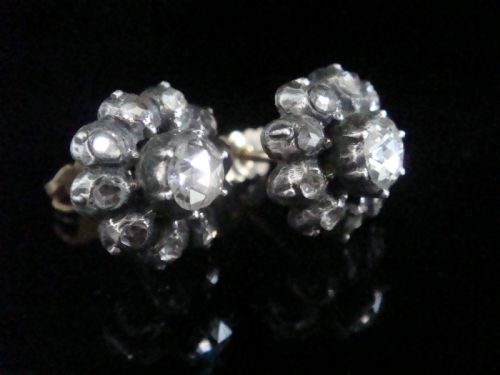
Rose Cut Diamond Cluster
Rose cut diamond cluster pieces bring together antique gemstones and intricate metalwork from the Georgian, Victorian, and Edwardian eras.
Rose Cut Diamond Cluster
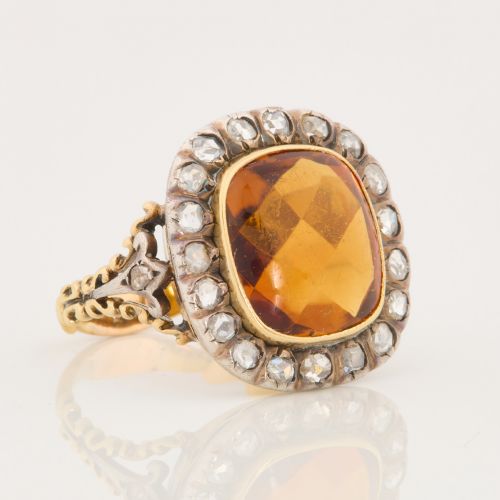
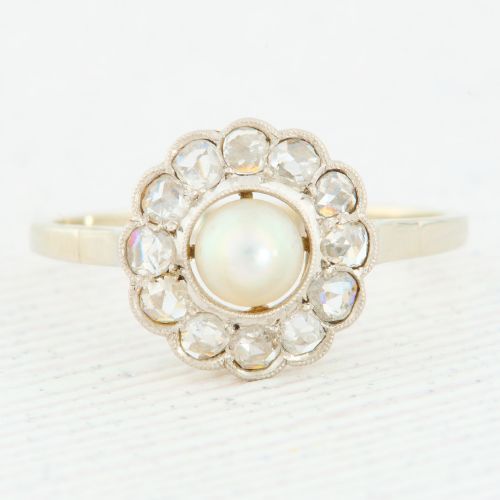
A rose cut diamond cluster comprises a central stone or grouping surrounded by smaller gems, frequently arranged as rings, earrings, pendants, and brooches. The forms span multiple historical periods, with Victorian and Edwardian examples appearing frequently alongside Georgian, Art Deco, and mid-century items.
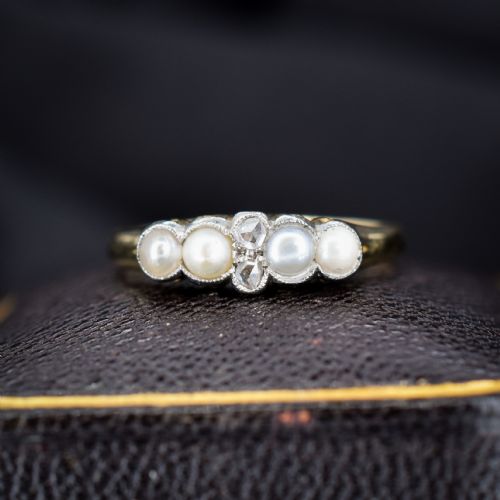
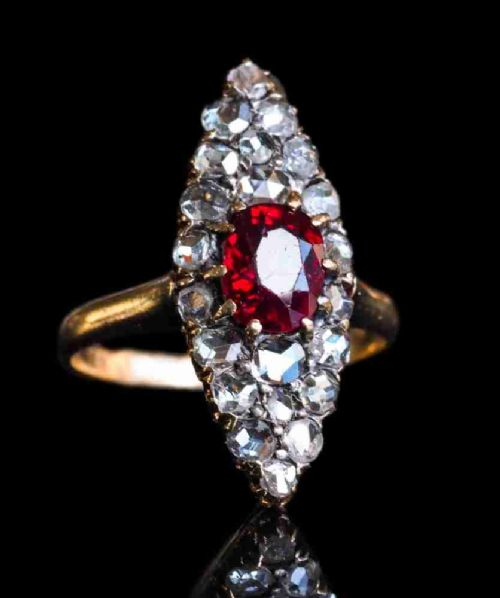
Makers often paired rose cut diamonds with coloured gemstones such as sapphires, rubies, emeralds, turquoise, opals, and natural pearls. These combinations create varied floral, geometric, and cluster motifs that reflect the prevailing aesthetic of each distinct era.
How They Were Made
Craftsmen utilised gold in 15ct and 18ct yellow or white variants, alongside silver and platinum, often combining silver and gold in earlier pieces to highlight white stones. Rose cut diamonds feature flat bases and faceted domes, reflecting light with a soft lustre distinct from modern brilliant cuts.
Jewellers set stones into closed or open-backed foils and metal settings by hand, incorporating delicate details such as silver-topped gold work, granulation, and engraved bands.
What Varies in Quality
The standard of execution depends on the symmetry of the stone arrangement and the fineness of the metalwork, where hand-beaten settings and secure claw or collet work elevate the piece. The choice and matching of secondary gemstones, whether unheated sapphires, natural pearls, or deep emeralds, heavily influence the overall coherence of the design.
Condition plays a part in desirability, particularly the retention of original foiled backs, untouched stone facets, and the integrity of antique shanks or brooch fittings without modern alterations.
The Rose Cut Diamond Cluster Glossary
- Rose cut
- A historic diamond cutting style featuring a flat base and a domed crown with triangular facets. This cut predates modern brilliant faceting and produces a gentle, glassy reflection.
- Cluster ring
- A ring design featuring a central gemstone encircled by a ring of smaller stones. This layout maximises visual impact and combines different gem varieties.
- Silver-topped gold
- A mounting technique where silver is applied to the front of a gold piece to provide a bright white background for diamonds. This method was common in Georgian and Victorian jewellery before platinum became widely used.
- Cabochon
- A gemstone shaped and polished with a smooth, convex surface rather than faceted edges. Opals, turquoises, and certain sapphires commonly appear in this form.
- Navette
- A boat-shaped gemstone or jewellery setting that tapers to points at both ends. This elongated silhouette is also known as a marquise shape.
Rose Cut Diamond Cluster: Frequently Asked Questions
How do I care for antique cluster jewellery?
Clean these delicate pieces gently with a soft dry cloth and avoid harsh chemical dips or ultrasonic cleaners. Many older settings utilise closed backs or foiled stones that can suffer permanent damage if exposed to water.
Store items individually in padded boxes to protect softer gems like opals and pearls from scratching against harder diamonds. Regular checks by a jeweller will ensure claws and settings remain secure.
What is the difference between rose cut and old mine cut diamonds?
Rose cut diamonds feature a flat bottom and a domed top covered in triangular facets, possessing an understated, translucent glow. Old mine cut stones are deeper with a cushion outline, small table, and substantial culet facets that capture light more dynamically.
Both cuts appear frequently in antique jewellery, sometimes within the same piece during transitional periods.
How can I date my cluster ring?
Examine the metal types, mounting styles, and overall silhouette to determine the likely period of origin. Georgian pieces often feature silver-topped gold with closed-back settings, while Victorian and Edwardian items introduce varied claw work, platinum elements, and natural pearl accents.
Assay marks, hallmarks, and specific gemstone combinations further narrow down the decade of manufacture.
Are these pieces suitable for daily wear?
Many antique cluster rings and earrings can be worn regularly provided they receive gentle treatment and professional maintenance. Softer materials like turquoise, opal, and pearls require extra care to prevent impact damage or moisture exposure.
Consider reserving delicate Georgian or high-profile Victorian items for special occasions to preserve their historic settings.