


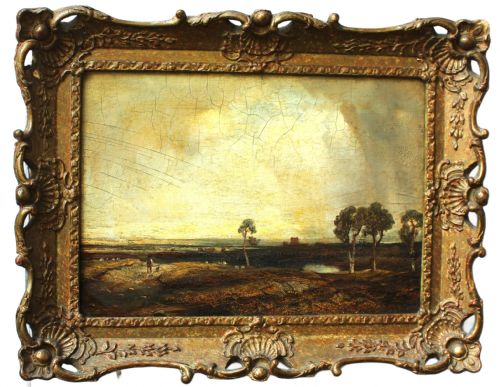

Romanticism Landscape Painting
A romanticism landscape painting captures sublime natural scenery and atmospheric moods through expressive brushwork.
Romanticism Landscape Painting
A romanticism landscape painting brings dramatic skies, pastoral scenes, and evocative ruins into focus. These works draw heavily upon nineteenth-century aesthetics, encompassing British and continental traditions.
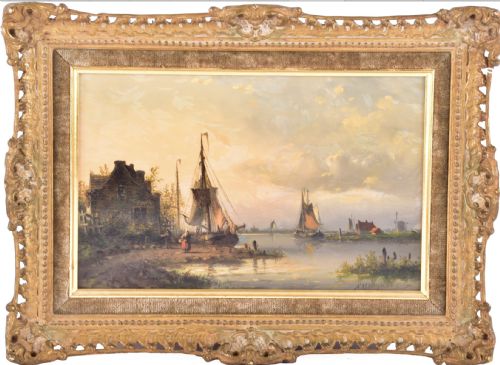
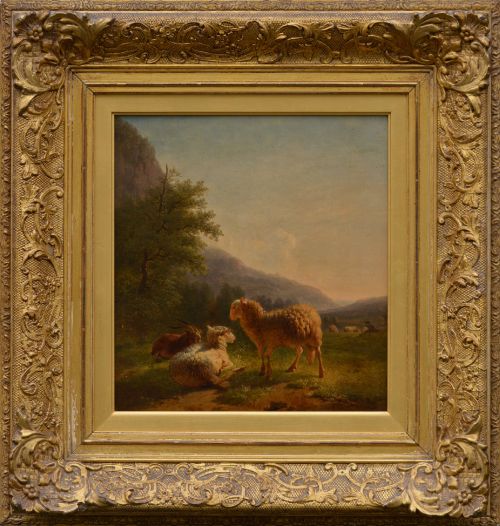
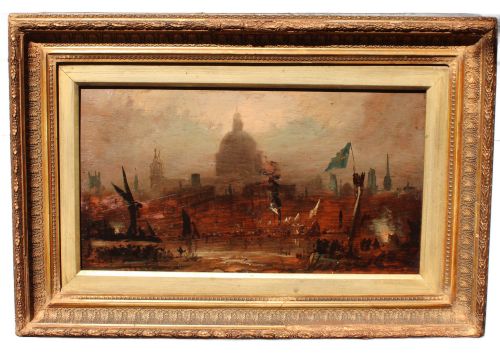
Buyers encounter oil paintings on canvas and board alongside delicate watercolour paintings. Many pieces depict riverscapes, coastal views, and mountainous terrain with figures or animals set within vast natural settings.
The selection ranges from intimate studies to grand framed artwork from the Georgian era through to the late nineteenth century. Scenes often channel the manner of notable painters or capture specific historic landscapes.
Materials and technique
Artists primarily applied oil paint to stretched canvas or wooden board, building rich textures and deep tones. Watercolours on paper or gouache capture lighter, more translucent atmospheric effects.
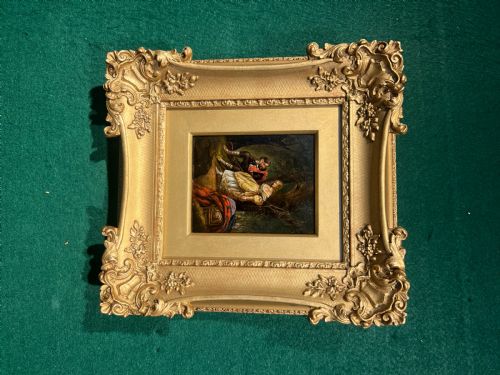
Many works retain their period frames constructed from wood, gesso, and giltwood adorned with gold leaf. These frames complete the presentation of the fine art pieces.
Watch for the solitary dog or wandering sheep keeping quiet company beneath an expansive nineteenth-century sky.
What varies in quality
The sophistication of the handling separates proficient regional works from exceptional compositions by recognised masters. Mastery over light, shadow, and expansive skies dictates the visual power of the canvas.
The preservation of the original paint surface and the integrity of the period frame influence the standing of an individual artwork. Finer examples retain their original pigments without heavy overpainting.
Eugène Verboeckhoven·George Hilditch·Augustus Jules Bouvier·Samuel Palmer·John Constable·William Collins RA·Karel Frans Philippeau·Ludwig Hermann·Alexandre Decamps·John Frederick Tennant·Peter de Wint
The Romanticism Landscape Painting Glossary
- Oil on canvas
- Pigments bound in a drying oil applied to a woven fabric support stretched over a wooden frame. This medium allowed artists to achieve rich colour depth and gradual tonal transitions.
- Giltwood
- Wood carved and coated with gold leaf or metallic powder for decorative effect. It frames and elevates nineteenth-century paintings.
- Gouache
- An opaque water-based paint featuring pigment mixed with a binding agent and white filler. It produces solid matte areas of colour in works on paper.
- Pastoral
- A genre of art depicting rural life, shepherds, and peaceful countryside scenes. These compositions often evoke an idealised harmony between humanity and nature.
- Waterscape
- A painting dominated by the representation of bodies of water such as rivers, lakes, or coastal quays. These subjects allow artists to explore shifting reflections and atmospheric light.
Romanticism Landscape Painting: Frequently Asked Questions
What defines a romanticism landscape painting?
These works focus on emotional response, sublime nature, and dramatic light effects rather than strict topographical accuracy.
Artists utilised expressive brushwork to evoke awe regarding mountains, ruins, and expansive skies.
How do I distinguish oil from watercolour?
Oil paintings utilise heavy pigments on canvas or board with visible texture and gloss.
Watercolour paintings appear on paper under glass, offering softer washes and translucent qualities.
Where were these landscape artists active?
The works originate from British, Dutch, German, and Italian schools across the nineteenth century.
Creators travelled extensively across Europe to capture picturesque ruins, rivers, and coastal scenes.