


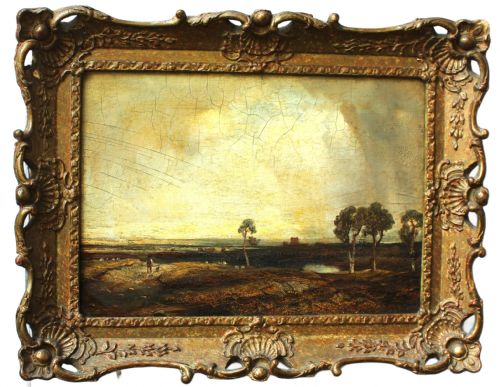

Romanticism Landscape Artwork
Romanticism landscape artwork captures sweeping vistas, dramatic skies, and intimate pastoral scenes through expressive nineteenth-century brushwork.
Romanticism Landscape Artwork
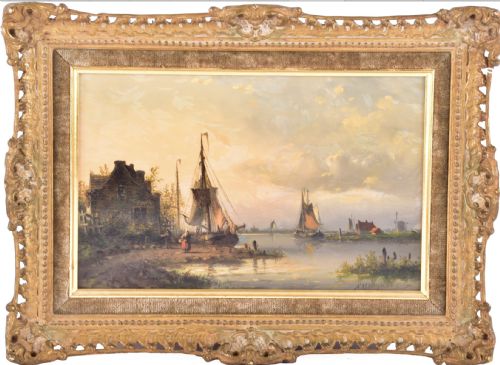
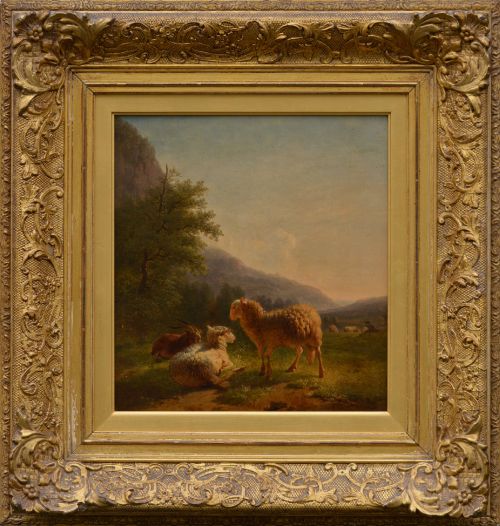
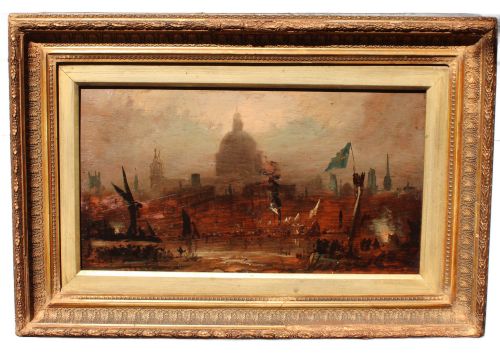
When you search for romanticism landscape artwork, you encounter painted scenes of rivers, mountains, coastal views, and architectural ruins created primarily during the nineteenth century. These works reflect a fascination with nature, emotional intensity, and picturesque settings ranging from quiet British waterways to dramatic continental mountain ranges.
The pieces appearing here span oils on canvas, oil on board, and watercolours, often housed in period frames of giltwood and gesso. You find both signed compositions by named painters and attributed works in the manner of prominent schools.
Most examples date from the Georgian era through to the late nineteenth century, capturing pastoral gatherings, maritime activities, and solitary figures dwarfed by expansive skies. The variety encompasses intimate watercolours alongside substantial oil paintings meant for prominent wall display.
Materials and execution
Artists painted primarily with oil paint or watercolour upon prepared canvas, wooden panel, or heavy paper supports. Pigments were applied using varying brush techniques to build texture in skies, foliage, and water, capturing the atmospheric light characteristic of the period.
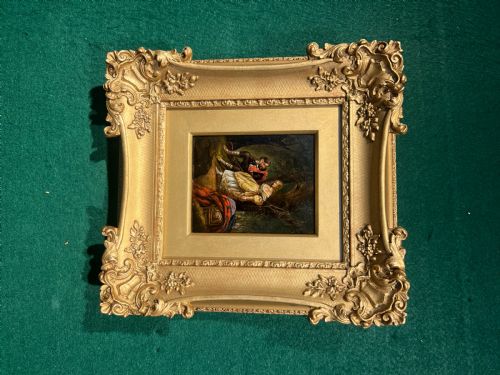
Frames play an integral role in the presentation, constructed from wood and finished with intricate gesso ornamentation, sometimes highlighted in gold leaf. These surrounds protect the edges of the canvas and complement the dramatic tones of the paintings within.
Frames featured across the selection utilise wood, gesso, and gold leaf materials dating from the Georgian period onward.
Factors of quality
Quality rests heavily on the handling of light, atmospheric depth, and the naturalistic rendering of figures and topography. Works that demonstrate confident brushwork and a compelling composition stand apart from stiffer, more formulaic student copies or unsigned decorative pieces.
The condition of the original surface and the integrity of the support material influence desirability. Paintings retaining their untouched varnish layers, stable canvas tension, and period-appropriate giltwood frames command greater attention from collectors.
Eugène Verboeckhoven·George Hilditch·Johannes Philippus Galjaard·Augustus Jules Bouvier·Samuel Palmer·John Constable·William Collins RA·Karel Frans Philippeau·Ludwig Hermann·Alexandre Decamps·John Frederick Tennant·Peter de Wint
The Romanticism Landscape Artwork Glossary
- Giltwood
- Wood carved and covered with a thin layer of gold leaf or metallic powder. This finish is typical of nineteenth-century picture frames.
- Gesso
- A plaster-like mixture applied to wooden frames as a base for gilding or moulding relief decoration. It allows for sharp detail in ornate corners.
- Oil on canvas
- Pigment mixed with drying oils applied to a stretched woven fabric support. This combination permits rich colour blending and textured impasto strokes.
- Watercolour
- Paint consisting of colour suspended in a water-soluble binder, traditionally used on paper. It offers luminous, translucent effects well suited to atmospheric landscape studies.
Romanticism Landscape Artwork: Frequently Asked Questions
What defines romanticism landscape artwork?
These works focus on emotional response to nature, featuring dramatic weather, expansive skies, ruined architecture, and picturesque pastoral settings.
Artists utilised expressive brushwork to evoke mood rather than mere topographical accuracy.
How should I hang these paintings?
Display them away from direct sunlight and fluctuating heat sources to protect the delicate oil or watercolour pigments and the wooden frames.
Ensure wall fixings securely support the weight of heavy giltwood and canvas assemblies.
Are these works signed by artists?
Many pieces bear signatures or inscriptions from nineteenth-century painters, while others remain attributed to specific schools or circles of well-known masters.
Unsigned works are frequently dated through style, material analysis, and framing techniques.
What framing is typically found?
Original pieces often retain period wooden frames finished with moulded gesso and gold leaf detailing.
These surrounds were designed to complement the theatrical lighting and atmospheric depth of the paintings.