
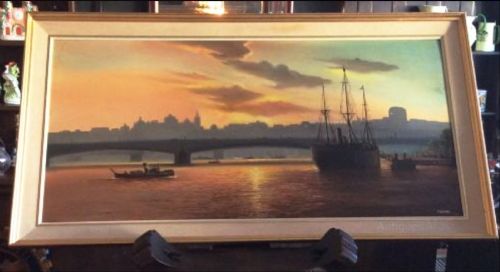
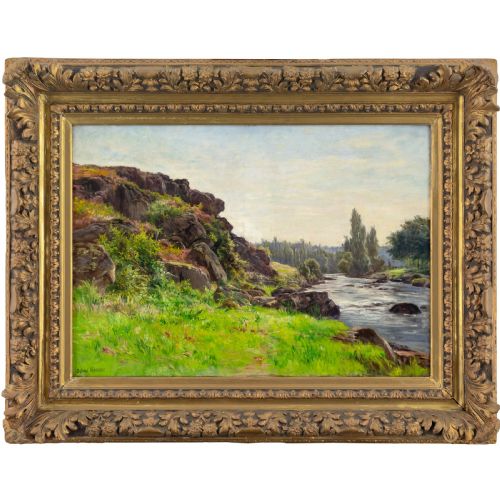
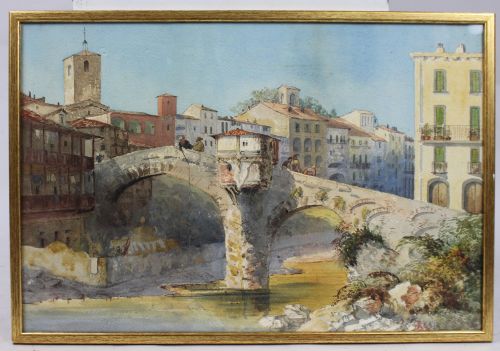
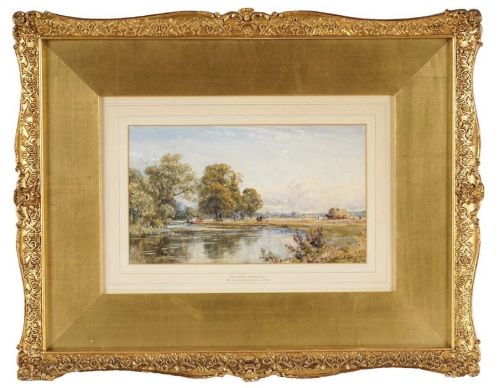
Gold Frame River Painting
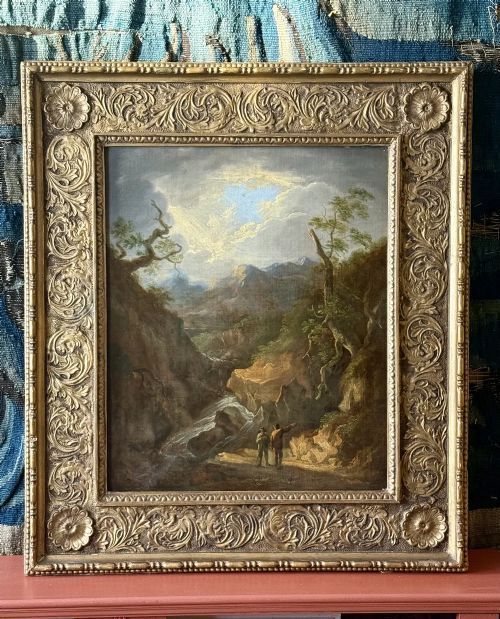
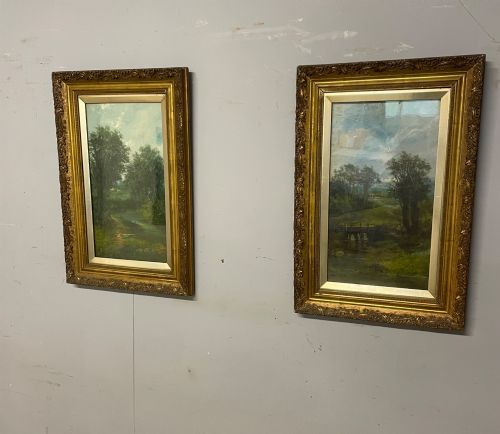
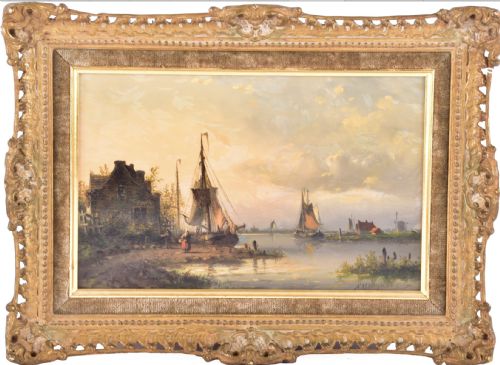
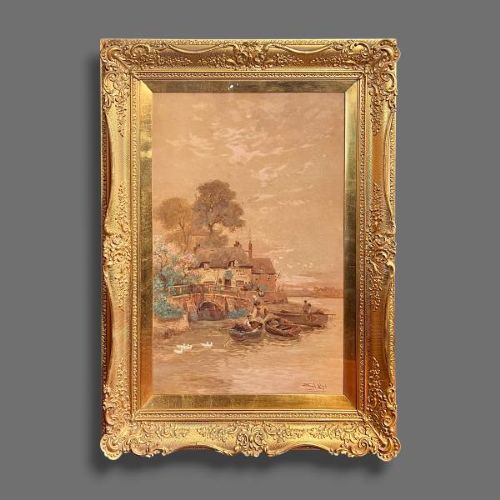
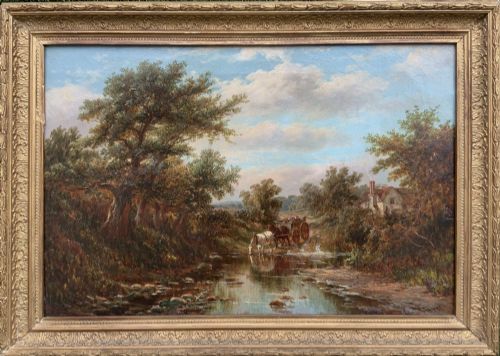
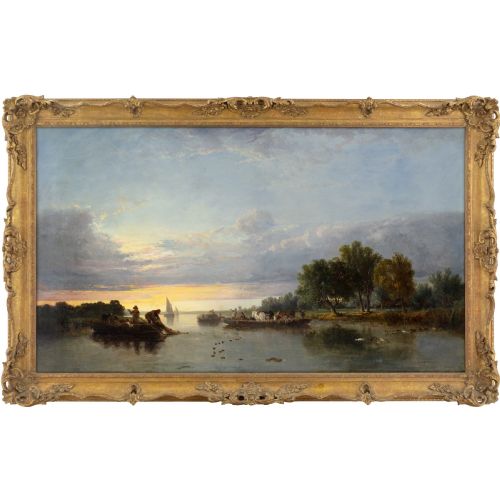
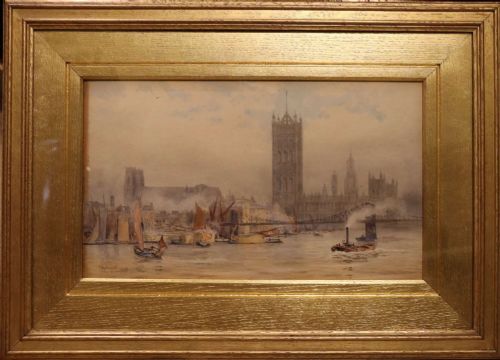
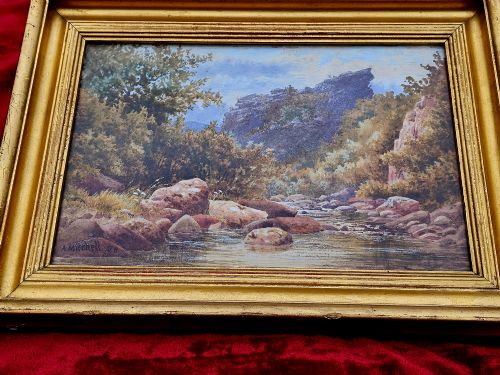
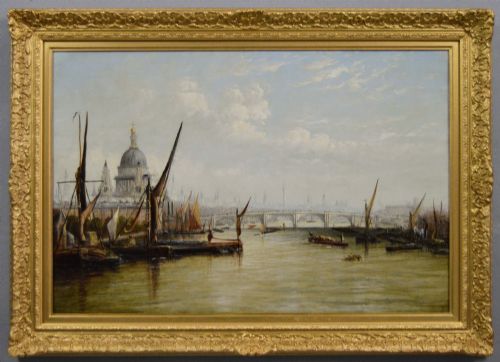
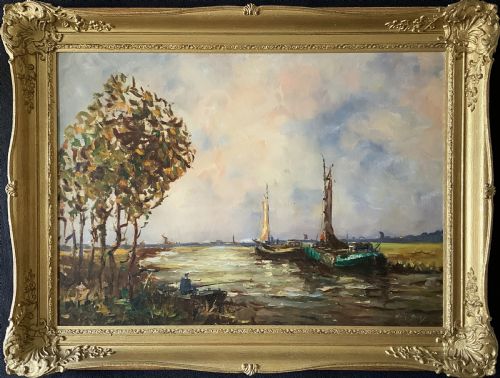
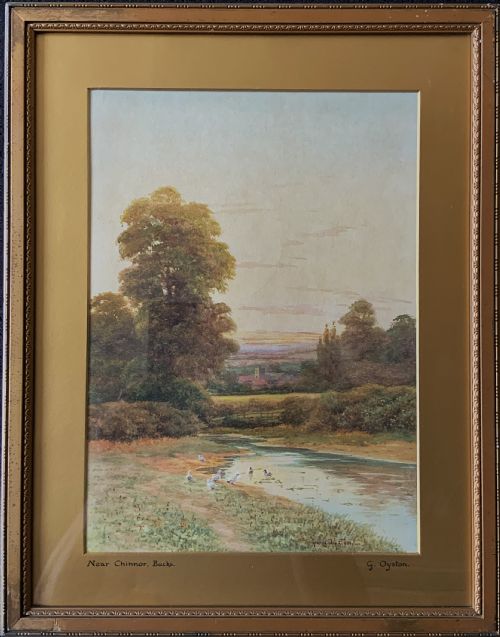
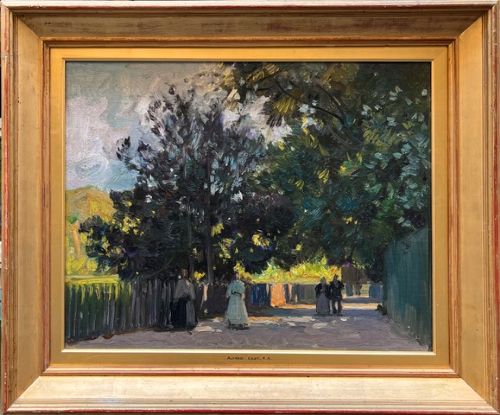
When you search for a gold frame river painting, you are looking at oil on canvas and watercolour works enclosed in giltwood and gesso mouldings.
Gold Frame River Painting
A gold frame river painting typically depicts nineteenth-century and early twentieth-century waterways, ranging from the River Thames in London to continental canals and French landscapes. These artworks appear as framed oil paintings, watercolours, and fine art panels executed by British, French, and Dutch schools.
The most common examples on this page date from the Victorian era and the broader nineteenth century, capturing pastoral river paths, industrial harbours, and quiet rural locks. Artists worked in styles from nineteenth-century realism to French and British impressionism, setting landscapes within ornate or simple gilt enclosures.
Materials and technique
Painters used oil paint on canvas or board, alongside watercolour on paper, applying pigments to capture the light and movement of water. Canvases were stretched over wooden frames and secured within housings built from wood, gesso, and applied gold leaf or metallic paint.
Mouldings were shaped from carved wood or built up with plaster gesso before gilding, creating the distinctive bright or burnished surrounds that frame these water scenes.
Several river views quietly conceal stray dogs, wandering sheep, and small children fishing alongside bustling industrial barges.
Variations in quality
Quality rests in the handling of light on water and the depth achieved in the perspective of the riverbanks, where skilled brushwork creates convincing atmosphere rather than flat imitation. Finer works display confident draughtsmanship and a balanced composition that anchors the viewer within the landscape.
The framing also dictates the standard of the piece, with original hand-carved giltwood mouldings offering greater integrity than later replacements or mass-produced plaster casts.
Francis Moltino·Willem Bos·George Oyston·Paul Desire Trouillebert·Henry H Parker·Thomas Baker·Charles William Wyllie·Alexandre Le Bihan
The Gold Frame River Painting Glossary
- Giltwood
- Wood that has been coated with gold leaf or gold paint. This finish creates the bright, reflective border characteristic of period art frames.
- Gesso
- A plaster mix of chalk and binder applied to wooden frames to form a smooth surface for gilding. It allows intricate relief patterns to be moulded into the surround.
- Impressionism
- An art movement focusing on transient effects of light and ordinary subject matter. Works in this style use visible brush strokes to capture the movement of water and atmosphere.
- Provenance
- The documented history of ownership of an artwork. It establishes the authenticity and origin of the painting.
- Seascape
- A painting depicting the sea, ships, or coastal views. Many examples on this page focus on tidal rivers and bustling ports.
Gold Frame River Painting: Frequently Asked Questions
How do I clean a gold frame?
Dust the moulding gently with a dry, soft-bristled brush to remove surface particles without disturbing the gilt surface. Avoid using water or chemical cleaners, which can strip the metallic leaf or soften the underlying gesso.
For stubborn grime, consult a professional conservator rather than attempting solvent cleaning at home. Older gilt finishes are fragile and easily damaged by modern cleaning products.
Are these paintings original?
The selection comprises original nineteenth and twentieth-century works painted directly by artists, rather than modern reproductions or prints. Each piece carries the distinct brushwork and material ageing consistent with its stated period.
Signatures, artist biographies, and period materials help substantiate the authenticity of individual works. Look for canvas texture and pigment cracking under close inspection to confirm age.
Where should I hang a river painting?
Position the artwork away from direct sunlight and damp environments, such as unventilated kitchens or bathrooms, to protect both the canvas and the gilt frame. Stable indoor temperatures prevent the wood and gesso from expanding and contracting.
Select a wall at eye level where natural ambient light can catch the gold frame without causing a persistent glare on the glass or varnished canvas.