

Rolled Top Writing Desk
A rolled top writing desk hides your papers behind a curved sliding cover, offering a tidy workspace with classic appeal.
Rolled Top Writing Desk
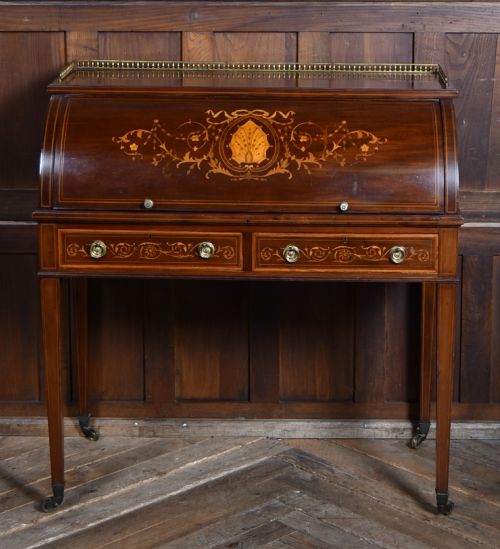
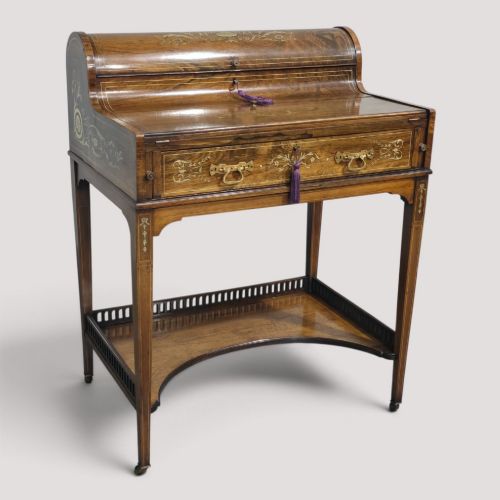
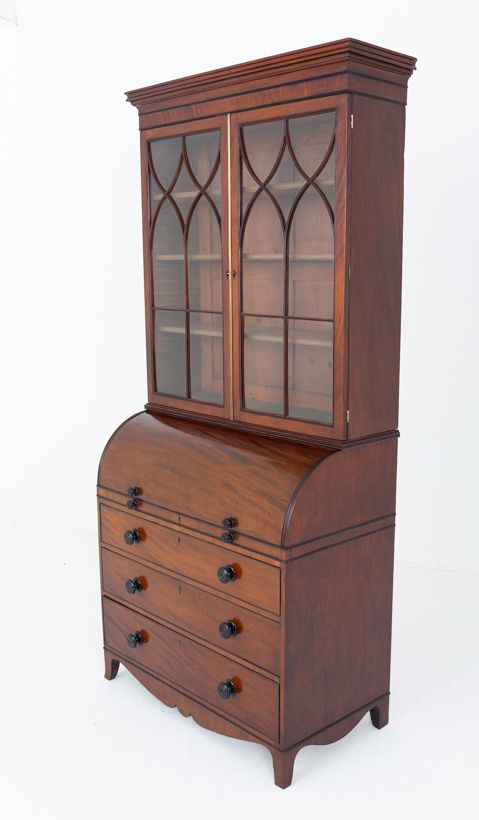
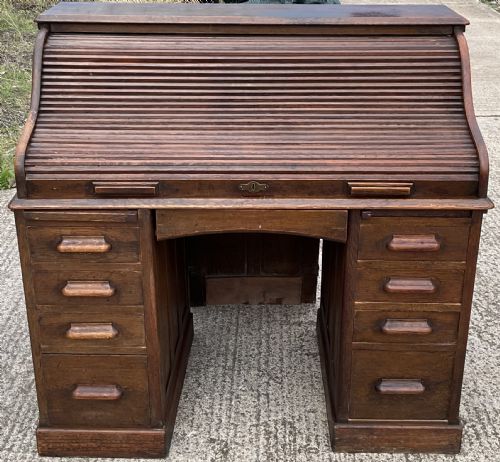
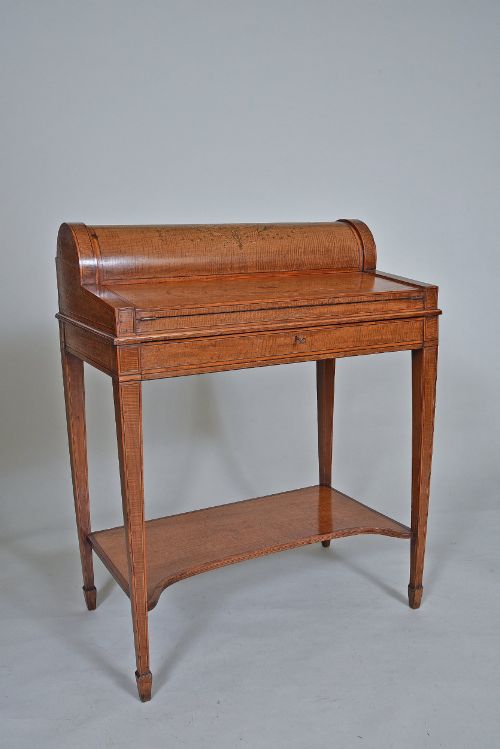
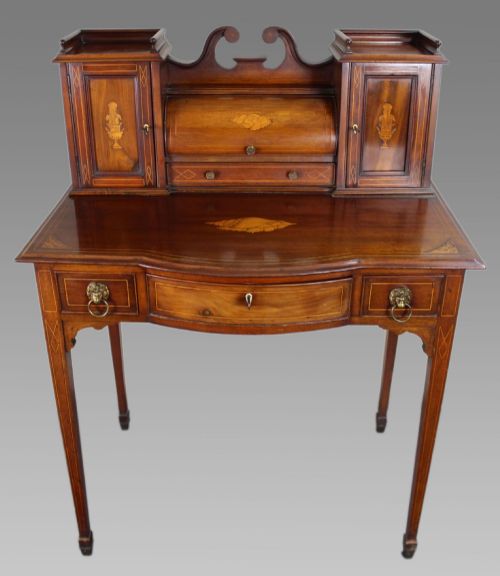
A rolled top writing desk combines a concealed writing surface with compartments for stationery, emerging in various period iterations on this page.
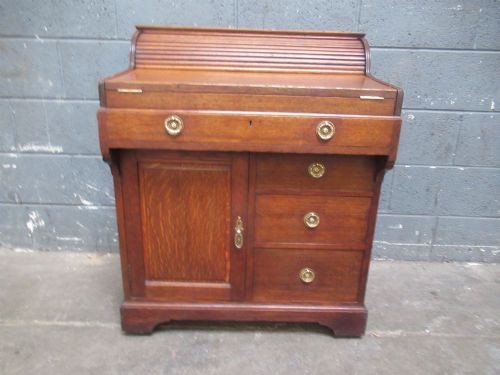
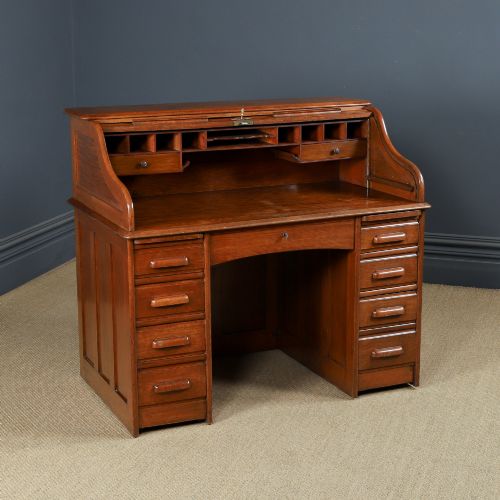
You will frequently encounter Edwardian and Victorian examples alongside Georgian pieces, spanning formats from compact oak desks to large walnut variants.
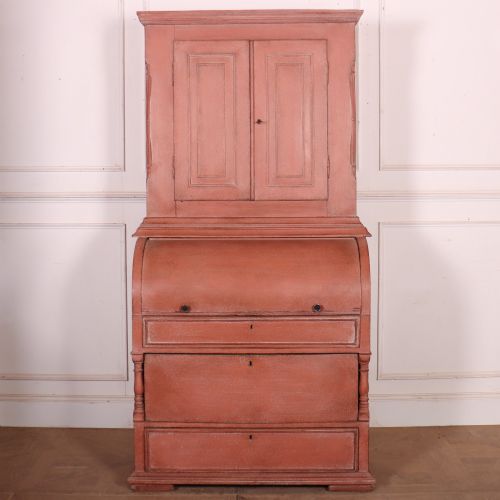
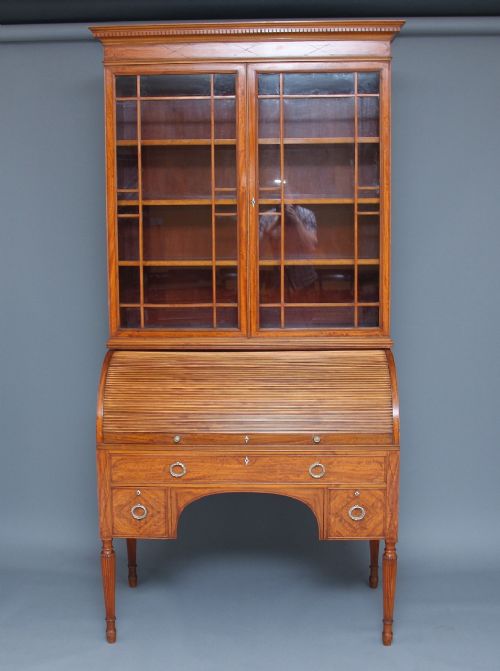
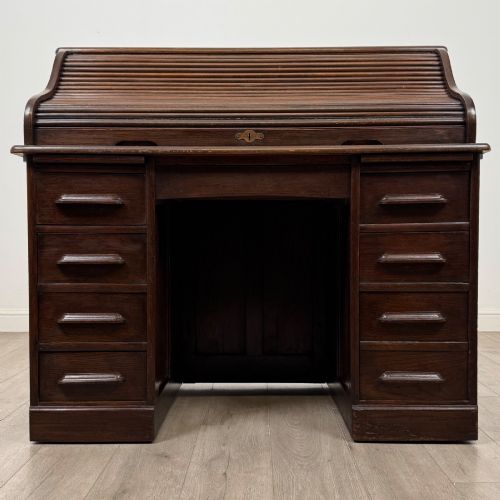
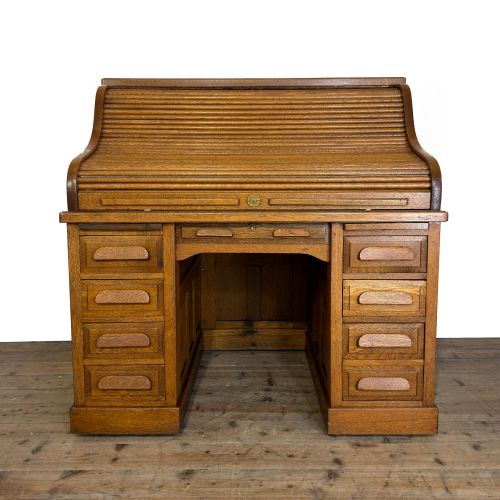
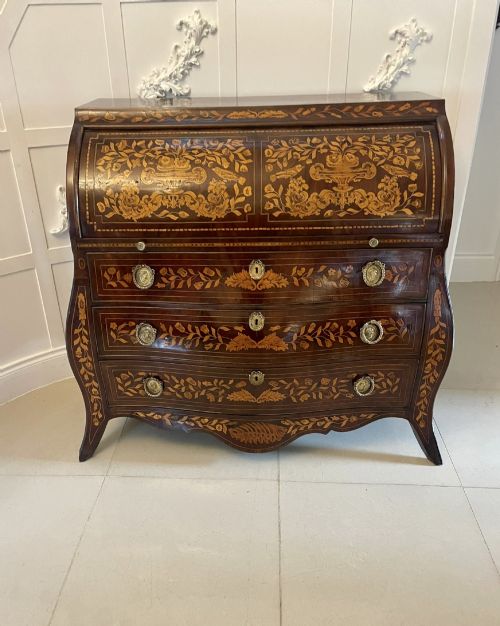
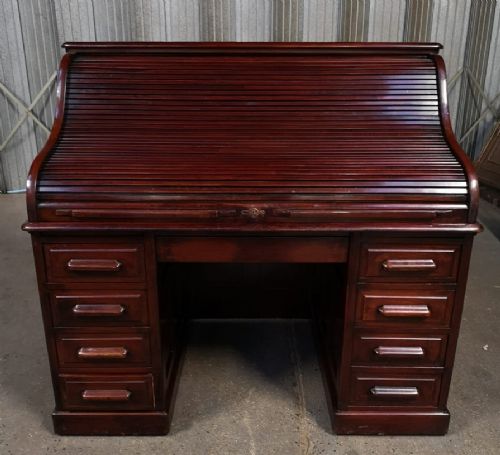
The selection ranges from free-standing pedestal desks to refined cylinder bureaux and bureau bookcases featuring tambour fronts or curved wooden covers.
Craftsmanship and distinction
The distinction between standard office pieces and high-end examples rests upon timber selection and the precision of the joinery in the sliding top.
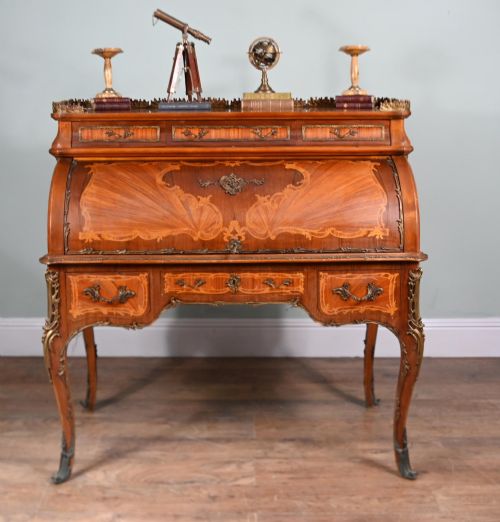
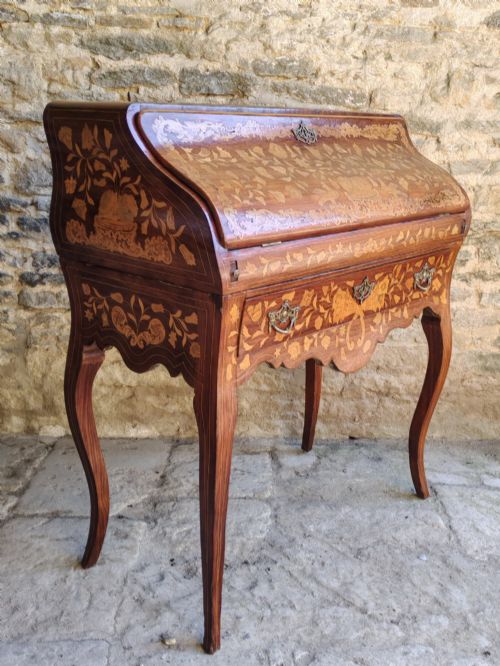
Fine items display meticulous parquetry, ormolu mounts, and subtle ebony inlay, whereas utilitarian office desks rely on sturdy, straightforward construction.
Rolled Top Writing Desk Retail Price Guide 2026
Typical asking prices for rolled top writing desk among the pieces listed under this phrase on Sellingantiques today, from the lower quarter to the upper quarter. They describe what is for sale here now, not the wider market.
Secret compartments inside pigeonholes often reward thorough exploration with hidden inkwells and tiny drawers.
Edwards & Roberts·Maple & Co. London·Tudor & Burrey
The Rolled Top Writing Desk Glossary
- Tambour
- A flexible shutter formed of narrow wooden strips glued to canvas, allowing the desk top to slide around a curved track.
- Cylinder bureau
- A writing desk featuring a quarter-circle solid wooden barrel that rolls back to reveal the writing surface and pigeonholes.
- Marquetry
- Decorative woodwork where pieces of different coloured veneers form floral or geometric patterns across the surface.
- Pedestal desk
- A heavy table-form desk supported by two banks of drawers rather than simple legs.
Rolled Top Writing Desk: Frequently Asked Questions
How do tambour desks work?
A tambour top consists of narrow vertical slats attached to a fabric backing, which allows the wooden curtain to slide smoothly around a concealed curved track.
This mechanism lets you pull the cover down to hide the writing surface and lock away your documents.
What is a cylinder desk?
Unlike slat-based tambour tops, a cylinder desk uses a solid curved wooden barrel that rotates backwards into the body of the furniture.
When pushed back, it often reveals an extendable writing slide along with pigeonholes and small drawers.
Where should I place my desk?
Many period examples are finished on all sides, allowing you to float them in the centre of a study rather than pushing them against a wall.
Ensure you have adequate clearance behind and above the moving top so the roll mechanism operates without obstruction.
How do I identify the period?
Look to the primary timber, hardware, and decorative motifs such as satinwood inlay or ormolu mounts to suggest whether a piece is Georgian, Victorian, or Edwardian.
Heavier oak examples often point towards Edwardian or late Victorian office production, while mahogany and satinwood frequently indicate earlier Georgian or Regency craftsmanship.