
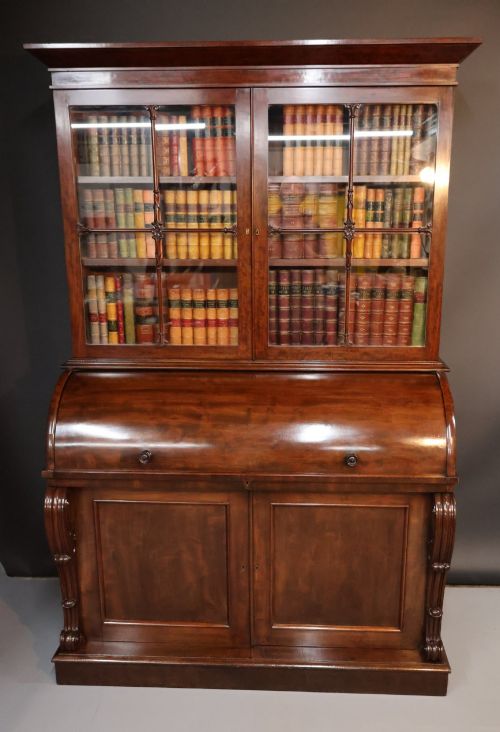
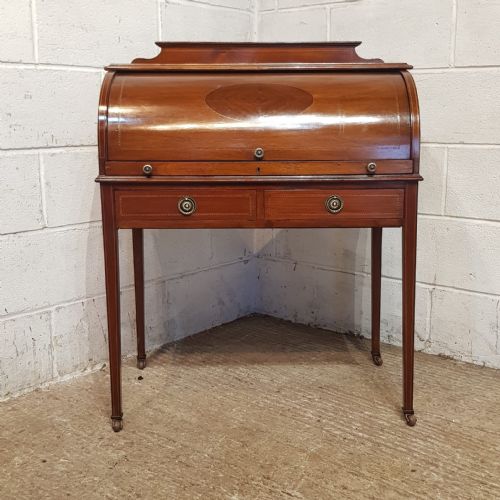
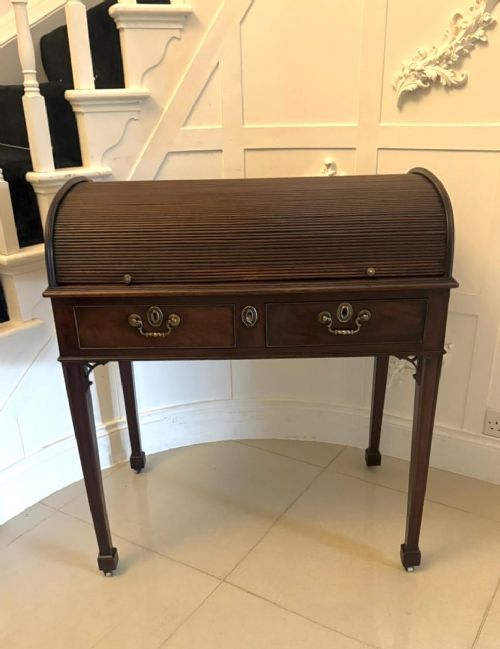
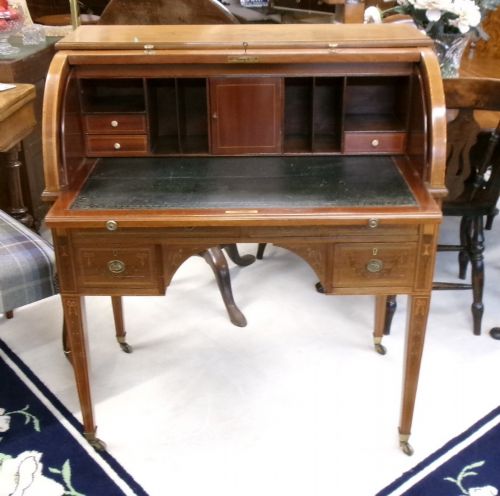

Roll Front Bureau
A roll front bureau brings architectural cleverness to the study, concealing papers behind a curving shutter of slatted wood or polished cylinder.
Roll Front Bureau
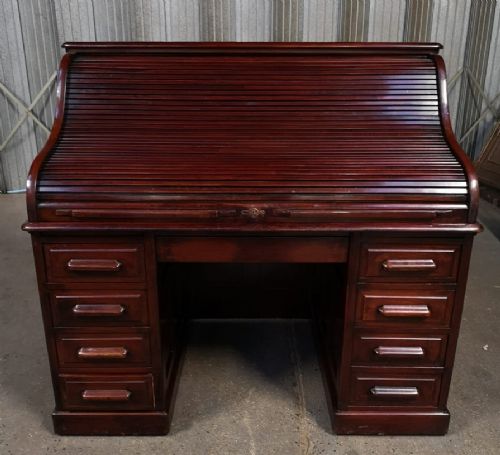
A roll front bureau is a practical writing desk featuring a sliding or revolving tambour shutter that encloses the interior writing surface and pigeonholes. When exploring this selection, buyers encounter pieces originating from the 18th century through to the Edwardian period and 1910.
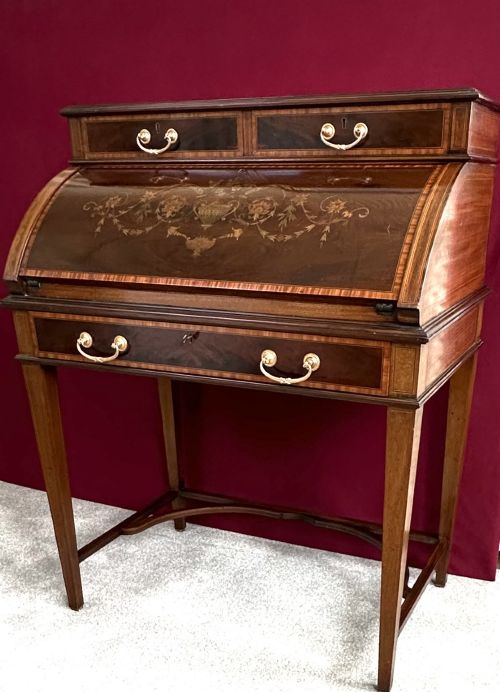
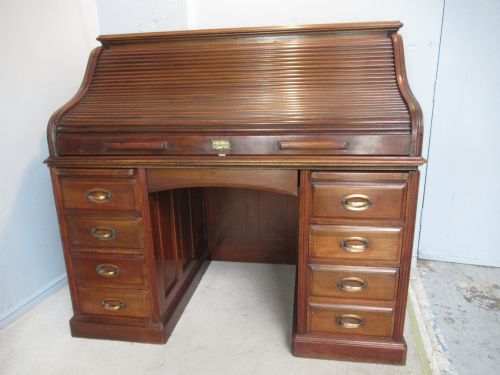
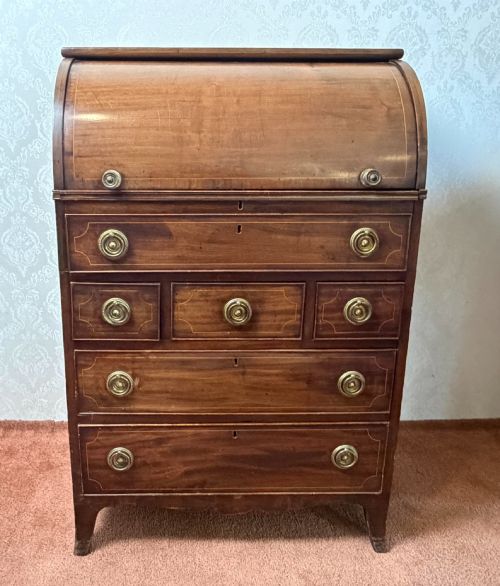
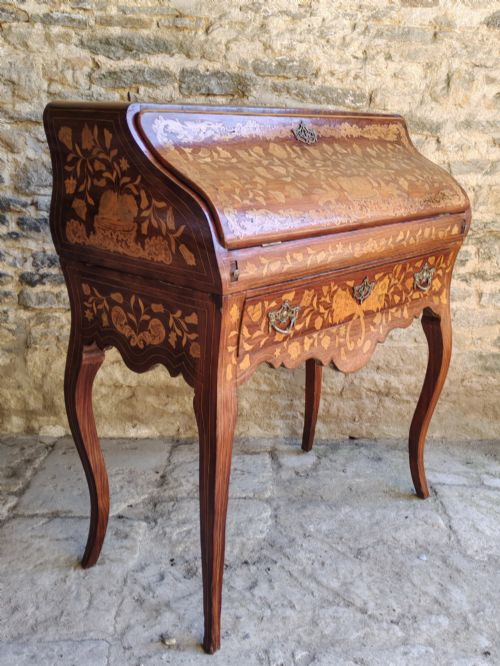
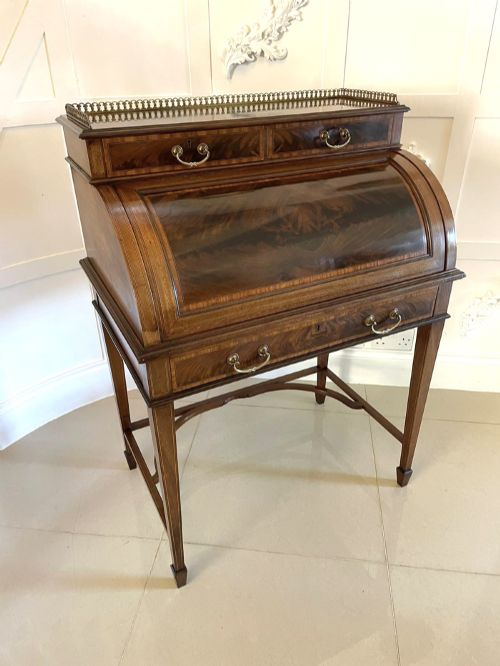
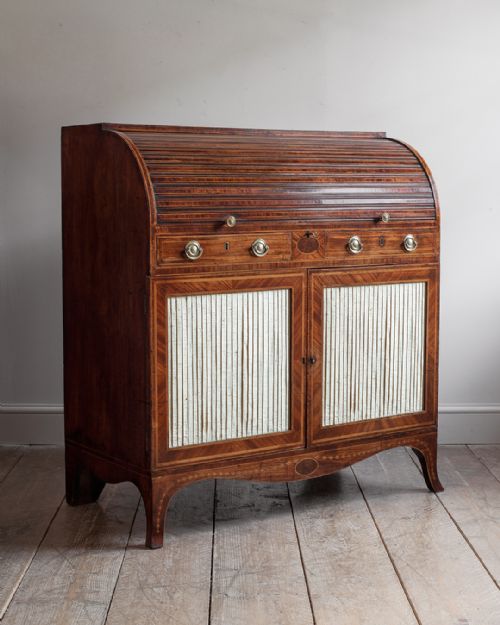
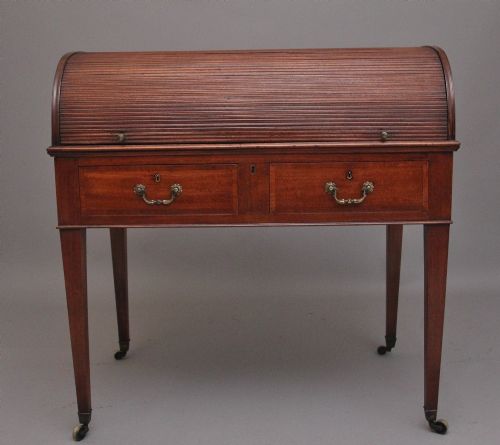
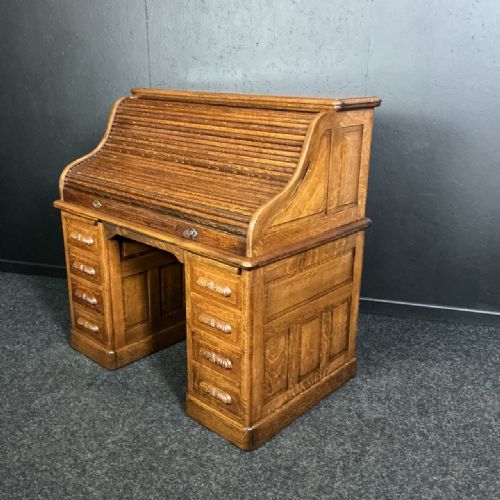
The most common forms on this page include mahogany pedestal desks with tambour tops, walnut cylinder desks, and inlaid Edwardian examples. Makers utilised various woods such as satinwood, oak, fruitwood, and partridgewood, often incorporating pull-out writing slides for additional workspace.
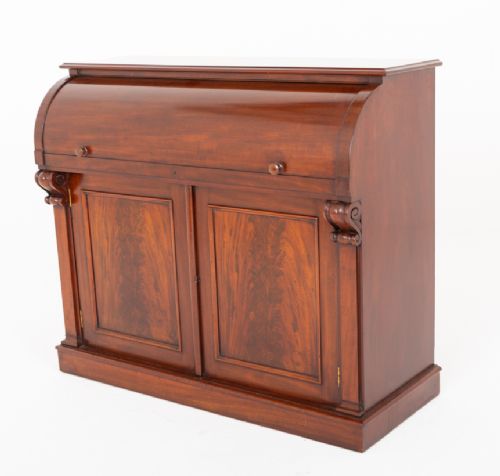
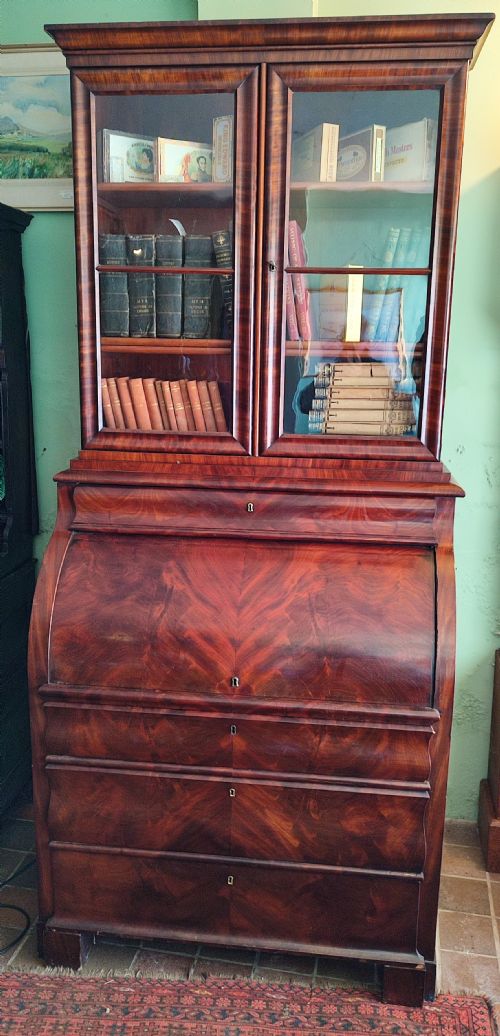
Cabinetmakers constructed these desks in several distinct regional and period styles, ranging from Georgian and George III designs to Dutch marquetry, Victorian, and Sheraton Revival pieces. Some grander examples extend upwards into bureau bookcases fitted with glass upper doors.
How they were made
Craftsmen built the curving roll fronts using either flexible tambour slats glued to a canvas backing or solid cylinder sections turned on a lathe. These wooden slats slide smoothly along routed grooves within the desk carcass to reveal the fitted interior.
Cabinetmakers applied choice veneers of mahogany, walnut, and satinwood over sturdy secondary timbers like oak, often embellishing surfaces with decorative brass hardware, leather writing inserts, and floral marquetry.
Listings feature roll front bureaux spanning the 18th century, Victorian era, and Edwardian period, constructed in mahogany, walnut, oak, and satinwood.
What varies in quality
Quality rests upon the precision of the joinery governing the roll mechanism, ensuring the tambour slats glide without binding or sagging in their tracks. Superior pieces maintain tight tolerances and smooth operation across the entire curve of the cylinder.
The choice of cabinet timber and the crispness of any inlaid marquetry or brass detailing elevate the standing of a desk. Finer examples display carefully selected grain figures and fully fitted internal drawers rather than simple pigeonholes.
Maple & Co·Edwards & Roberts·Boston Chair Company·Maples of London and Paris
The Roll Front Bureau Glossary
- Tambour
- Narrow strips of wood glued to a fabric backing to form a flexible shutter. This technique allows the desktop cover to curve around a track.
- Cylinder top
- A solid quarter-circle wooden drum that rotates on pivots to open the desk. It differs from a slatted tambour by using a single curved panel.
- Marquetry
- Decorative patterns formed by fitting contrasting veneers into a wood ground. Floral motifs and geometric banding frequently appear on Georgian and Dutch pieces.
- Bonheur du jour
- A light lady's writing desk with a small cabinet or shelving superstructure on top. These dainty pieces gained popularity during the 18th century.
Roll Front Bureau: Frequently Asked Questions
How do I maintain a tambour roll front?
Keep the wooden tracks clean and free from dust so the slats slide without resistance. Apply a light wax polish periodically to nourish the timber.
Avoid placing these desks in areas with excessive humidity or direct sunlight, which can cause the wooden slats to warp or bind within their channels.
What is the difference between a tambour and a cylinder desk?
A tambour desk uses many small horizontal wooden strips glued to canvas, allowing the shutter to bend around a tight radius. A cylinder desk uses a solid curved piece of wood that pivots on a fixed radius.
Both styles serve the same function of hiding the writing surface, but cylinder desks present a completely smooth, unbroken curve when closed.
Where were roll front bureaux typically used?
These desks served as private writing stations in domestic libraries, studies, and home offices. The lockable roll top allowed owners to secure sensitive correspondence and account books.
Larger pedestal versions functioned as heavy executive furniture, while lighter satinwood and mahogany variations suited drawing rooms and ladies' writing chambers.
How can I date an antique roll front bureau?
Examine the secondary timbers, construction joints, and hardware styles to determine the period of manufacture. Georgian pieces often feature hand-cut dovetails and rich mahogany, whilst Edwardian examples may show lighter satinwood inlays and machine-made fixings.
Makers' stamps or paper labels inside the drawers can also provide specific attribution to firms operating around 1900 or earlier.