




Rococo Walnut Writing Desk
A rococo walnut writing desk brings fluid curves and rich timber grain to a room, combining practical workspace with decorative artistry.
Rococo Walnut Writing Desk
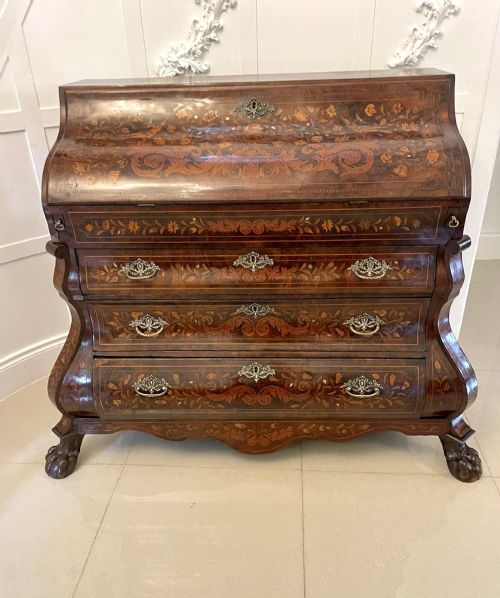
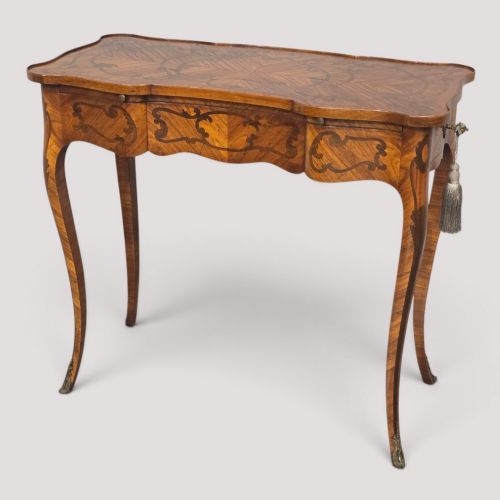
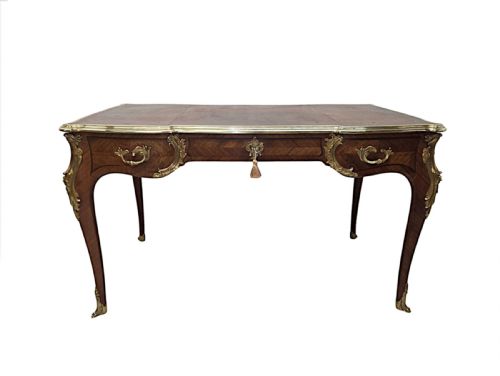
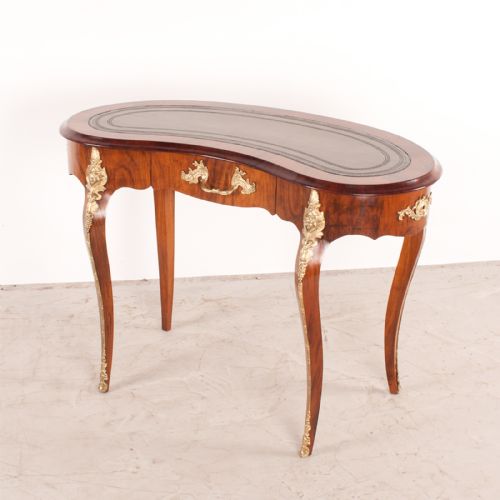
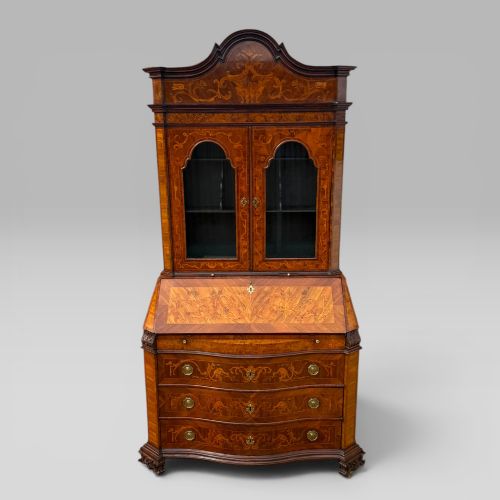
A rococo walnut writing desk encompasses items built across the eighteenth and nineteenth centuries, including bureau bookcases, bureau plat desks, and kidney-shaped writing tables. These pieces draw on Dutch, French, Italian, and Victorian revivals of the mid-eighteenth-century decorative movement. Surviving examples display the characteristic serpentine fronts and cabriole legs typical of the aesthetic.
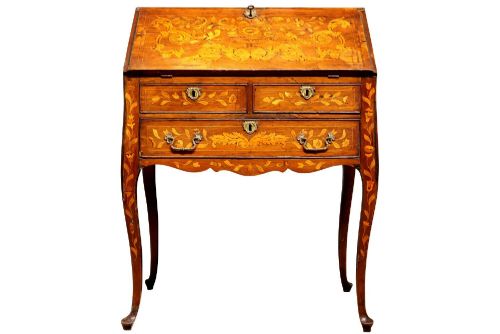
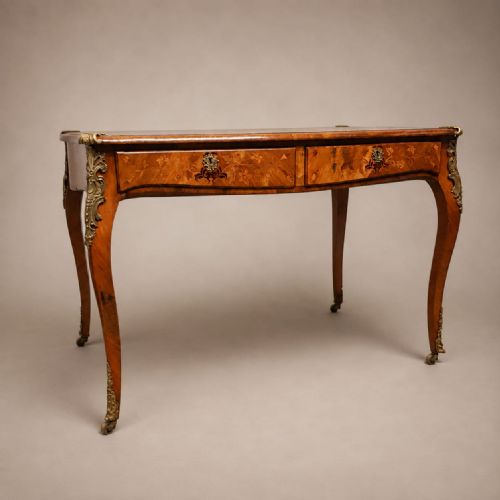
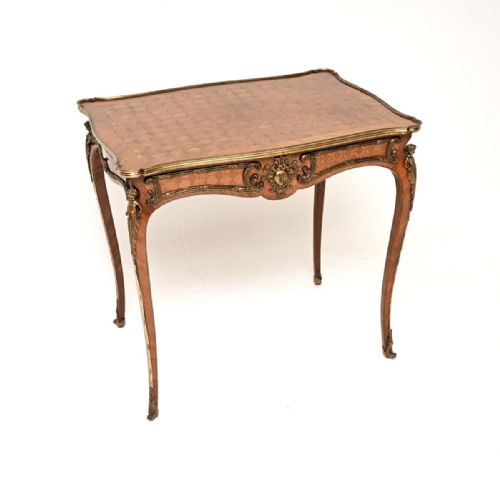
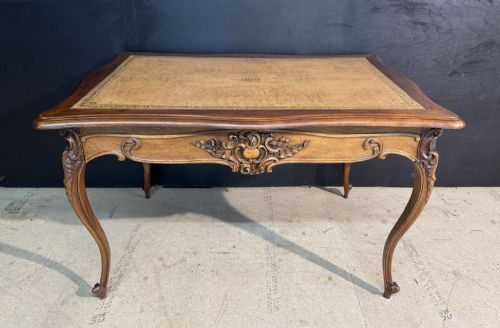
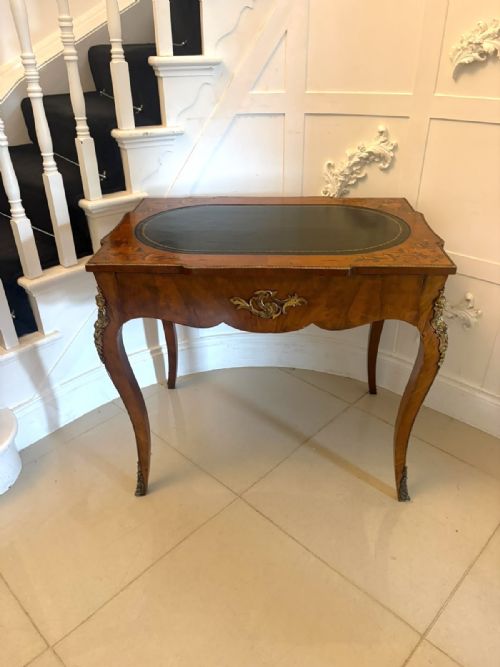
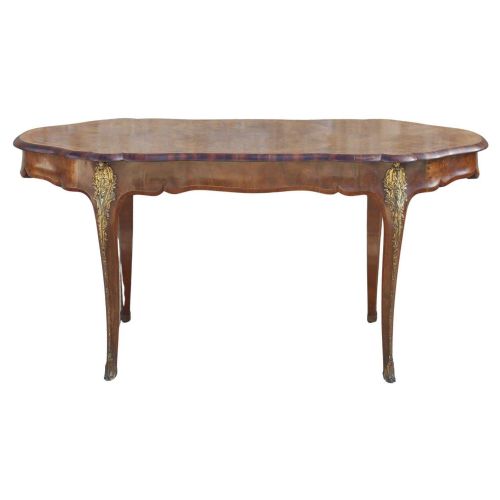
The pieces on this page range from compact French ladies' desks to large South German and Venetian bureau bookcases. Bureau forms predominate, alongside freestanding centre tables fitted with leather inserts and brass mounts. Walnut and burr walnut serve as the primary timbers across these varied desk types.
Judging the work
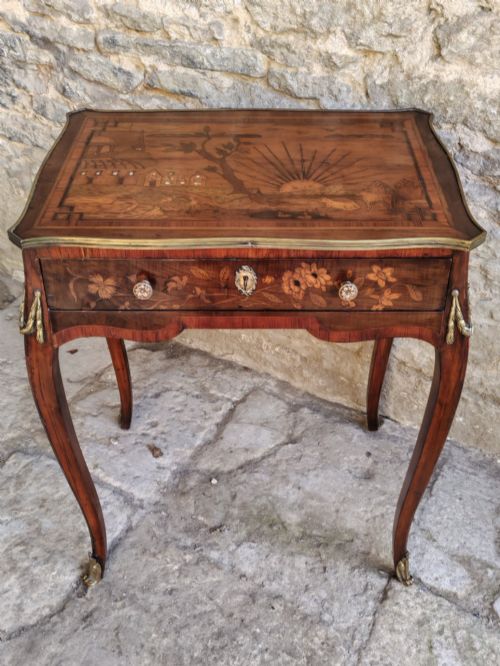
Quality rests upon the depth and intricacy of the timber veneers and the precision of the marquetry inlay. Pieces displaying carefully matched burr walnut grain and complex floral patterns executed in varied fruitwoods command attention. The crispness of the cast ormolu mounts and the fluidity of the carved cabriole legs further distinguish superior examples.
Construction methods such as the dovetailing of drawer linings and the integration of secondary woods indicate the standard of the workshop. Superior desks retain their original brass hardware, leather writing surfaces, and balanced proportions. The handling of the bombe curves and the alignment of inlay work demonstrate the maker's skill.
Secret compartments inside bureau fall fronts once hid love letters and small fortunes.
Edwards & Roberts·Gillows·Holland + Son
The Rococo Walnut Writing Desk Glossary
- Bureau
- A sloping desk with a hinged flap that opens to reveal internal pigeonholes and small drawers. Many examples rest on bracket feet or cabriole legs.
- Bureau Plat
- A freestanding writing table fitted with drawers beneath the top, originating in France. These tables often feature leather writing inserts and gilt-metal mounts.
- Marquetry
- Decorative patterns formed by inserting pieces of fine wood, veneer, and other materials into a veneer background. Floral motifs are common on Dutch and Italian pieces.
- Ormolu
- Gilded bronze used for decorative mounts on furniture. The technique involves applying a mercury-gold amalgam to cast bronze.
- Cabriole leg
- A furniture leg that curves outward at the knee and tapers inward toward the foot, mimicking animal limbs. This form is central to the rococo style.
- Bombe
- A bulging, outward-curving swell on the front and sides of a cabinet or bureau. This curved profile requires advanced woodworking skill.
Rococo Walnut Writing Desk: Frequently Asked Questions
How do I identify French rococo revival desks?
French rococo revival desks, produced mainly during the nineteenth century, feature asymmetric ornamentation, cabriole legs, and elaborate ormolu mounts. They often take the form of a bureau plat with a leather-lined top.
Cabinetmakers utilised walnut and kingwood veneers, sometimes incorporating parquetry patterns. The curves on these pieces reference the original Louis XV aesthetic.
Where were floral marquetry desks made?
Floral marquetry desks are strongly associated with Dutch and Italian workshops, particularly from the eighteenth century. Makers in cities such as Venice and centres in Holland produced bureau bookcases and tables decorated with elaborate inlaid flowers.
These pieces utilised contrasting fruitwoods and satinwood set into walnut grounds. The marquetry covers fall fronts, tabletops, and drawer fronts.
How should I care for a walnut writing desk?
Keep walnut furniture away from direct sunlight and heat sources to prevent the wood and veneers from drying out. Maintain a stable room temperature and humidity to protect antique timber and marquetry.
Dust the surface regularly with a soft, dry cloth. Avoid using harsh chemical polishes that can damage the antique finish and patination.