
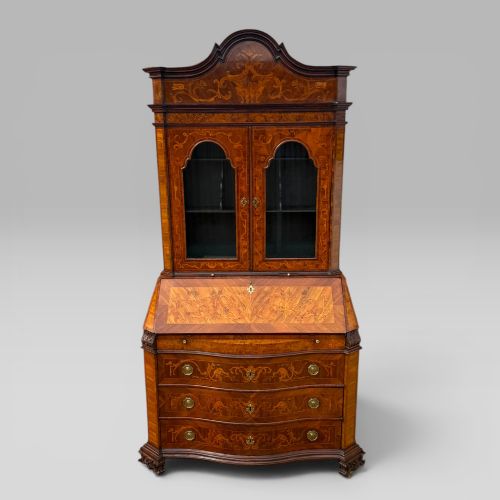


Rococo Walnut Secretary
A rococo walnut secretary brings rich cabinet-making into a room through serpentine forms and dark, figured timber.
Rococo Walnut Secretary
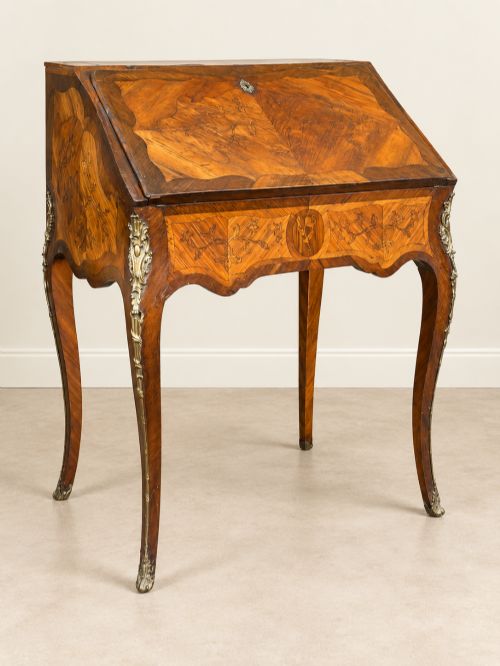
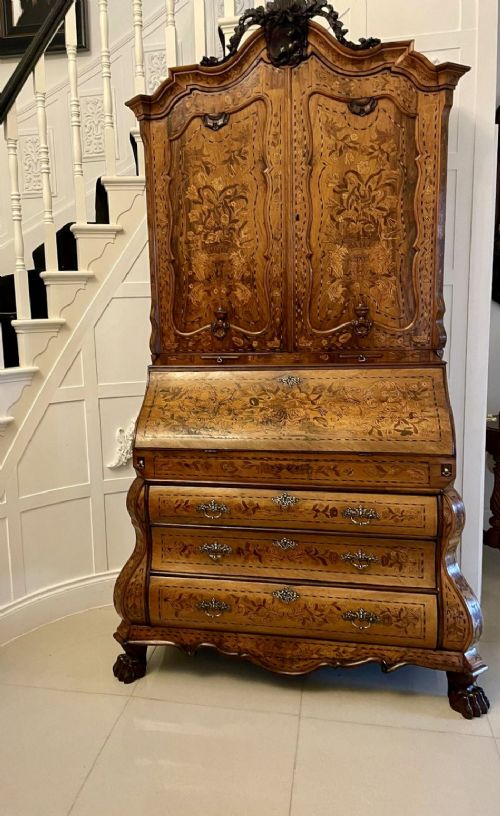
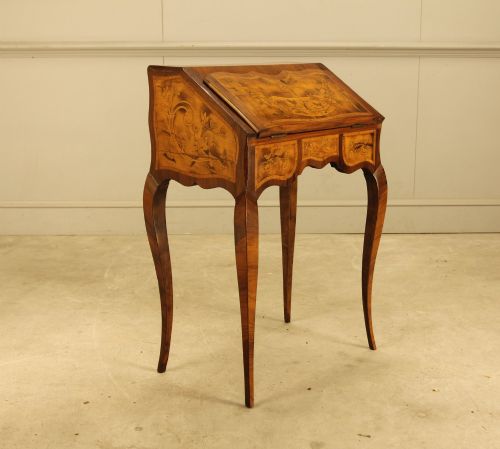
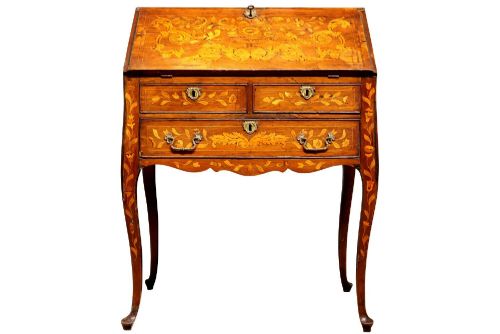
A rococo walnut secretary combines a writing desk with a bookcase top, appearing as bureau bookcases, bureau cabinets, and compact desks across this selection. These pieces originate mainly from continental workshops, spanning Dutch, Italian Venetian, and South German regional styles.
The materials centre on walnut and burr walnut, often enriched with tulipwood, fruitwood, and intricate marquetry. Dating stretches from the mid-eighteenth century through nineteenth-century revival interpretations, showing how makers adapted these ornate forms over generations.
How they were made
Construction relies on solid walnut and burr walnut veneers laid over secondary timbers to create highly figured exterior surfaces. Cabinetmakers shaped these carcasses with serpentine and bombé curves characteristic of the style.
Decoration involves floral marquetry in lighter fruitwoods and tulipwood, paired with cast brass hardware. Glass panels frequently front the upper bookcase doors, while internal compartments organise letters and documents.
Some Dutch bureau bookcases wear their floral marquetry so enthusiastically that even the sides and interiors bloom with inlaid tulips.
What varies in quality
The sophistication of the marquetry and the choice of burr walnut determine the visual impact of a piece. Finer examples display complex floral inlays that follow the complex curves of the bureau front without distortion.
Architectural ambition separates standard desks from grand double dome bureau bookcases. The crispness of the carving and the balance of proportions dictate the standing of each cabinet.
The Rococo Walnut Secretary Glossary
- Marquetry
- Decorative veneer work arranged in pictorial patterns using different coloured woods. Floral motifs are particularly common on continental secretaries.
- Burr Walnut
- Timber taken from a tree growth that produces swirling, highly figured grain patterns. It is sliced into veneers to cover large cabinet surfaces.
- Bureau Bookcase
- A dual-purpose furniture form featuring a sloping desk compartment below shelving enclosed by doors. The upper section often terminates in architectural cornices or double domes.
- Tulipwood
- A pale timber with distinct pinkish streaks utilised for contrasting banding and inlay work. It highlights the borders of panels on continental pieces.
- Bonheur de Jour
- A light lady writing desk developed in France during the eighteenth century. It typically incorporates small drawers and a cabinet above the writing surface.
Rococo Walnut Secretary: Frequently Asked Questions
What is a rococo walnut secretary?
A rococo walnut secretary is a combined writing desk and storage cabinet featuring flowing, asymmetrical curves and figured wood grain. These pieces originated in continental European workshops during the eighteenth century.
They serve as both practical desks and prominent display furniture for books and ornaments. The upper section usually encloses shelves behind glass doors, while the lower bureau provides a slanted writing flap.
How do I date a walnut secretary?
Dating relies on examining the construction methods, secondary woods, and decorative vocabulary of the cabinet. Eighteenth-century examples display hand-cut dovetails and regional marquetry styles.
Nineteenth-century revival pieces often incorporate machine-sawn elements or interpret earlier Dutch and Italian designs with heavier proportions. Comparing the floral inlay patterns to known period motifs helps narrow the timeline.
How do I care for walnut veneer?
Walnut veneer requires stable indoor humidity and protection from direct sunlight to prevent fading and splitting. Keeping the timber away from heat sources preserves the natural oils in the wood.
Polishing should be done sparingly using traditional wax rather than modern silicone sprays. This maintains the soft lustre of the historic surface without building up residue.