
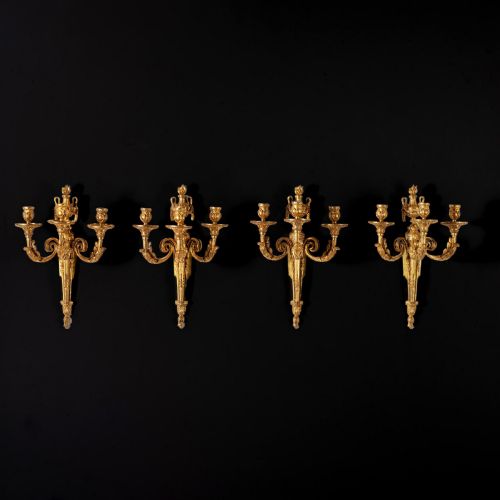
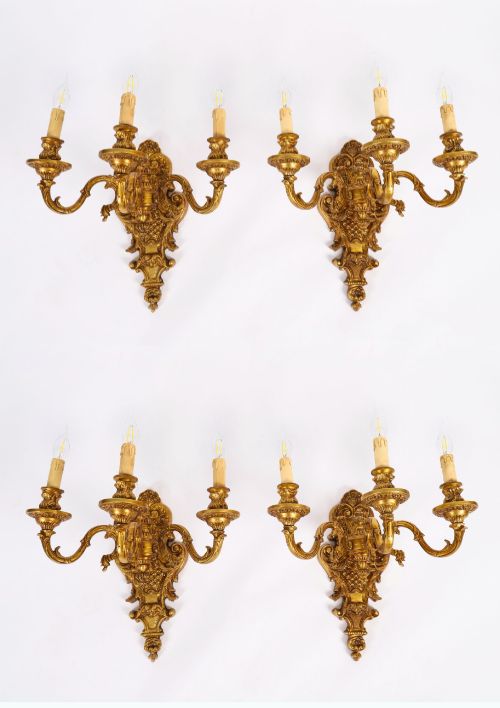
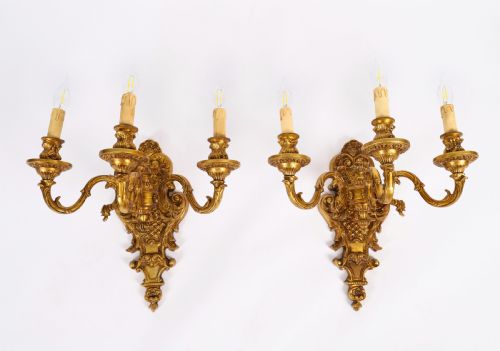
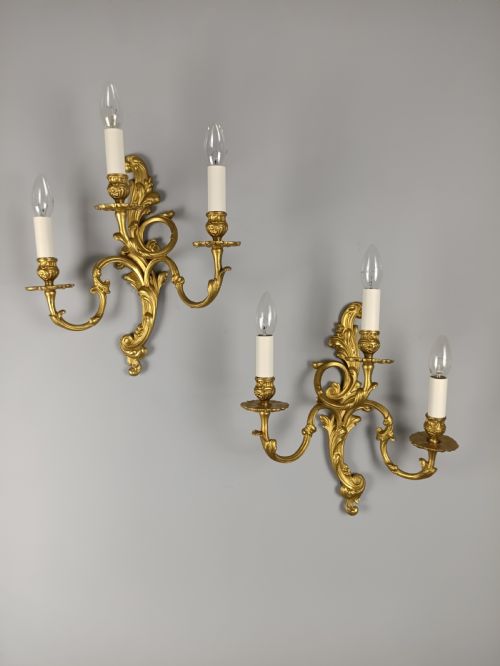

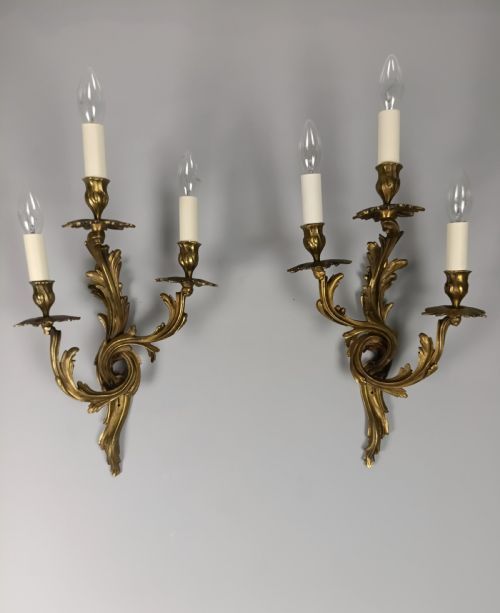
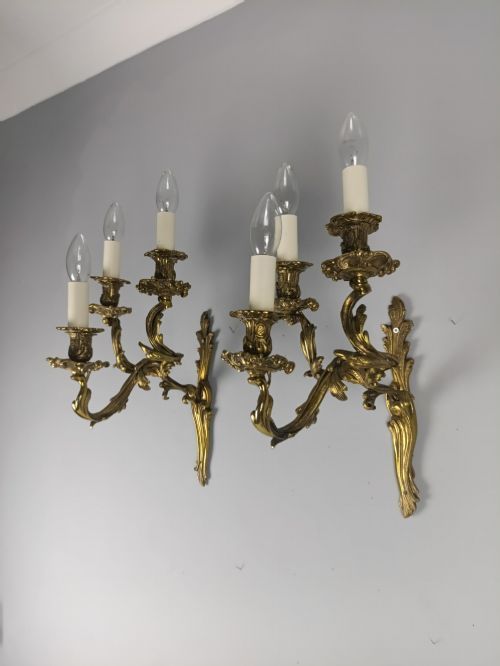

Rococo Three Light Sconces
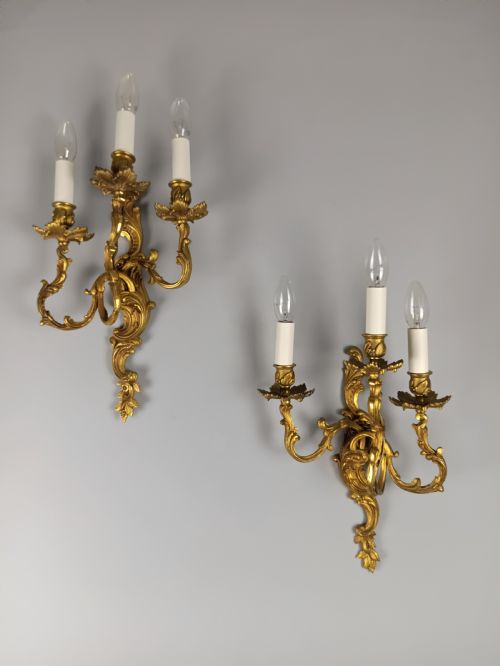
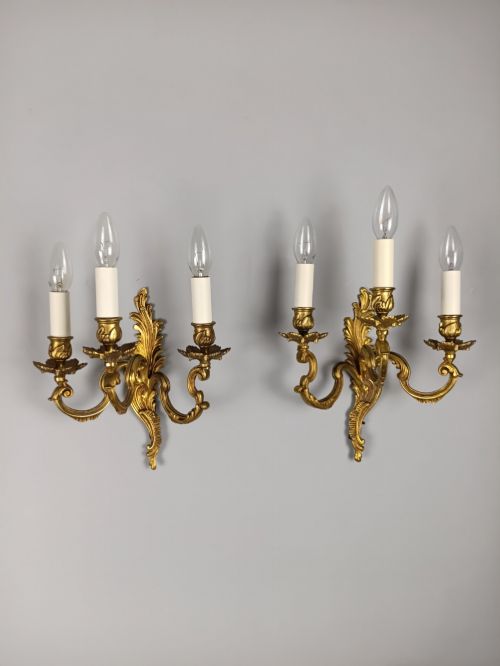
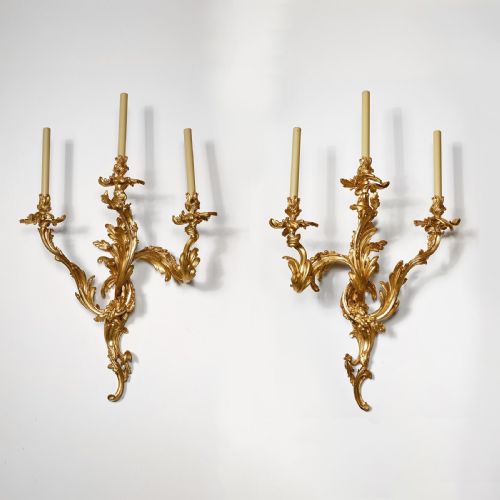
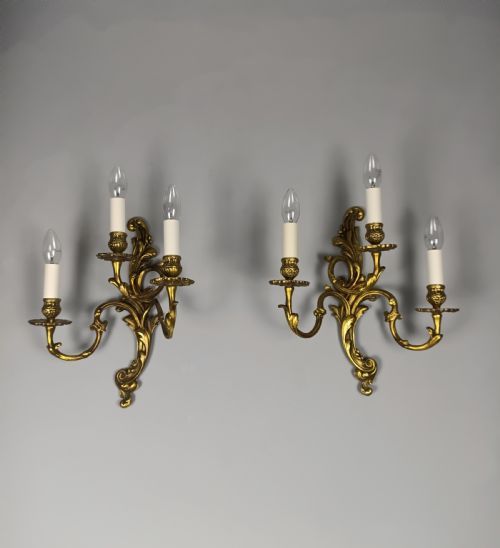
These rococo three light sconces bring fluid, asymmetrical curves and period warmth directly to an interior wall.
Rococo Three Light Sconces
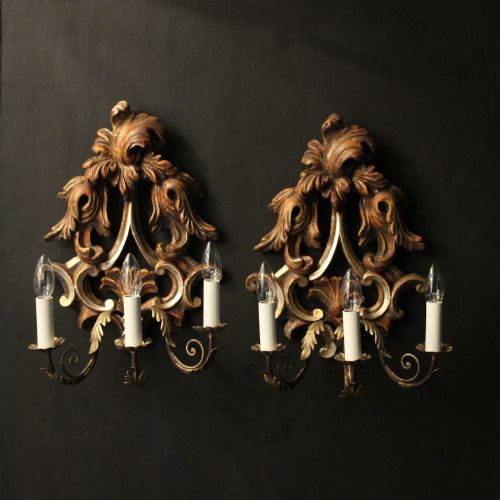
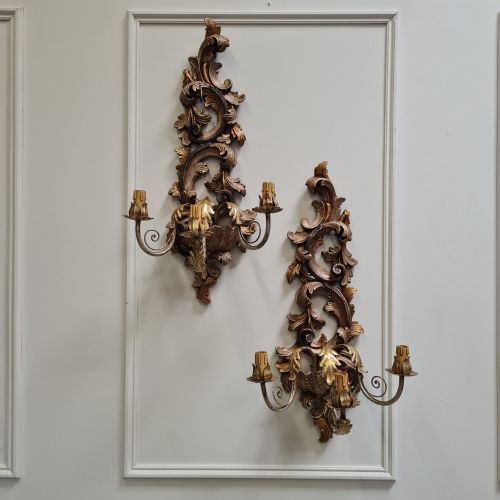
Rococo three light sconces comprise triple-arm wall lights and appliques designed to project candlelight or electric illumination across a room. The items found here span the eighteenth century up through the nineteen-thirties, embracing Louis XV and Rococo Revival idioms alongside Florentine giltwood pieces.
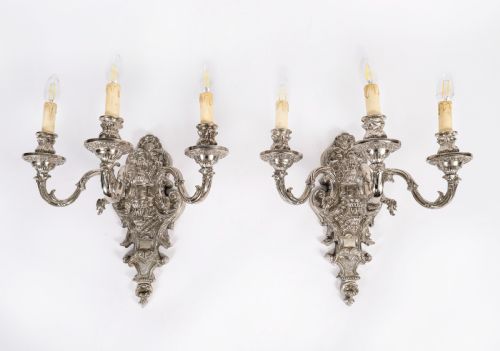
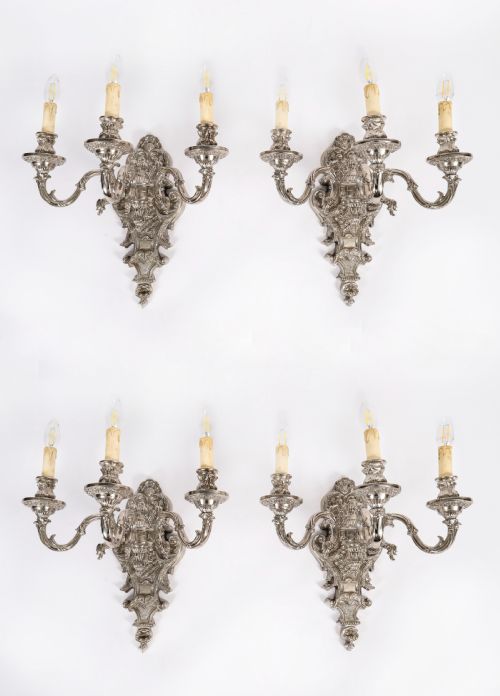
The prevailing format on this page is the matching pair or set of four, configured with three branches issuing from a scrolling backplate. Wall lights and mirrored sconces dominate the selection, bringing ornate symmetry or organic asymmetry to domestic settings.
Origins cluster heavily around French workshops and Italian carvers, connecting domestic lighting directly to classical European decorative traditions. These fixtures operate functionally as wall lamps while serving visually as sculptural metalwork or carved wood.
Materials and Construction
Makers relied primarily on cast or chased ormolu, gilt bronze, and gilded brass to achieve the rich metallic surfaces characteristic of the style. Ormolu and bronze components provide both structural rigidity and a durable base for mercury gilding or surface plating.
Carved wood and gesso appear frequently in Italian Florentine examples, shaped by hand into intricate scrolls and finished with gold leaf or silver gilt. Glass elements and crystal drops are integrated into select branch configurations to catch and refract the light.
Assembly typically involves mechanical fastening of distinct cast arms to a central backplate, allowing complex three-dimensional compositions. Many examples incorporate apertures or channels adapted later for modern electrical wiring.
Listings span periods from the eighteenth century through the nineteen-thirties, showing enduring demand for rococo forms across multiple design revivals.
Assessing Craftsmanship and Definition
The standard of chasing across bronze and brass elements distinguishes superior examples from simpler commercial production. Crisp definition in the leaf scrolls and C-scroll motifs reveals the hand of a skilled artisan rather than a blunt secondary cast.
The integrity and depth of the original gilding or silver plating significantly influence the visual weight of each piece. Surface treatments that retain their warm tonal variation without heavy rubbing command greater appreciation.
The harmony of proportion between the backplate and the three extending branches dictates the overall balance of the fixture on the wall. Heavier cast components distribute visual mass securely, anchoring the asymmetric rhythms inherent to the design.
The Rococo Three Light Sconces Glossary
- Applique
- A wall-mounted light fitting designed to hold candles or electric lamps against vertical surfaces. This term appears interchangeably with wall sconce in historical inventories.
- Ormolu
- Finely chopped high-zinc bronze gilded with a mercury amalgam, producing a brilliant golden surface finish. It forms the primary metallic medium for eighteenth-century and revival French lighting.
- Giltwood
- Timber carved and subsequently covered with a thin layer of gold leaf over a prepared gesso ground. Florentine pieces rely extensively on this technique.
- C-scroll
- A foundational decorative motif shaped like the letter C, forming the basis of asymmetrical rococo ornament. Multiple scrolls intertwine to construct the arms and backplates.
- Louis XV style
- A design vocabulary originating in France characterised by organic asymmetry, naturalistic foliage, and lack of straight lines. Sconces in this style emulate mid-eighteenth-century court aesthetics.
Rococo Three Light Sconces: Frequently Asked Questions
How were these sconces originally mounted?
These fixtures were secured directly to wall studs or wood panelling using heavy screws through the backplate. The positioning placed them at eye level or above furniture to maximise the spread of candlelight.
Later installations often required adapting the backplates to conceal modern electrical wiring while preserving the original mounting points.
Can these antique sconces take modern bulbs?
Many surviving examples arrive rewired with standard lamp holders capable of accepting low-wattage pygmy or candelabra bulbs. The internal wiring channels accommodate contemporary electrical standards without altering the external metalwork.
Qualified electricians should inspect the internal connections to ensure safe installation on domestic circuits.
What distinguishes French rococo from Florentine pieces?
French pieces primarily utilise cast bronze, brass, or ormolu with sharp chasing and metallic lustre. The forms emphasise sweeping metal scrolls and cast floral appliques.
Florentine pieces instead employ carved wood and gesso finished in gilt or silver leaf, focusing on volumetric wooden forms rather than cast metal.
How do I identify a revival piece from an eighteenth-century original?
Eighteenth-century originals display hand-finished chasing work, heavy mercury gilding, and structural assembly using hand-cut threaded pins or square nuts. Revival pieces from the nineteenth and early twentieth centuries show more uniform machine casting and standardised screw threads.
Weight, patination, and the specific composition of the brass or bronze alloy provide further chronological indicators.