


French Period Wall Lighting
French period wall lighting brings genuine warmth and historical character to a room through traditional forms and metals.
French Period Wall Lighting
French period wall lighting covers wall lights, wall sconces, and wall lanterns originating from various eras including the nineteenth century, Edwardian period, and the early decades of the twentieth century. These pieces serve functional illumination while adding distinct ornamental presence to domestic interiors.
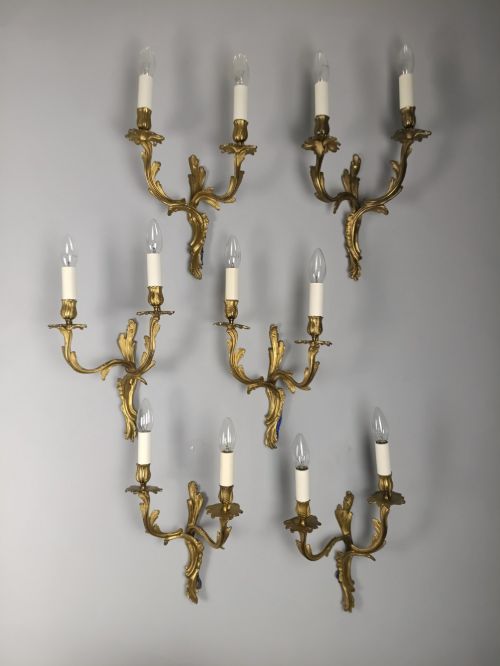
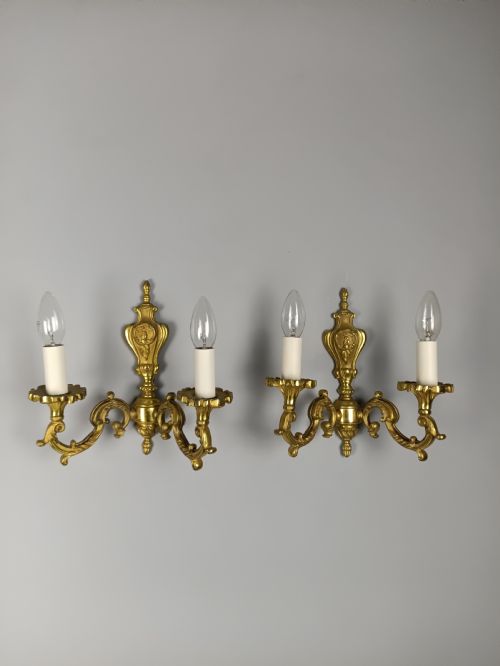
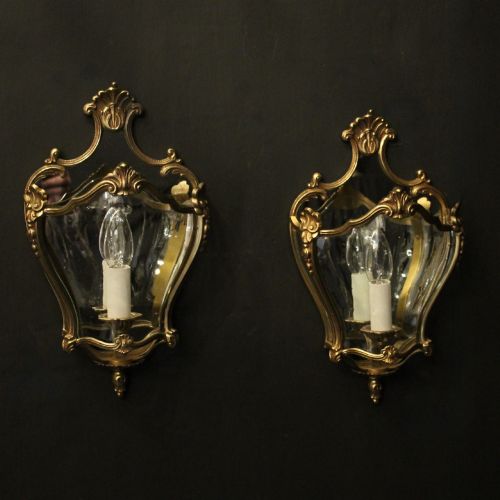
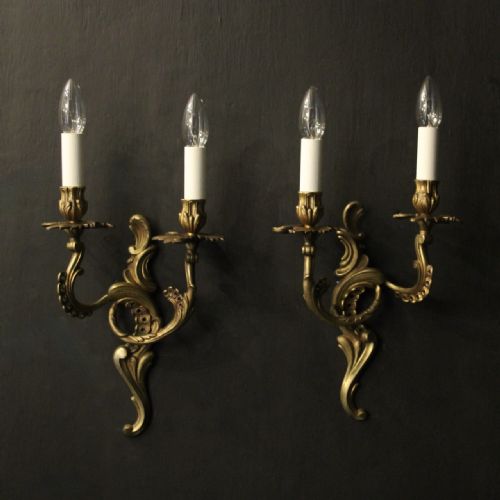
The selection on this page relies heavily on twin-arm wall lights and pairs of half lanterns, predominantly from the nineteen-thirties and surrounding decades. Buyers frequently encounter symmetrical pairs and larger sets intended to balance architectural spaces effectively.
Stylistic influences span from French Rococo, Empire, and Neoclassical designs to Art Deco interpretations and Chateau aesthetics. Such variety allows collectors to match specific historical design schemes within their properties.
Materials and construction methods
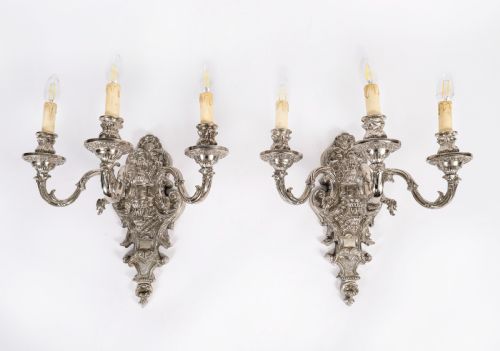
Metalwork forms the core of these fixtures, utilising brass, bronze, copper, and cast metals that are frequently gilded, silver-plated, or given an ormolu finish. Artisans employed casting and chasing techniques to produce crisp decorative relief on backplates and arms.
Glass elements appear alongside metal frames, particularly in half lanterns and enclosed sconces where panes diffuse the light source. Occasional surface treatments, such as green enamel on brass, introduce contrasting colour and texture to the metal structure.
French Period Wall Lighting Retail Price Guide 2026
Typical asking prices for french period wall lighting among the pieces listed under this phrase on Sellingantiques today, from the lower quarter to the upper quarter. They describe what is for sale here now, not the wider market.
Listings feature pieces spanning from the nineteenth century through the nineteen-thirties, utilising brass, bronze, glass, and enamel.
Distinguishing quality in period lighting
The refinement of the casting and the depth of the chasing dictate the visual merit of the metalwork, distinguishing sophisticated decorative detailing from simpler utilitarian output. Heavier gauge metals and carefully applied gilding or bronze patination signify superior manufacture.
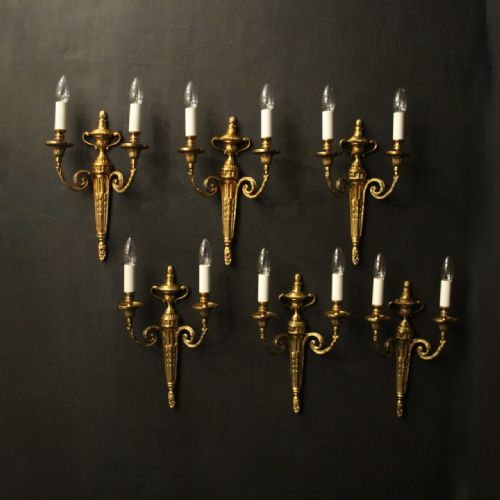
Scale and proportion separate standard fixtures from impressive larger examples, particularly in matched pairs or sets of six where uniformity across every component matters. The integrity of the original design vocabulary, whether Empire or Rococo Revival, determines the authenticity of the decorative impact.
The French Period Wall Lighting Glossary
- Wall sconce
- A bracket fixture fixed to a wall to hold one or more lamps or candles. These units project outwards to cast illumination across surrounding wall surfaces.
- Ormolu
- Gilded bronze produced by applying a mercury and gold amalgam to a bronze base and heating it. This technique creates a rich, durable golden surface characteristic of fine French decorative arts.
- Half lantern
- A wall-mounted lighting fixture shaped like a traditional hanging lantern cut in half against the backplate. It projects outward while sitting flat flush to the wall surface.
- Empire style
- A neoclassical design movement spanning the late eighteenth and early nineteenth centuries characterised by military motifs and classical symmetry. Pieces from this tradition often utilise cast bronze and formal geometric lines.
French Period Wall Lighting: Frequently Asked Questions
How do I choose between wall lights and lanterns?
Wall lights typically feature open arms designed to hold candles or electric bulbs, projecting light directly into the room. Lanterns enclose the light source within metal and glass panels, making them suited to hallways or spaces requiring directed illumination.
Consider the architectural scale of the room and the existing fixtures when deciding between an open sconce and an enclosed half lantern format.
Are these lights wired for modern use?
Many period fixtures arrive rewired for contemporary electrical standards, allowing for straightforward installation by a qualified professional. Some examples retain older wiring configurations that require updating to meet current safety codes.
Checking the wiring status before purchase ensures appropriate planning for installation in residential or commercial settings.
How do I identify French Empire style lighting?
French Empire style fixtures draw upon classical antiquity and military motifs, displaying formal symmetry, laurel wreaths, and restrained ornamentation. They frequently employ gilded bronze and clean structural lines that reflect early nineteenth-century design priorities.
Comparing the decorative vocabulary against known neoclassical motifs helps confirm the stylistic lineage of a particular bracket or sconce.
Can I mix different periods of wall lighting?
Mixing periods works successfully if the scale, metal finishes, and overall visual weight complement the surrounding interior scheme. Pairing Edwardian brass with earlier French bronze pieces requires careful attention to patination and proportion.
Maintaining a consistent metal tone, such as gilded brass across different fixtures, helps unify disparate historical styles within the same space.