
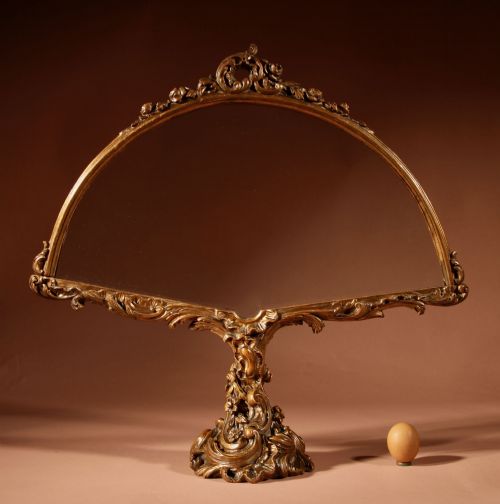

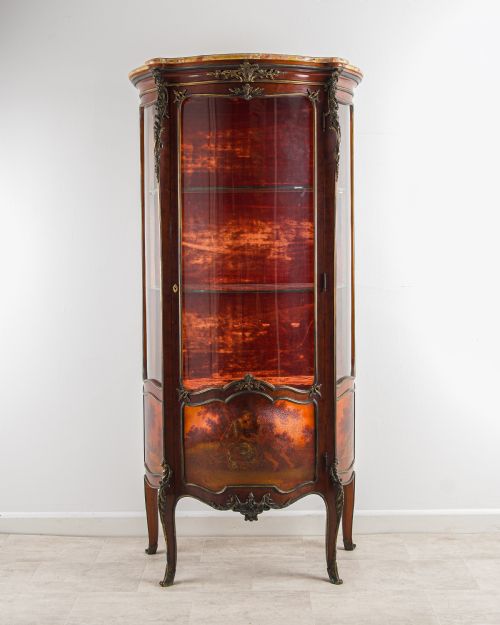


Rococo Style Display Cabinet
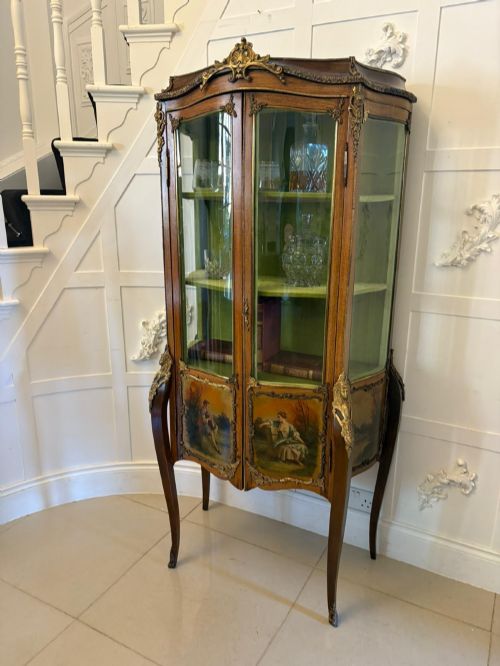
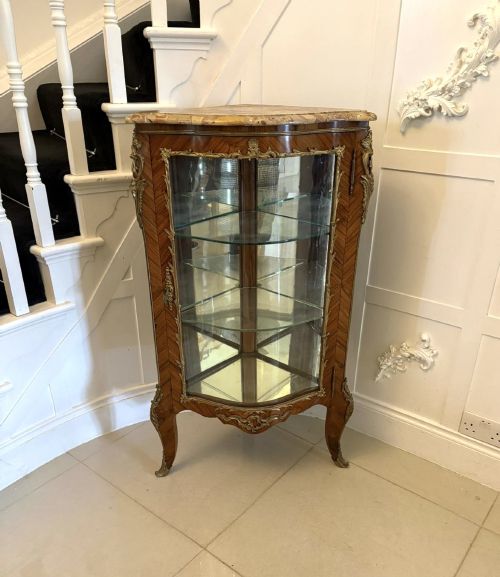
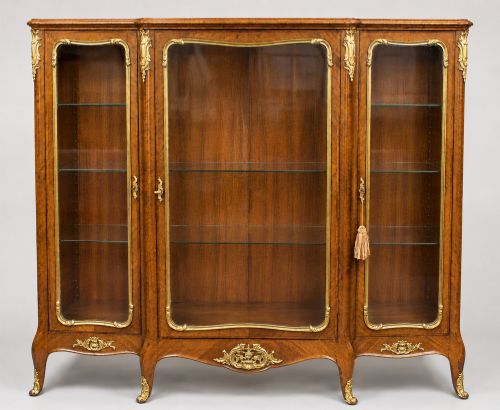
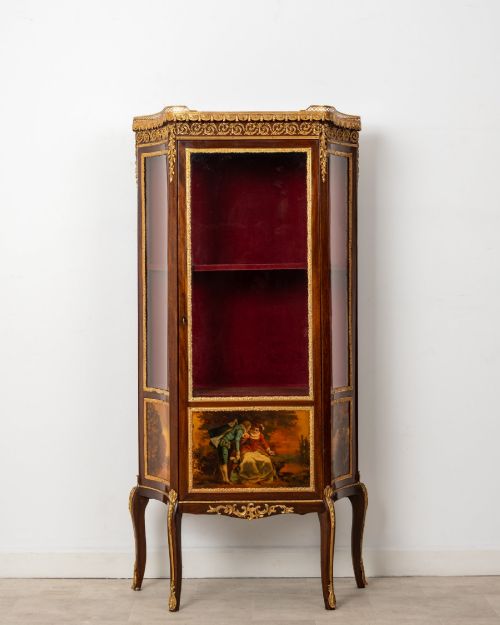
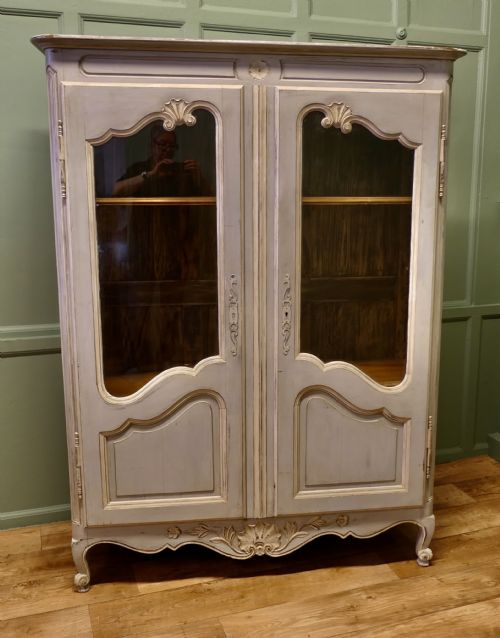
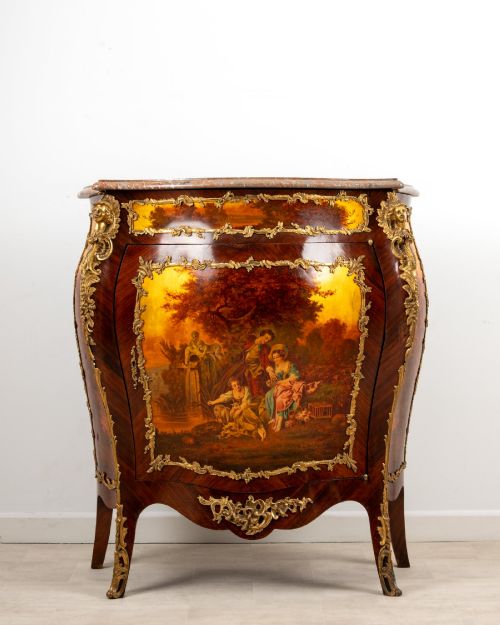
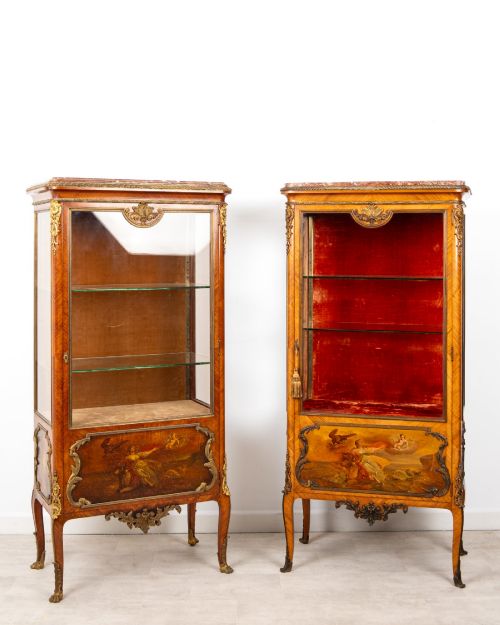
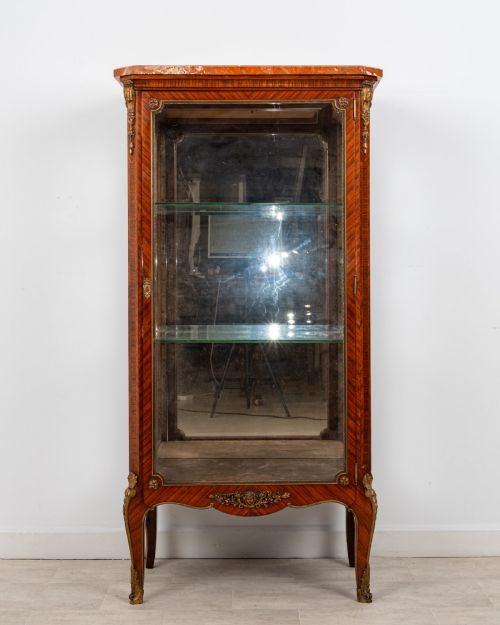
These rococo style display cabinet examples offer grand display for porcelain and curios, drawing the eye with curvaceous serpentine lines and lavish gilt mounts.
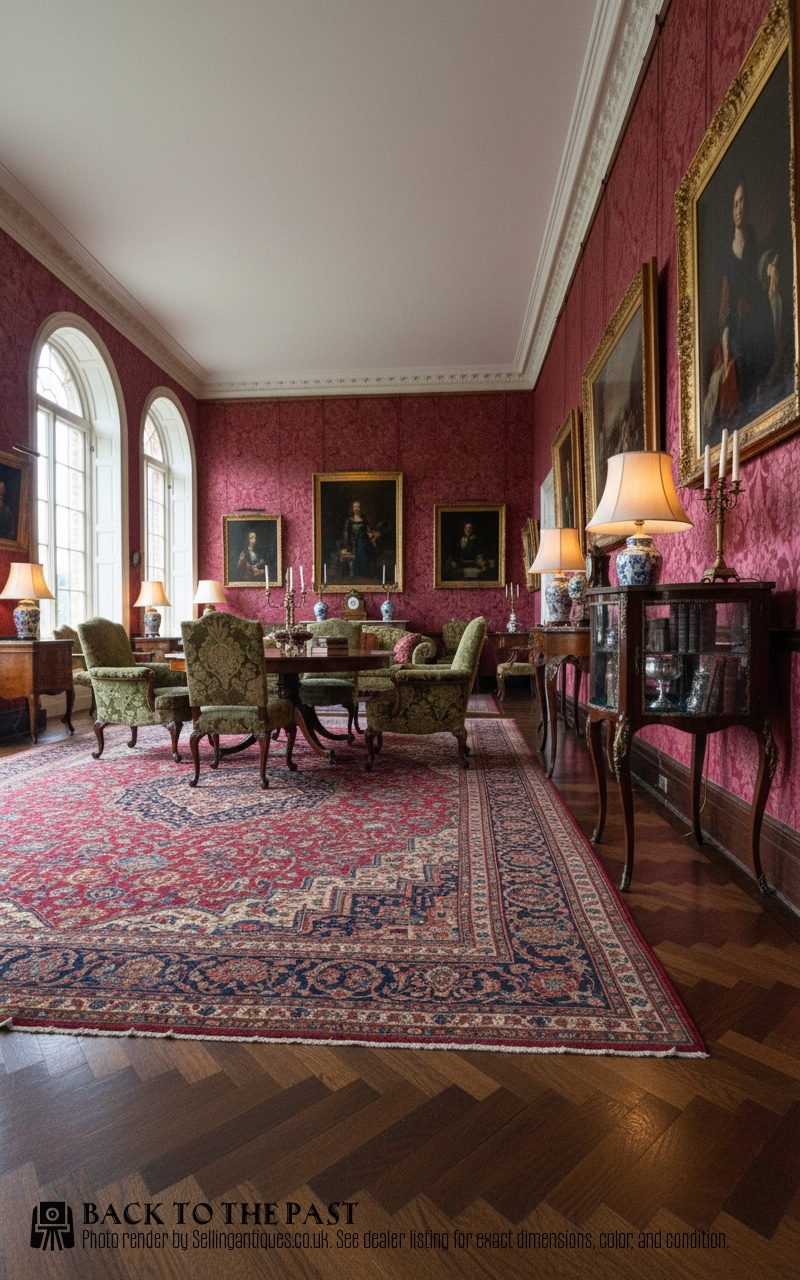
Rococo Style Display Cabinet
A rococo style display cabinet brings together the exuberant curves of eighteenth-century revivals, most frequently appearing in nineteenth-century French forms such as the freestanding vitrine or the corner cabinet. These pieces combine glazed viewing areas with decorative lower panels, often following serpentine or bombé contours that echo original Louis XV designs.
The selection ranges from tall double-door bookcases to compact side cabinets and corner vitrines, spanning periods from the mid-nineteenth century onwards. Makers drew heavily upon French revival styles, producing glazed furniture intended to showcase precious ceramics and ornaments behind curved glass panels.
Materials and technique
Cabinetmakers utilised rich timbers including kingwood, mahogany, and walnut as structural bases, frequently applying marquetry inlays or hand-painted Vernis Martin panels depicting pastoral scenes. These wooden carcasses were then shaped into complex serpentine and bombé curves requiring advanced joinery skills.
Gilt bronze and ormolu mounts were cast and chased to frame the glass doors and accentuate the corners, complemented by inset marble slabs on top surfaces. Glazing bars and delicate giltwood carvings completed the decorative scheme, uniting metalwork and cabinetry.
Some cabinets feature curved glass panes so skillfully bent that visitors occasionally walk straight into them.
Judging execution
Quality rests upon the crispness of the ormolu mounts and the depth of the timber selection, where finely figured kingwood veneer and intricate hand-painted panels elevate the piece. Superior examples display finely chased gilt bronze that fits the wooden contours precisely without gaps.
The structural complexity of the serpentine or bombé shape dictates the tier of craftsmanship, alongside the weight and finish of the inset marble top. Lesser pieces rely on simpler mahogany carcasses with minimal mounts, whereas master workshops achieved fluid integration of bronze, glass, and painted decoration.
François Linke·Gillows
The Rococo Style Display Cabinet Glossary
- Ormolu
- Gilded bronze used for decorative mounts and framing on furniture. It provides a bright golden contrast against dark timbers like kingwood and mahogany.
- Bombé
- A swelling, outward-curving shape found on the sides and fronts of advanced cabinetwork. This technique requires considerable skill in veneer application.
- Serpentine
- A front line or shelf edge curved in a wave pattern, concave in the centre and convex at the ends. It defines the fluid movement of rococo revival pieces.
Rococo Style Display Cabinet: Frequently Asked Questions
What is a vitrine?
A vitrine is a glass-fronted display cabinet designed specifically for showing porcelain, silver, and small decorative objects. The glazed sides and doors let light enter from multiple angles to illuminate the contents.
These pieces served as formal drawing room furniture in the nineteenth century, allowing households to display their finest possessions to visitors.
How do I spot a revival piece?
Revival pieces from the nineteenth century reproduce eighteenth-century French designs using contemporary mechanical tools and standard hardware construction. Look for nineteenth-century secondary woods and nineteenth-century assembly methods beneath the revival styling.
Familiarity with Victorian and Edwardian manufacturing traits helps distinguish nineteenth-century interpretations from original eighteenth-century furniture.
Where should I place a corner cabinet?
A corner cabinet fits directly into room junctions to utilise dead space while introducing architectural interest and display storage. These pieces anchor empty corners without obstructing room flow.
Ensure the floor space matches the angled footprint of the cabinet before purchase, as serpentine and bombé versions project further outward than flat furniture.
How do I care for ormolu mounts?
Ormolu mounts require gentle dusting with a soft dry cloth to prevent the accumulation of dirt in the chased recesses. Avoid abrasive cleaners or metal polishes that strip the original gilding.
Maintaining a stable room temperature protects the underlying timber and prevents shrinkage around the metal fittings and marble tops.