




Rococo Style Bombe Commode
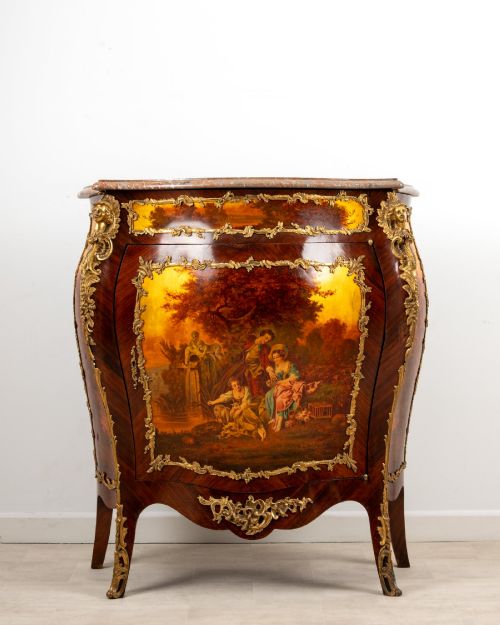
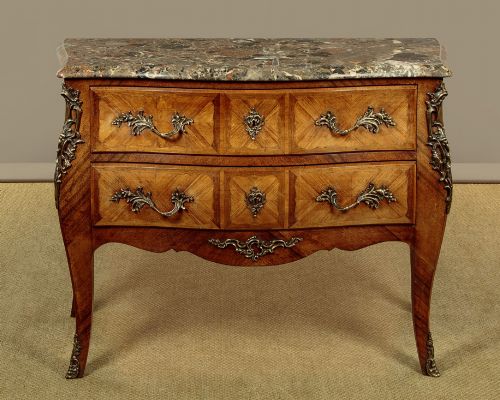
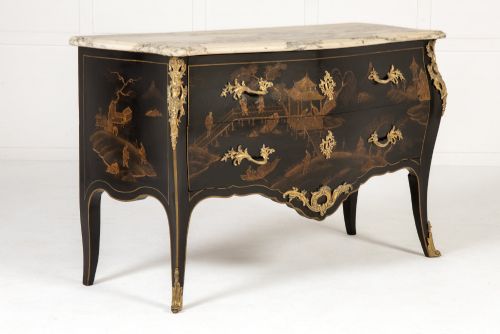
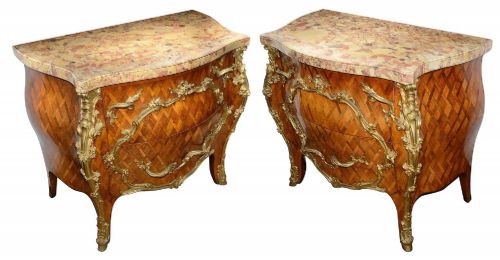
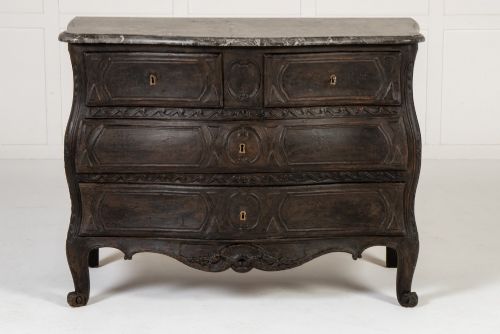
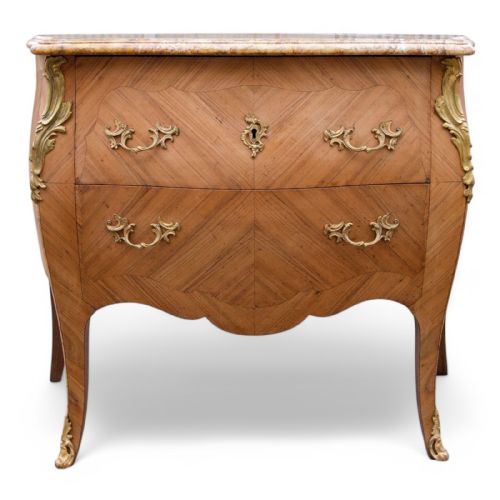
These rococo style bombe commode pieces bring sweeping continental presence to a room through swelling fronts and rich decorative mounts.
Rococo Style Bombe Commode
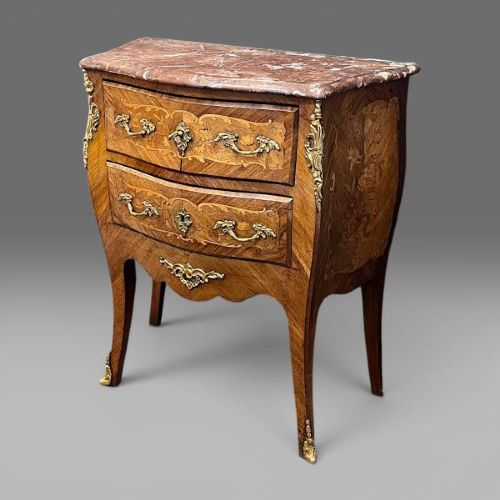
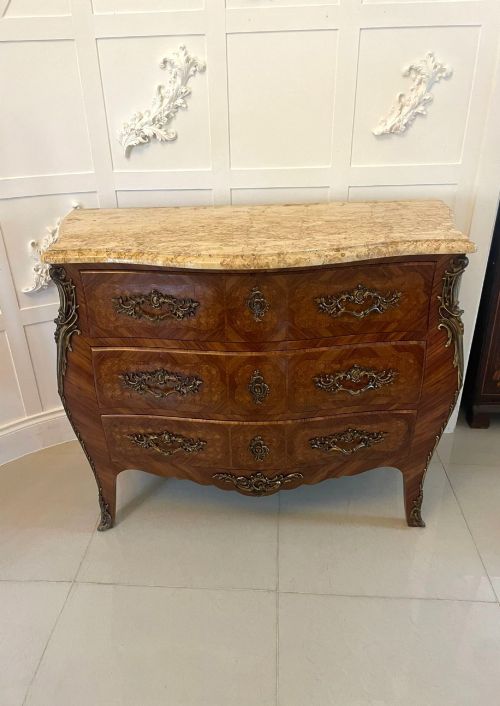
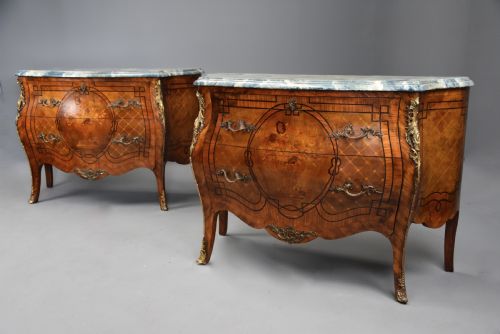
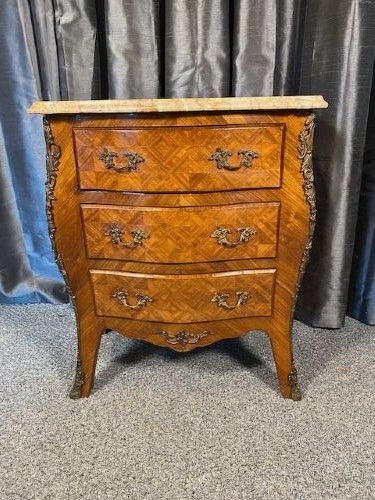
When you search for a rococo style bombe commode, you encounter a striking form defined by outward-swelling sides and curved fronts. These pieces trace their lineage back to eighteenth-century continental workshops, though many surviving examples date from nineteenth-century revivals.
The versions most common on this page span French, Dutch, and Italian origins, taking the shape of chests of drawers, bedside tables, and larger sideboards. They display stylistic traits from Louis XV and broader rococo movements, uniting bold architectural curves with ornate surface decoration.
Materials and construction methods
Cabinetmakers built these carcases using substantial timbers such as oak and walnut, overlaid with decorative veneer timbers including kingwood, burr walnut, fruitwood, and mahogany. Skilled artisans shaped the timber to achieve the characteristic bulging profile of the bombe form.
Metalwork and stone form an integral part of the construction, featuring heavy cast ormolu and brass mounts bolted to corners and handles. Heavy marble slabs, often cut with serpentine edges, sit atop many of the carcases to finish the piece.
Rococo Style Bombe Commode Retail Price Guide 2026
Typical asking prices for rococo style bombe commode among the pieces listed under this phrase on Sellingantiques today, from the lower quarter to the upper quarter. They describe what is for sale here now, not the wider market.
Periods represented span from the eighteenth century through the nineteenth century and into the early twentieth century.
Judging the quality
Quality rests in the fluency of the timber figure and the precision of the marquetry or parquetry layout across curved surfaces. Finer examples show seamless matching of grain patterns that follow the difficult contours of the swelling carcase.
The standard of the cast bronze or ormolu mounts dictates the tier of the piece, with crisp, chased detailing separating superior workshop output from simpler castings. The weight and thickness of the fitted marble top further signal the original investment in the furniture.
The Rococo Style Bombe Commode Glossary
- Bombe
- A swelling, outward-curved profile found on the sides and fronts of drawer carcases. This bulging contour demands advanced cabinetmaking skill to execute in solid timber and veneer.
- Ormolu
- Gilded bronze used for decorative mounts, handles, and sabots on period furniture. The material provides bright metallic contrast against dark or polished timber surfaces.
- Marquetry
- Decorative patterns formed by fitting together thin slices of various coloured woods into a veneer. Craftsmen apply these designs to flat and curved furniture surfaces alike.
- Parquetry
- Geometric wood inlay arranged in regular patterns such as cubes, lozenges, or squares. It creates a structured, architectural visual texture on the exterior panels.
- Serpentine
- A curved line that undulates with a convex centre flanked by concave sides. This shaping appears frequently along the front edges of commode tops and drawer rails.
Rococo Style Bombe Commode: Frequently Asked Questions
Where did the bombe commode originate?
The form developed in continental Europe during the eighteenth century, driven by cabinetmakers seeking dynamic, flowing furniture shapes.
French and Dutch workshops popularized the swelling profile before later nineteenth-century revival makers reinterpreted the aesthetic.
How do I care for a marble top commode?
Keep the stone clean using a damp cloth and mild soap, avoiding acidic cleaners that etch polished marble surfaces.
Treat the timber carcase with appropriate wax polish to maintain the finish without building up heavy residue.
What is the difference between Louis XV and Louis XVI styles?
Louis XV furniture relies on asymmetrical curves, sweeping cabriole lines, and exuberant organic rococo ornamentation.
Louis XVI pieces introduce straighter structural lines, neoclassical symmetry, and more restrained decorative elements.
Are these commodes suitable for everyday storage?
The deep drawers provide substantial practical capacity for clothing, linens, or dining room items.
Their substantial footprint and heavy marble tops mean they function well as standalone surface units in hallways or living areas.