


Rococo Storage Cabinet
A rococo storage cabinet brings asymmetric curves and exuberant mounts into a room, offering functional storage dressed in grand historical style.
Rococo Storage Cabinet
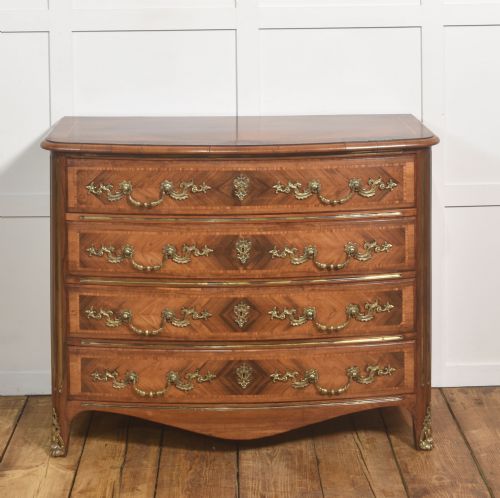
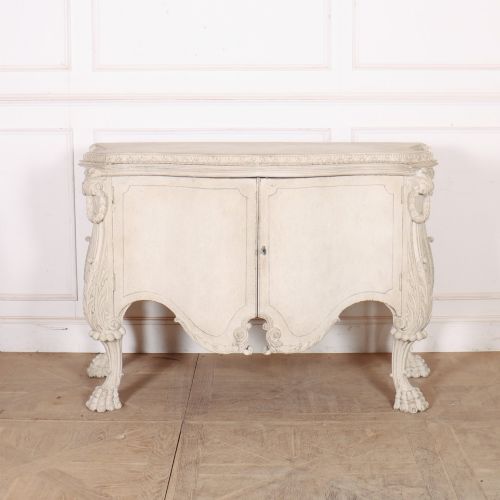
A rococo storage cabinet encompasses commodes, side cabinets, chests of drawers, and credenzas spanning from the eighteenth century into the twentieth century. These pieces emerge predominantly in French Louis XV, Italian Rococo, and Victorian Rococo Revival idioms.
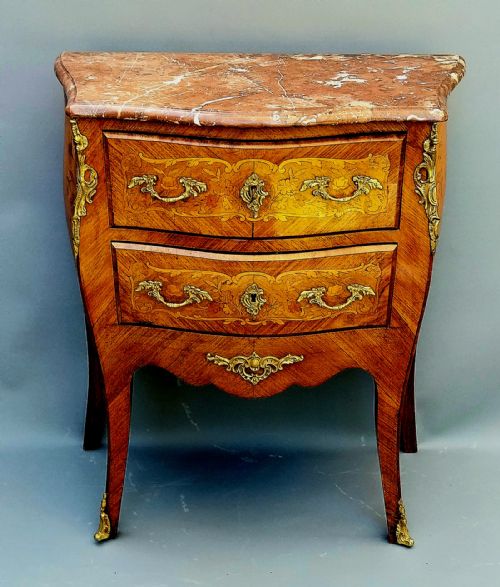
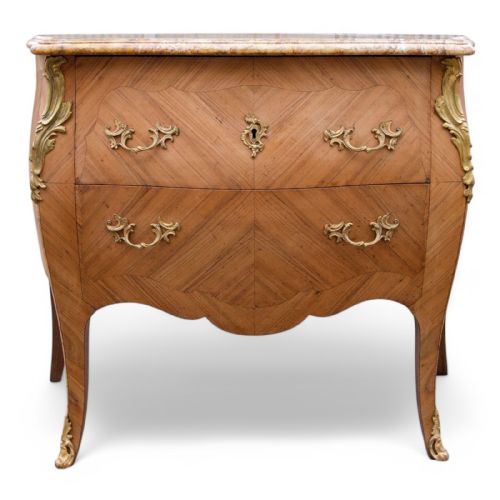
The version most commonly encountered on this page is the French marble-top commode or chest of drawers from the nineteenth century. These forms display serpentine or bombé contours, echoing the decorative vocabulary of eighteenth-century court furniture.
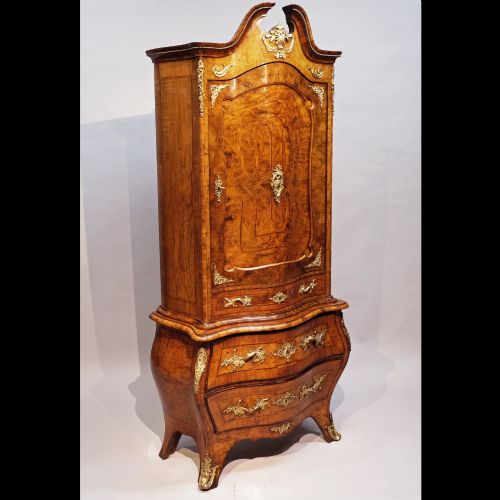
Makers and workshops also channel these curves into sideboards, display cabinets, and cabinets on stands using walnut, kingwood, and mahogany. The regional scope stretches from English and Dutch interpretations to Italian and French masterworks.
Materials and technique
Cabinetmakers construct carcases from sturdy foundational timbers like walnut, mahogany, and oak, then apply intricate veneers of kingwood and burr walnut. Marquetry and birds-eye maple introduce contrasting geometric or floral patterns across curved drawer fronts.
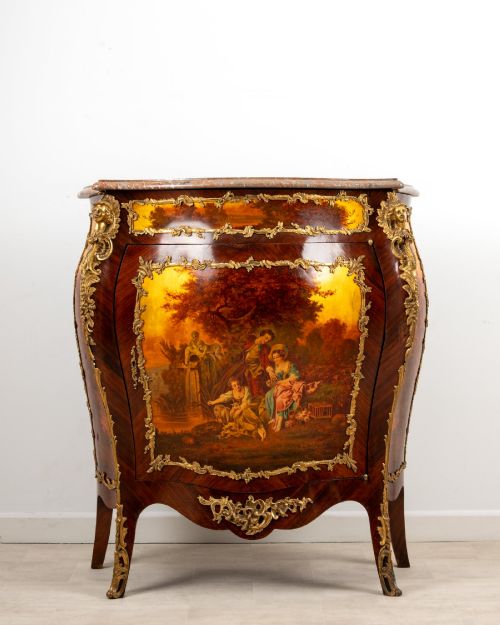
Mounts of cast ormolu and bronze accentuate the swelling lines of bombé forms and serpentine edges. Tops feature shaped marble, including breccia and scagliola slabs, fitted precisely to follow the organic contours of the timber carcase.
Listings feature pieces from the eighteenth century, the Victorian era, and early twentieth-century revivals.
The markers of distinction
Quality rests in the fluency of the serpentine or bombé shape and the precision with which veneers follow difficult curves. Master carvers ensure that marquetry flows seamlessly across joints without interrupting the visual rhythm of the design.
The refinement of the ormolu mounts and the weight of the selected marble slab signal the ambition of the piece. Crisp chasing on metal mounts and thick, beautifully figured marble distinguish exceptional examples from standard revival items.
Zweiner
The Rococo Storage Cabinet Glossary
- Bombé
- Swelling outward in a convex curve on the front and sides. This technique requires expert joinery to maintain structural integrity.
- Ormolu
- Gilded bronze applied as decorative mounts on furniture edges and corners. It protects vulnerable areas while adding metallic brilliance.
- Marquetry
- Inlaid patterns of wood veneers forming pictorial or abstract designs. Craftsmen carefully cut contrasting timbers to fit flush.
- Serpentine
- A line curving inward centrally and outward at the ends. It defines the fluid movement characteristic of rococo case furniture.
- Commode
- A low chest of drawers or cabinet with doors. French examples often feature prominent marble tops and lavish mounts.
Rococo Storage Cabinet: Frequently Asked Questions
Where should I place a rococo storage cabinet?
These cabinets work well as focal points in drawing rooms, hallways, or dining spaces where their curved profiles can be appreciated from multiple angles. Their marble tops and decorative mounts command attention against plain walls.
Ensure adequate clearance around the piece so the serpentine or bombé silhouette remains unobstructed by surrounding furniture.
How do I care for the marble top?
Wipe the marble surface regularly with a soft, damp cloth and neutral soap to prevent staining from liquids or oils. Avoid acidic cleaning agents that etch polished stone.
Place protective felt pads beneath heavy decorative objects to prevent scratching the surface over time.
How do I distinguish eighteenth-century pieces from later revivals?
Examine the construction methods, tool marks on interior secondary timbers, and the wear patterns on the wood. Eighteenth-century pieces typically show hand-cut dovetails and period-specific framing.
Nineteenth- and twentieth-century revivals often utilise machine assistance while adopting historic styles like Louis XV.
What is Vernis Martin?
Vernis Martin is a decorative japanning technique developed in France that mimics Asian lacquer using transparent varnishes. It creates a glossy, layered surface often seen on high-end cabinet doors.
This finish requires gentle dusting and protection from direct sunlight to preserve its rich tones and depth.