


Rococo Silver Box
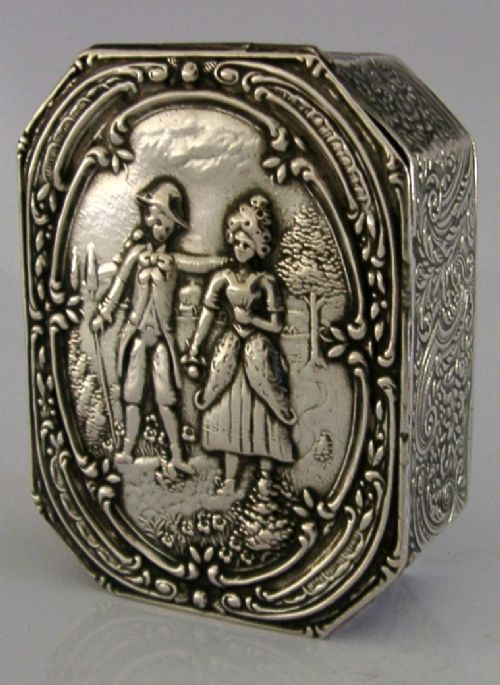
A rococo silver box brings flamboyant 18th-century curves and chased asymmetry to the dressing table or pocket, prized for its tactile weight and intricate repoussé work.
Rococo Silver Box
A rococo silver box encompasses a range of small receptacles designed for snuff, trinkets, tea, or cards, characterised by ornate revival styles and scrolling foliage. When searching for a rococo silver box, collectors encounter various iterations spanning the Georgian, Victorian, and Edwardian eras, alongside continental European pieces from the 18th and early 20th centuries.
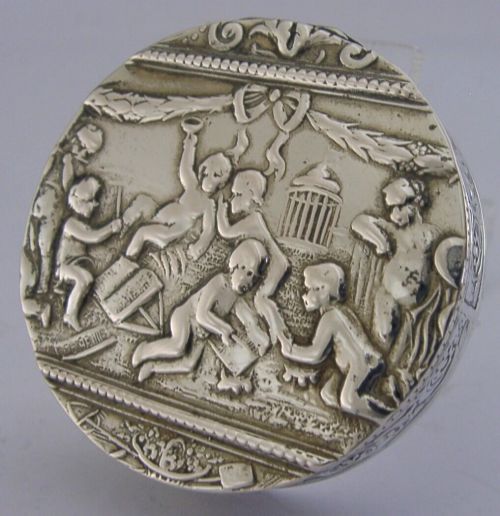
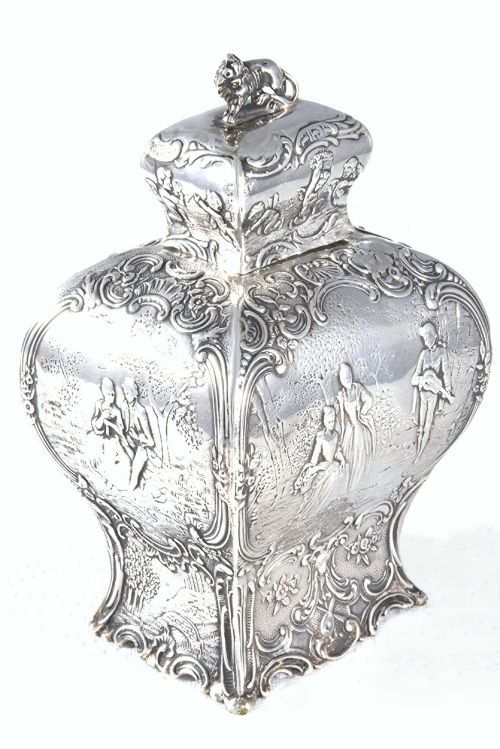
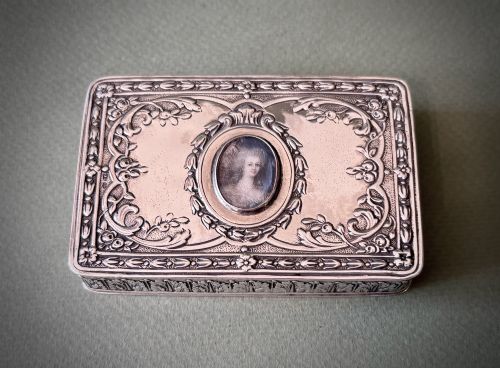
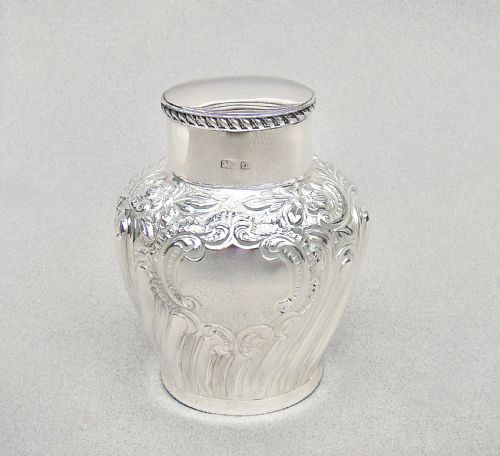
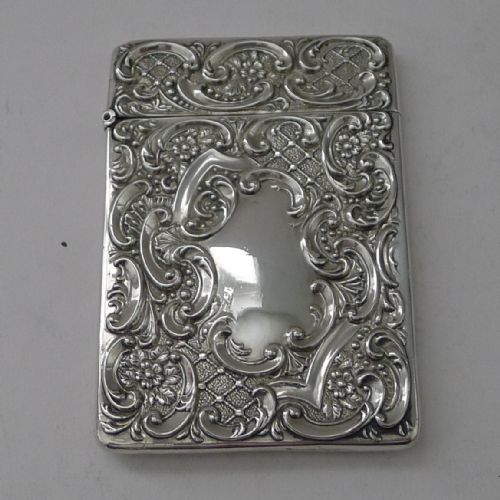
The objects take several distinct shapes, from heavy table boxes and bombe tea caddies to pocket-sized snuff boxes, card cases, and jewellery caskets. Many items feature hinged lids decorated with figural scenes, cherubs, or mythological motifs executed in solid silver, silver gilt, or silver-plated metal.
Materials and construction techniques
Makers utilised sterling silver, solid silver, and silver-plated copper, often working the metal by hand through chasing, repoussé, and embossing to achieve high-relief ornamentation. Interior surfaces of boxes intended for snuff or spices were frequently gilded to prevent corrosion from the contents.
Beyond metalwork, certain pieces incorporate organic and mineral materials such as wood, glass, fabric, shagreen, and enamel. Construction methods vary from sturdy plate over base metals to hand-formed solid silver bodies fitted with secure hinges and clasps.
Listings feature items spanning the 18th, 19th, and 20th centuries, executed in sterling silver, silver plate, wood, glass, and fabric.
Distinctions in craftsmanship and condition
Quality rests upon the crispness of the chased decoration and the depth of the repoussé work, where sharper, deeper motifs indicate superior hand skill. The articulation of the hinge and the snugness of the lid closure demonstrate the original maker's precision.
The inclusion of clear hallmarks provides a definitive measure of origin and standard, whereas unmarked continental or provincial pieces rely entirely on the integrity of the design and metal thickness. Surface wear, dents to bombé sides, and fading of interior gilding or fabric lining affect the preservation state.
Thomas Hayes·William Comyns·David Pettifer·James Barrat·Christofle
The Rococo Silver Box Glossary
- Repoussé
- A metalworking technique where the silver is hammered from the reverse side to form a raised design on the front. This method creates the characteristic three-dimensional scrolls seen on revival pieces.
- Bombe
- A swollen, bulging contour typical of certain tea caddies and table boxes. It requires considerable skill to shape metal into these curved profiles without thinning the corners.
- Silver Gilt
- Silver that has been coated with a thin layer of gold, often referred to as vermeil. This treatment protected the interior of snuff and spice containers from tarnishing.
- Etui
- A small ornamental case used to hold needles, tweezers, or other small implements. Examples from the 18th century often contain fitted compartments for multiple tiny tools.
- Shagreen
- Undressed leather prepared from the skin of a shark or ray, presenting a distinct granulated texture. It frequently covers wooden tea caddies from the mid-18th century.
Rococo Silver Box: Frequently Asked Questions
What were small silver boxes used for?
Historically, these receptacles held dry snuff, herbal lozenges, spices, or personal stamps, serving as functional daily accessories for the wealthy. Pocket-sized versions were carried discreetly, while larger table boxes sat in parlours and dressing rooms.
By the Victorian and Edwardian periods, many adapted into trinket holders, card cases, or miniature caskets for jewellery.
How can I date an unmarked box?
Dating relies on stylistic clues, construction techniques, and the type of secondary materials like wood or fabric used inside. Rococo revival pieces from the 19th century often display heavier casting and different hinge mechanics compared to genuine 18th-century originals.
Consulting hallmark charts for registered maker's marks or standard duty marks provides a narrower window of manufacture.
What is the difference between solid silver and plate?
Solid silver objects consist of uniform precious metal throughout, meeting official fineness standards often confirmed by hallmarks. Silver-plated pieces feature a thin layer of silver bonded over a base metal core, such as copper or brass.
Weight, wear patterns near high points, and the visibility of base metal underneath help distinguish the two categories.