


Rococo Revival Sideboard
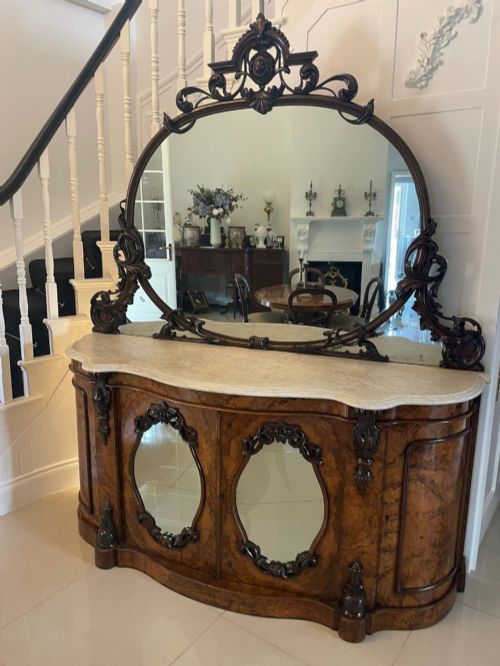
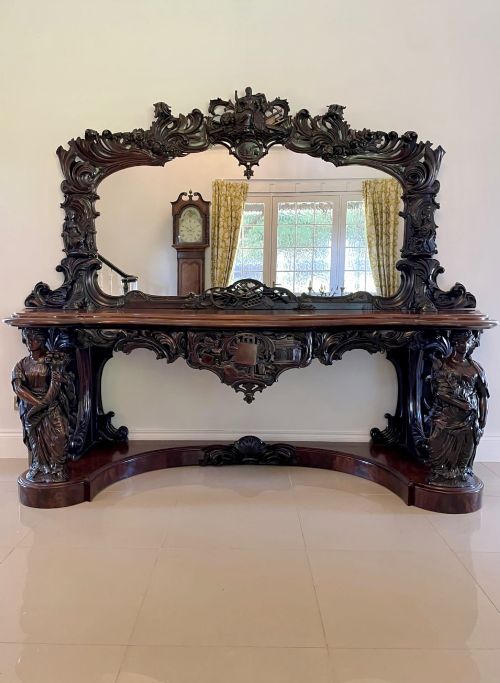
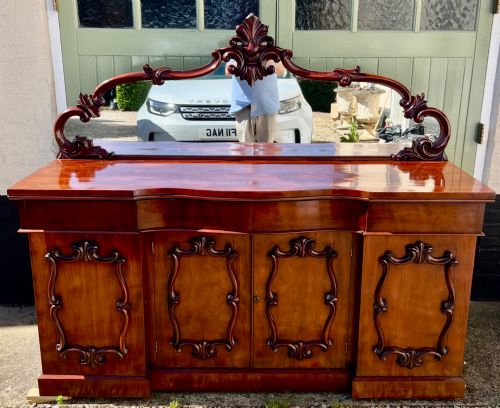
These rococo revival sideboards bring 19th century presence to a room, combining burr walnut and carved mahogany with marble tops and mirror backs.
Rococo Revival Sideboard
A rococo revival sideboard sits within the wider group of Victorian sideboards, credenzas, and console tables documented from the mid 19th century onwards. The pieces meeting this search phrase include serpentine credenzas and mirror back sideboards made during the Victorian era.
Buyers encounter walnut, mahogany, and burr walnut forms, often paired with marble tops and glass mirrors. These substantial cabinet pieces served as display and storage furniture in grand Victorian interiors.
Materials and construction
Cabinet makers utilised dense timbers like mahogany and walnut, frequently applying burr walnut and flame mahogany veneer over solid carcases. These woods provided the figured surfaces prized by Victorian makers.
Carved wooden details work alongside inset marble tops, brass fittings, and large mirrored glass panels in the backboards. The construction combines heavy joinery with ornate applied carving characteristic of the revival styles.
A brass candlestick lamp occasionally slips into the sideboard category, proving that Victorian dining rooms enjoyed eclectic lighting.
Distinctions in quality
Quality rests on the selection of timber veneers and the depth of the carved ornamentation on the frame. Finely figured burr walnut and substantial marble slabs elevate certain examples above simpler mahogany counterparts.
The integration of the mirror back and the precision of the serpentine form indicate the maker's hand. Superior pieces demonstrate crisp carving and harmonious proportions across large credenza and sideboard formats.
Gillows
The Rococo Revival Sideboard Glossary
- Credenza
- A low cabinet or sideboard, frequently fitted with mirrored backs and glass doors in 19th century furniture. These pieces often feature marble tops.
- Serpentine
- A furniture front or top curving outward in the centre and inward at the ends. This contour appears on finer Victorian case pieces.
- Veneer
- A thin layer of figured wood applied over a secondary timber base. Burr walnut and flame mahogany veneers give these cabinets their decorative grain.
- Mirror back
- An upright glass mirror attached to the rear of a sideboard or credenza. This feature reflects light and displays objects placed on the surface below.
Rococo Revival Sideboard: Frequently Asked Questions
What is a rococo revival sideboard?
A rococo revival sideboard is a 19th century cabinet piece featuring ornate carved wood, curved serpentine shapes, and often a mirror back or marble top.
These items belong to the broader Victorian sideboard and credenza tradition, designed for display and storage in period rooms.
How do I date a Victorian credenza?
Dating relies on timber choices such as burr walnut or mahogany, construction methods, and stylistic markers recorded across the mid to late 19th century.
Examining the mirror glass, marble slab thickness, and interior secondary woods helps confirm the period of manufacture.
Where were sideboards placed?
Victorian sideboards and credenzas stood principally in dining rooms and grand reception spaces against main walls.
They functioned as serving surfaces for meals and as display furniture for silver, ceramics, and lamps.
How do I care for burr walnut?
Burr walnut veneer requires stable room temperatures away from direct sunlight and excessive moisture to prevent timber movement.
Dusting with a dry cloth and applying appropriate wax polish preserves the polished finish on these antique surfaces.