





Rococo Porcelain Group
A rococo porcelain group brings figurative storytelling, scrolled ornamentation and elaborate pastoral scenes straight from the 18th century into a room.
Rococo Porcelain Group
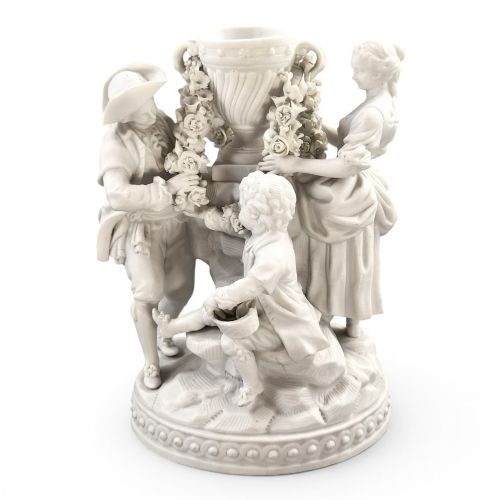
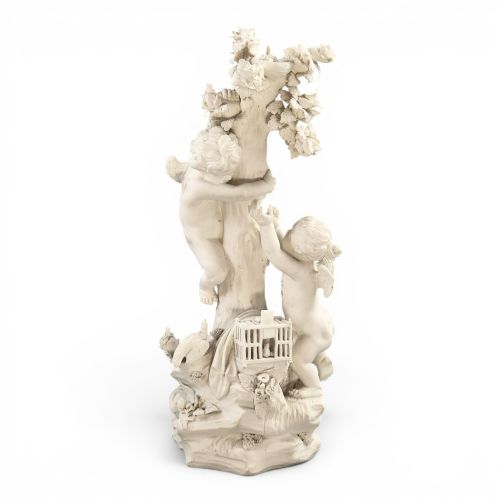
A rococo porcelain group comprises multi-figure sculptural compositions, often depicting courting couples, mythological figures, allegorical subjects, or children in pastoral settings. These ceramic works capture the playful, theatrical spirit associated with the rococo style and its 19th-century revivals.
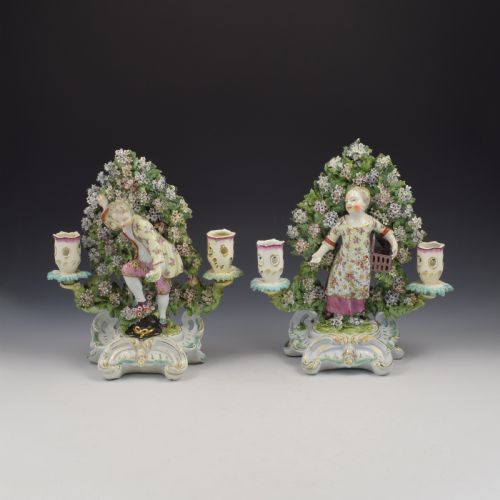
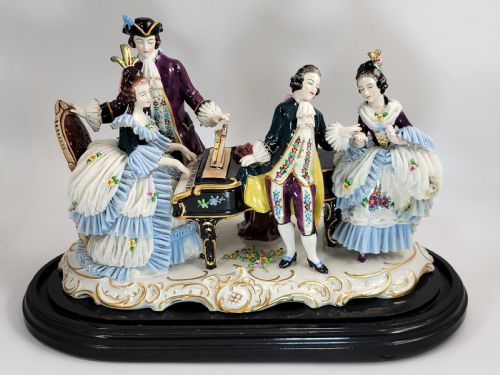
Buyers will encounter various forms on this page, ranging from 18th-century originals produced during the Georgian era to later continental revivals from the Victorian period and the early 20th century. Common iterations include candelabra figures framed by bocage, musical troupes, and domestic tableaus.
The aesthetic leans heavily on asymmetry, C-scrolls, and delicate facial expressions, reflecting the decorative priorities of European factories like Meissen, Derby, and various Parisian workshops. These pieces function primarily as centrepieces and decorative sculptures rather than utilitarian vessels.
How They Were Made
Potters utilised both hard-paste and soft-paste porcelain, shaping the complex multi-figure groups through intricate moulding and hand-modelling techniques. Artisans applied fine details such as applied floral garlands, lace made from real fabric dipped in slip, and delicate bocage foliage by hand before firing.
Enamel colours, gilding, and gold leaf were hand-painted onto the glazed or unglazed biscuit porcelain surfaces before undergoing a final kiln firing to fix the pigments. Ormolu mounts occasionally supplemented the ceramic bodies, particularly in French and German decorative objects.
Real lace dipped in porcelain slip before firing creates impossibly delicate dresses on these miniature musicians and dancers.
What Varies in Quality
The complexity of the composition also dictates distinction, as groups with multiple interacting figures, such as musicians or mythological narratives, demand greater technical mastery during the kiln-firing process than single figures do.
Meissen·Derby·Bourdois and Bloch·Ernst Bohne Sohne·Volkstedt·Triebner Ens and Co·Ludwigsburg
The Rococo Porcelain Group Glossary
- Bocage
- An intricate background of applied ceramic leaves and branches framing a figure or group. It is commonly found on Derby and continental porcelain figures from the 18th century onwards.
- Biscuit Porcelain
- Unglazed porcelain fired once to produce a matte, white surface with a texture similar to marble. It was favoured for sculptural groups and figures during the neoclassical and revival periods.
- Hard-paste Porcelain
- A true porcelain made from kaolin and petuntse, fired at very high temperatures to create a dense, vitrified body. It was the primary medium for factories such as Meissen.
- Soft-paste Porcelain
- An artificial porcelain compound fired at lower temperatures, producing a warmer-toned body with a softer glaze. It was widely utilised by French and early English factories.
- Ormolu
- Gilded bronze used for decorative mounts, stands, and hardware. It frequently accompanies 18th-century porcelain groups and decorative objects.
Rococo Porcelain Group: Frequently Asked Questions
What is a rococo porcelain group?
A rococo porcelain group is a multi-figure ceramic sculpture depicting romantic, mythological, or pastoral scenes decorated with 18th-century stylistic flourishes.
These decorative objects were designed as table centrepieces and cabinet displays for European elites.
How do I care for antique porcelain?
Keep antique porcelain out of direct sunlight and clean it gently with a dry, soft brush to remove dust.
Avoid using water or chemical cleaners, especially on pieces with delicate hand-painted enamel or gold leaf.
How can I tell the period?
Examine the paste, the quality of the painting style, and any factory marks stamped or painted on the base.
Earlier 18th-century pieces often feature hand-modelled details and specific factory ciphers, while Victorian and later revivals utilise heavier glazes or different paste compositions.
Where were these pieces made?
These pieces were primarily manufactured in renowned European ceramic centres in Germany, France, and England.
Prominent manufacturing regions included Meissen, Paris, and Derby.