
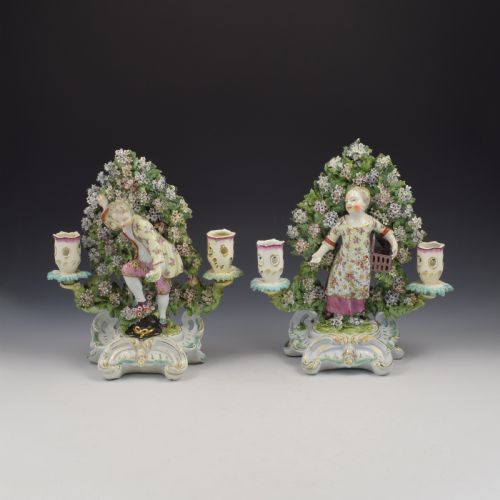


Rococo Porcelain Candlesticks
Rococo porcelain candlesticks bring the swirling asymmetry and sculptural grace of eighteenth-century design straight to a mantelpiece.
Rococo Porcelain Candlesticks
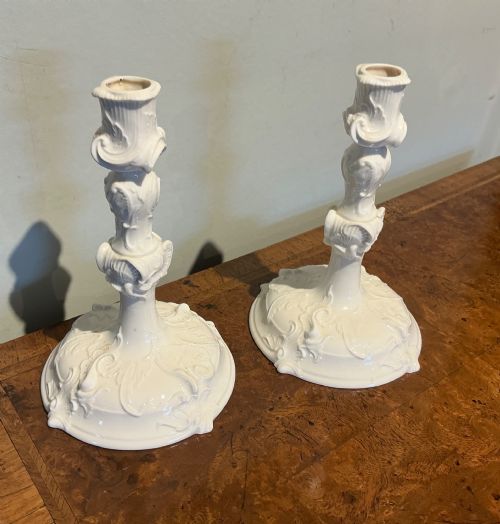
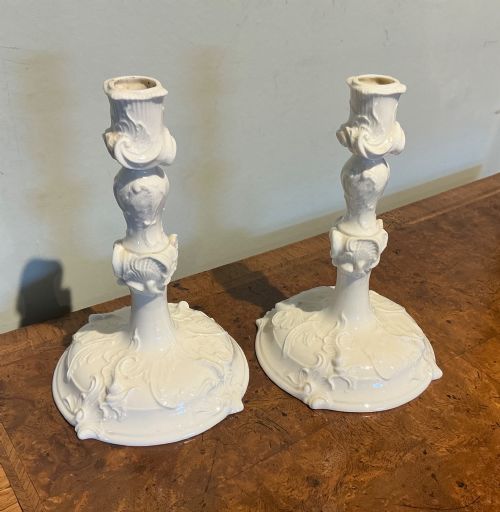
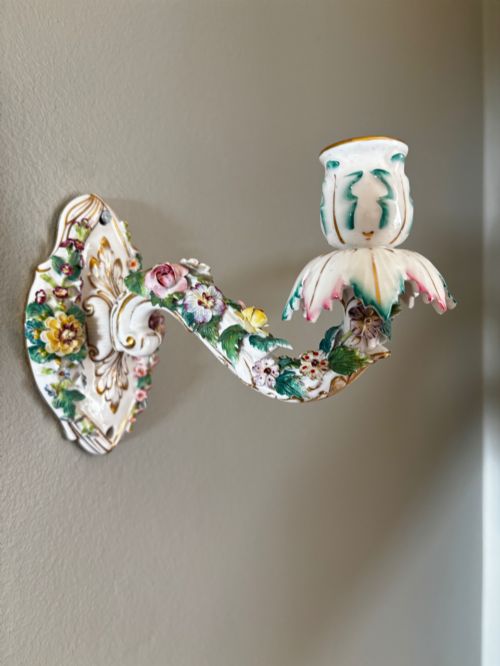
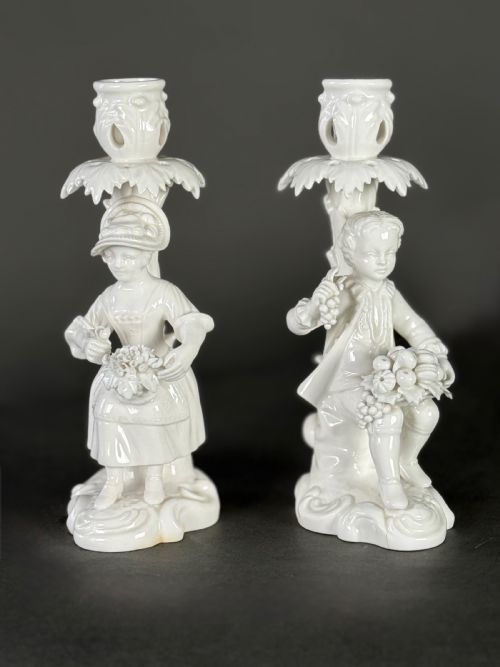
Rococo porcelain candlesticks combine functional candle holders with elaborate figural groups, floral bocage, and asymmetrical scrollwork. These pieces emerge primarily from eighteenth-century manufactories and later nineteenth-century revivals, taking the form of paired sticks, multi-armed candelabra, wall sconces, and chambersticks.
The inventory on this page spans from mid-eighteenth-century Georgian productions to nineteenth-century continental revivals. Buyers encounter allegorical figures representing seasons or musicians, alongside naturalistic arrangements involving dogs, birds, and children set against leafy backdrops.
European porcelain centres such as Derby, Chelsea, Bow, Meissen, Nymphenburg, and Sitzendorf dominate these listings. Each manufactory applies distinct modelling traditions, shifting between simple chambersticks and complex figural candelabra mounted in ormolu.
How they were made
Artisans shape these objects using soft-paste and hard-paste porcelain, finished with glazes, enamels, and accents of gold leaf and gilding. Moulds form the structural bases and figures, while delicate details like floral bocage require meticulous hand-assembly before firing.
Several eighteenth-century musicians play their porcelain instruments with unwavering concentration while surrounded by permanent ceramic shrubbery.
What varies in quality
Quality rests upon the crispness of the modelling and the precision of the hand-painting beneath the glaze. Superior examples retain fine details in the facial expressions, fingers, and layered foliage without blurring or pooling in the porcelain paste.
The complexity of the form dictates distinction, separating simple socket candlesticks from multi-figure allegorical groups framed by intricate bocage. Intact original components, balanced proportions, and careful firing without major distortion separate standard workshop output from exceptional survivals.
Nymphenburg·Meissen·Derby·Chelsea·Volkstedt·Minton·Sitzendorf·Dresden·Bow·Triebner, ENS & Eckert·Helena Wolfsohn·Sevres
The Rococo Porcelain Candlesticks Glossary
- Bocage
- A background screen of applied porcelain leaves and flowers that surrounds figures in eighteenth-century designs. This leafy arbor cushions the fragility of the composition while adding botanical depth.
- Hard-paste porcelain
- A durable ceramic compound made from kaolin and petuntse fired at high temperatures. It yields a bright white body that resists scratching and accepts crisp moulding.
- Soft-paste porcelain
- An artificial porcelain mixture fired at lower temperatures, common in early English factories. It presents a warm, creamy translucence beneath the glaze.
- Ormolu
- Gilded bronze used for mounts, bases, and arms on European candelabra. This metalwork provides structural support and adds metallic contrast to the glazed porcelain.
- Chamberstick
- A low candlestick fitted with a handle and a drip pan, designed for carrying through a house at night. These portable pieces often feature small socket cups and match holders.
Rococo Porcelain Candlesticks: Frequently Asked Questions
What periods do these pieces date from?
The listings include eighteenth-century pieces from the Georgian and patch-mark periods alongside nineteenth-century revivals produced around eighteen-eighty to nineteen-twenty.
Factories active across both eras reproduced these flowing designs, meaning shoppers find genuine eighteenth-century items alongside later nineteenth-century interpretations.
How do I distinguish eighteenth-century pieces from later revivals?
Eighteenth-century examples often display early factory marks, characteristic glaze textures of soft-paste porcelain, and hand-modelled nuances unique to early ceramicists. Nineteenth-century revival pieces tend to utilise harder paste bodies and distinct factory stamps from that later period.
Close inspection of the painting style and baseline markings helps clarify the production era.
Were these items meant for lighting rooms?
Many multi-armed candelabra and figural sticks served as functional lighting on dining tables and mantelpieces. Chambersticks were specifically built for carrying down dark hallways.
At the same time, elaborate figural groups functioned primarily as decorative ornaments for wealthy interiors.
How should I clean porcelain candlesticks?
Dust these delicate surfaces gently with a soft dry brush to protect fragile elements like porcelain leaves and flower petals. Avoid submerging items with painted enamel or gold leaf in water.
Gentle maintenance preserves the hand-painted enamels and prevents accidental breakage of protruding bocage.