



Rococo Painted Chest
A rococo painted chest brings curvaceous continental flair to a room, offering generous storage wrapped in flowing painted artistry.
Rococo Painted Chest
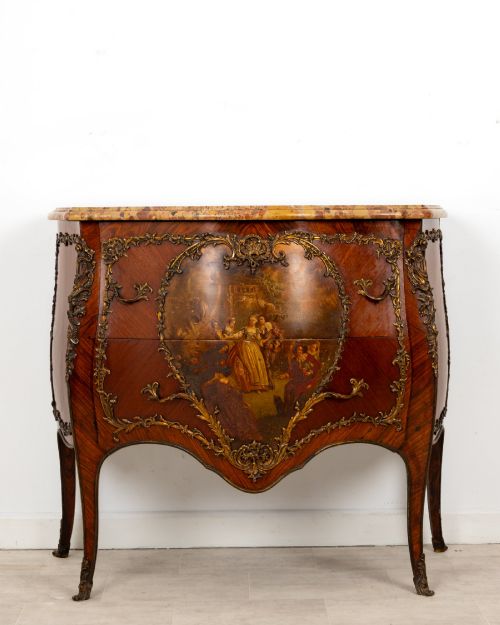
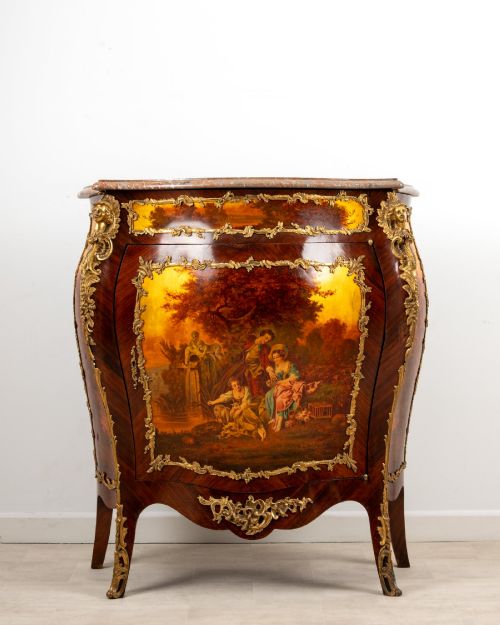
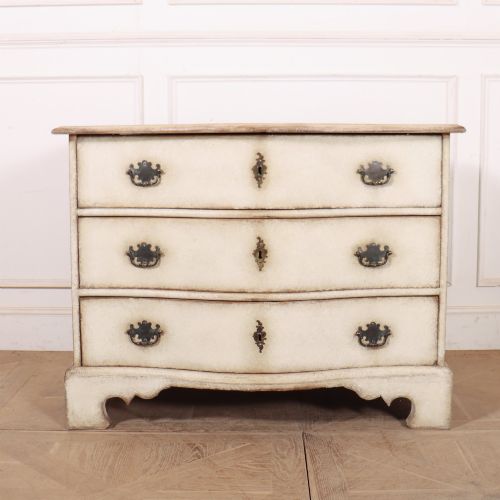
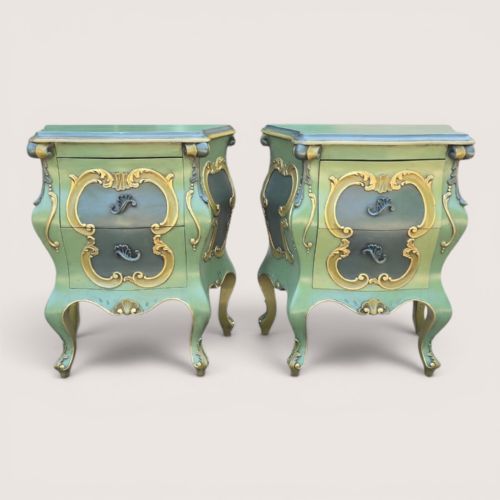
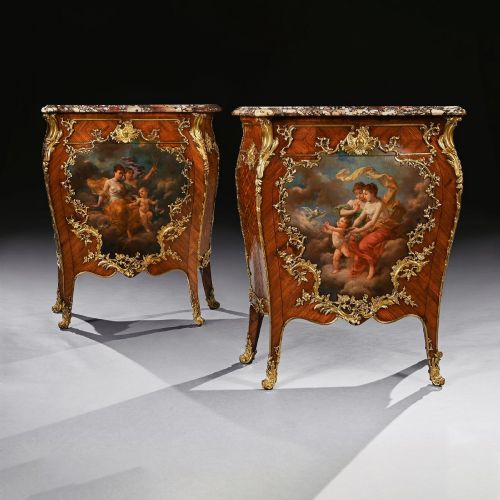
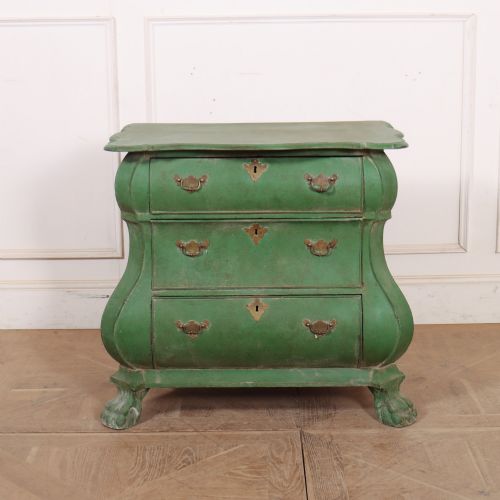
A rococo painted chest unites asymmetrical curves with decorative paintwork, appearing across continental Europe in forms such as commodes and bedside cabinets. These pieces span the eighteenth century through to the early twentieth century, encompassing Dutch, Italian, French, German, and Scandinavian interpretations. The most frequent iteration encountered here is the serpentine or bombé commode featuring painted surfaces.
Regional variations shape the silhouette and palette, ranging from robust Dutch and German bombe profiles to lighter French provincial and Italian painted designs. Makers constructed these chests of drawers to serve practical storage needs while functioning as decorative focal points within grand and domestic interiors alike. Buyers encounter both eighteenth-century period originals and later nineteenth- and twentieth-century revivals.
Materials and construction methods
Craftsmen built these carcases using timber substrates such as oak, pine, and kingwood, often shaping the wood into pronounced serpentine and bombé contours. Surfaces received layers of paint, sometimes augmented with giltwood or vernis martin finishes, while mounts in brass, gilt-bronze, and ormolu framed the drawers. Marble tops frequently finished the upper surface of French and Italian commodes.
Carving and joinery demanded specialist skill to achieve the characteristic undulating fronts without compromising structural integrity. Painters applied decorative scenes, floral motifs, or Venetian landscapes directly onto the prepared wood, sealing the pigment to endure decades of domestic use.
Some German commodes feature mischievous carved masks peering out from heavily sculpted bombé wooden folds.
Distinguishing quality factors
The sophistication of the painted decoration dictates much of the visual distinction, with finely rendered figurative scenes or delicate floral motifs commanding attention over simpler washes. The crispness of the carved wood contours and the fluency of the serpentine or bombé sweep reveal the hand of a skilled cabinetmaker.
The integration of secondary materials elevates a piece, particularly heavy ormolu or gilt-bronze mounts that fit the carcase precisely alongside solid marble slabs. Original period surfaces carry greater weight among collectors than later revival paint layers, preserving the authentic tonal shifts of the era.
The Rococo Painted Chest Glossary
- Bombe
- A swelling, bulging chest profile that curves outward in convex lines on the front and sides. This exuberant shape characterises much eighteenth-century continental cabinetmaking.
- Serpentine
- A furniture front shaped with a central concave curve flanked by two convex sweeps. It provides a fluid, undulating appearance typical of rococo design.
- Commode
- A low chest of drawers or cabinet developed in France during the seventeenth century. These pieces evolved into highly decorative focal points for reception rooms.
- Vernis Martin
- A simulated Japanese lacquer finish developed in France using multiple layers of varnish. It allowed European cabinetmakers to achieve lustrous, translucent decorative surfaces.
- Ormolu
- Gilded bronze mounts applied to furniture edges, corners, and feet for ornamentation. The technique involves treating metal with a mercury and gold amalgam before firing.
Rococo Painted Chest: Frequently Asked Questions
Where should I place a painted commode?
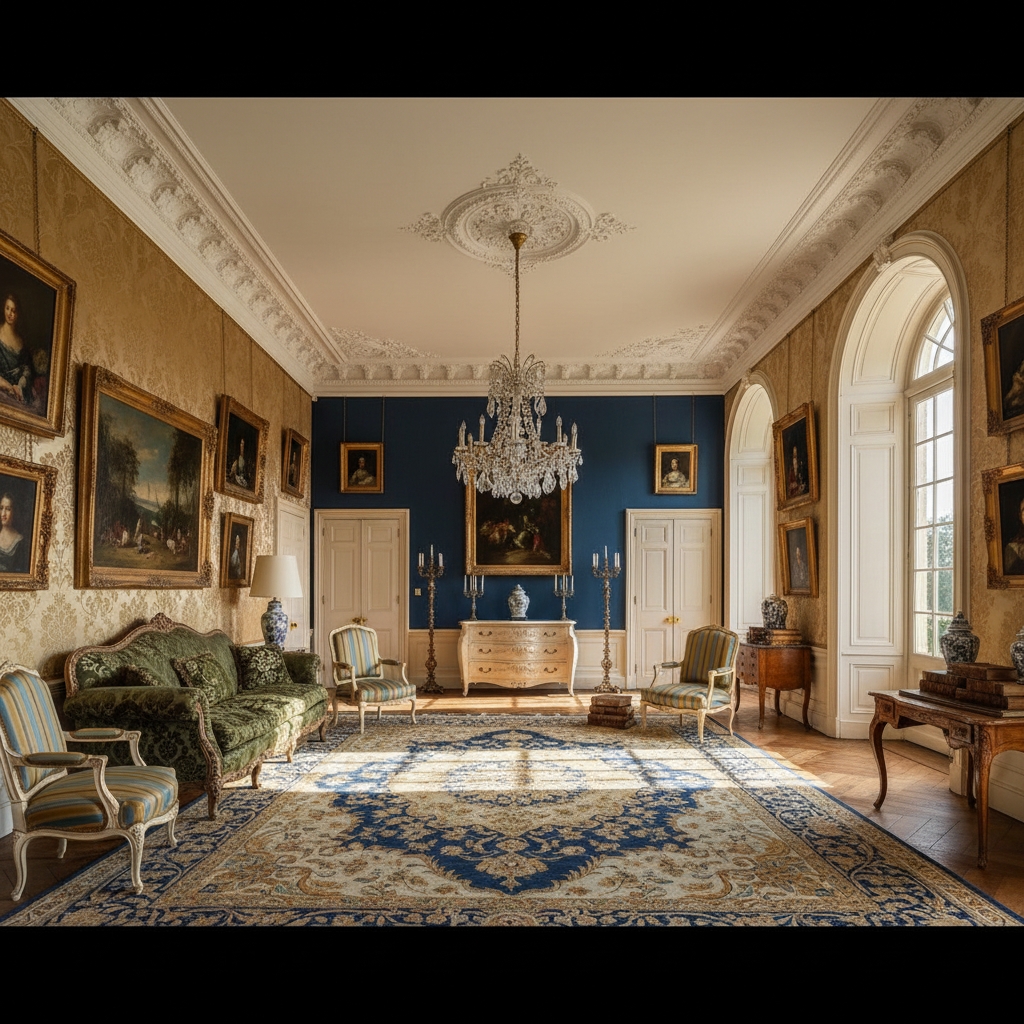
These chests suit entrance halls, drawing rooms, or bedrooms where their decorative painted surfaces can be appreciated fully. Placing them away from direct sunlight preserves the painted pigments and underlying wood.
Pairing a commode with a simple mirror or wall art allows the curvaceous silhouette to remain the primary visual anchor in the space.
How do I distinguish eighteenth-century pieces from later revivals?
Examining the timber construction, secondary woods, and hand-cut joinery provides clues regarding age, as eighteenth-century makers worked with specific regional framing techniques. Tool marks and the natural ageing of the paint layers also help differentiate period originals from nineteenth- or twentieth-century revivals.
Revival pieces often display machine-sawn elements or standardised hardware fittings that contrast with the bespoke craftsmanship of earlier centuries.
How do I care for antique painted furniture?
Maintain stable indoor humidity levels and moderate temperatures to prevent the timber carcase from expanding or contracting, which can stress the paint layer. Dust surfaces gently with a dry, soft cloth rather than using commercial liquid polishes.
Keeping these pieces away from heat sources and windows protects both the delicate painted scenes and any applied gilt bronze mounts.