



Rococo Mirror Console Table
These rococo mirror console table pieces bring dramatic nineteenth-century curves and reflective depth to a hallway or drawing room.
Rococo Mirror Console Table
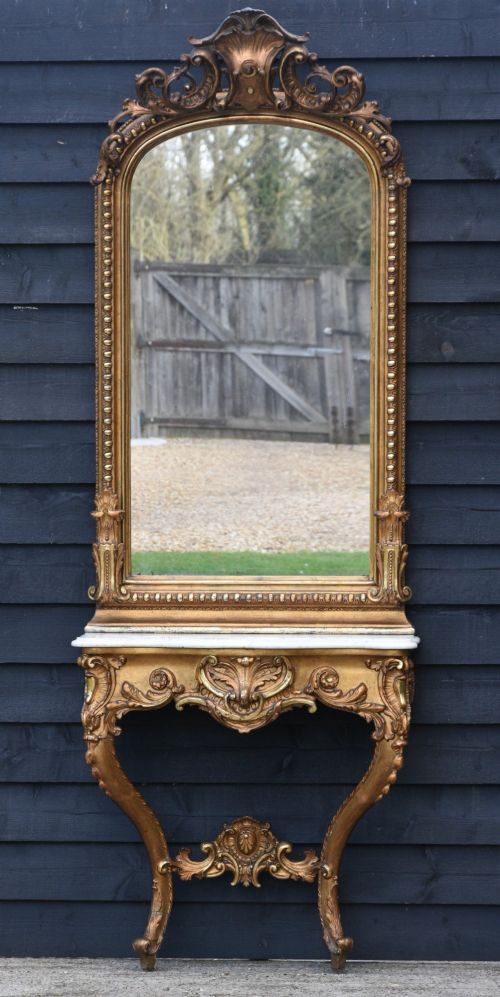
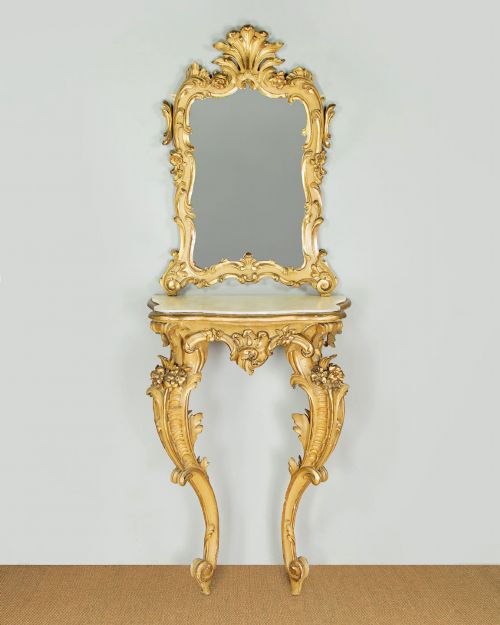
A rococo mirror console table combines a carved wall glass with a matching support table below, often presented as a unified set originating from nineteenth century revivals. The form draws heavily on French and Italian rococo revivals, bringing together ornate woodwork and substantial mirror glass.
Buyers will encounter paired console tables and mirrors alongside independent wall mirrors and carved mahogany or giltwood tables. Most examples date across the nineteenth century and the early twentieth century, utilising styles from Venetian and French traditions.
How they were made
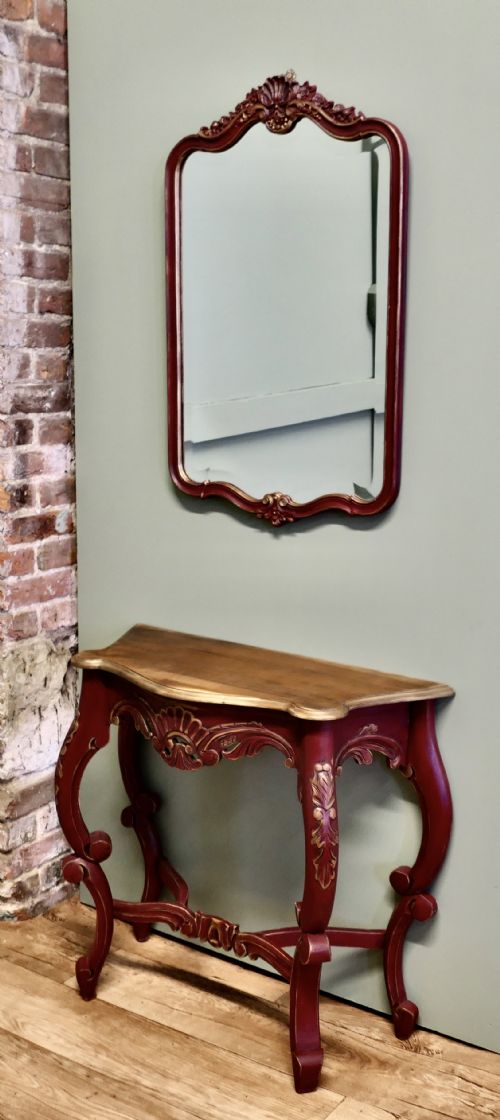
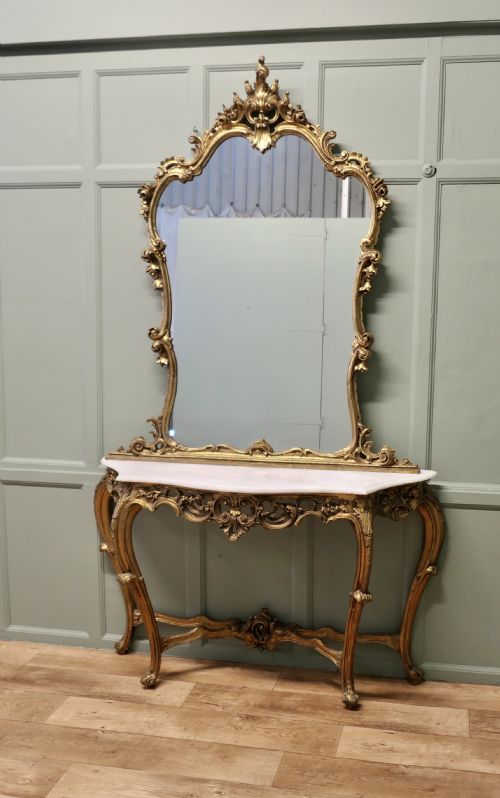
Maker workshops shaped these pieces from timber such as mahogany, walnut, and wood substrates finished with gesso. Artisans applied layers of leaf gilding to create rich surfaces on carved frames, while others employed painted wood or shabby chic treatments.
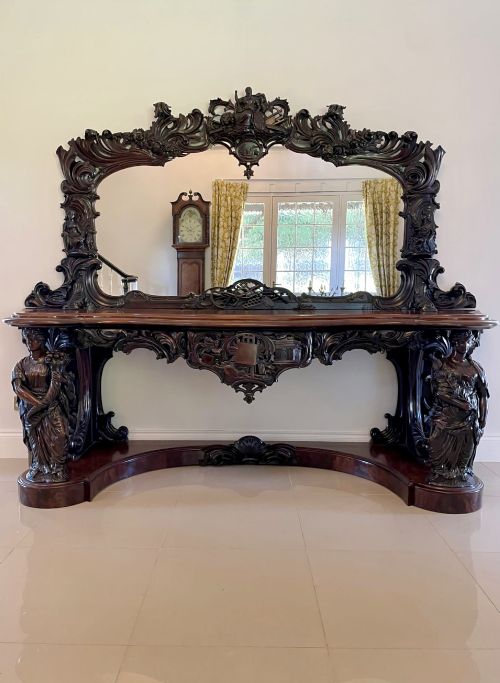
The upper sections integrate heavy mirror glass, while the lower tables frequently incorporate inset marble tops. Carving forms the central technique for the elaborate frames, executed by hand to achieve the characteristic asymmetric scrolls of the style.
Rococo Mirror Console Table Retail Price Guide 2026
Typical asking prices for rococo mirror console table among the pieces listed under this phrase on Sellingantiques today, from the lower quarter to the upper quarter. They describe what is for sale here now, not the wider market.
One Venetian cabinet carries the spirit of Pauly et Cie without needing a passport.
What varies in quality
The depth and crispness of the hand carving distinguish finer examples from simpler production, particularly where gesso and giltwood meet complex scrolls. Exhibition quality items display exceptionally intricate timber work and substantial proportions.
Material selection dictates the character of each piece, ranging from solid carved mahogany and veined marble tops to lighter painted wood surfaces. The integration between the pier mirror and the console table below also indicates the ambition of the original workshop.
Pauly et Cie
The Rococo Mirror Console Table Glossary
- Giltwood
- Wood covered with fine gold leaf applied over a prepared gesso ground. This finish provides the characteristic metallic brilliance seen on nineteenth century revival frames.
- Console table
- A table designed to stand against a wall, frequently supported by ornamental brackets or legs rather than four independent vertical posts. These often carry heavy marble slabs.
- Pier mirror
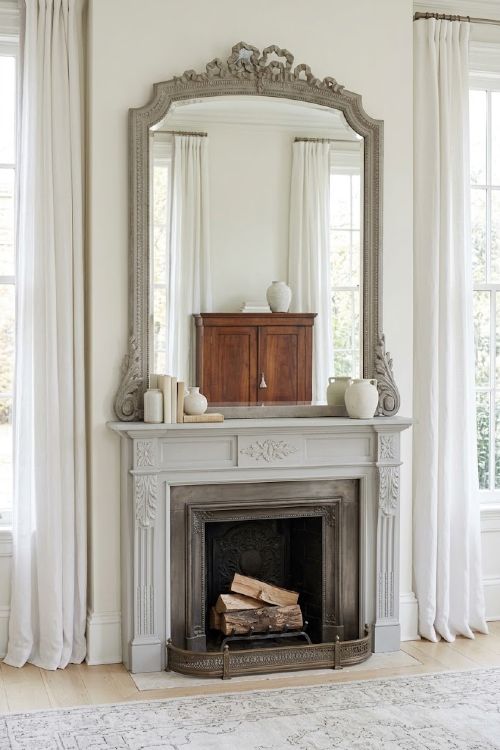
- A tall wall mirror traditionally hung on the pier, the section of wall between two windows. In these listings, they frequently match the console table placed directly beneath them.
- Gesso
- A plaster mixture applied to wood frames to provide a smooth base for gilding and detailed carving. It allows artisans to shape intricate relief ornamentation.
Rococo Mirror Console Table: Frequently Asked Questions
Where should I place a console table and mirror set?
These matched sets work best in grand hallways, living rooms, or dining spaces where they anchor a wall and bounce light around the room. Their combined height demands substantial wall space.
Ensure the floor can support heavy marble tops and that the wall fixings safely bear the weight of large mirror frames.
How do I identify a Victorian rococo revival piece?
Look for heavy carved mahogany or giltwood frames featuring asymmetrical scrolls, floral motifs, and deep relief work typical of nineteenth century craftsmanship. These often pair large pier mirrors with matching console tables.
Makers of this era drew heavily on earlier French and Italian designs while employing industrial-era scale.
Are the mirror glass panels original?
Many nineteenth century pieces retain their original mirror glass, which often exhibits subtle foxing, minor spotting, and age-related oxidation. These natural signs of ageing confirm the period origin of the glass.
Replacements do occur during restoration, so inspecting the silvering backing provides helpful clues about age.
What is the difference between Venetian and French styles here?
Venetian examples often lean towards painted wood finishes, delicate polychrome, or lighter decorative treatments reminiscent of historic Italian workshops. French rococo revival pieces tend to favour rich giltwood and elaborate gesso carving.
Both traditions embrace extravagant curves, though regional palette choices set them apart.