
Rococo Marble Top Chest
A rococo marble top chest brings sculptural stone and sweeping serpentine timber together for an interior that demands attention.
Rococo Marble Top Chest
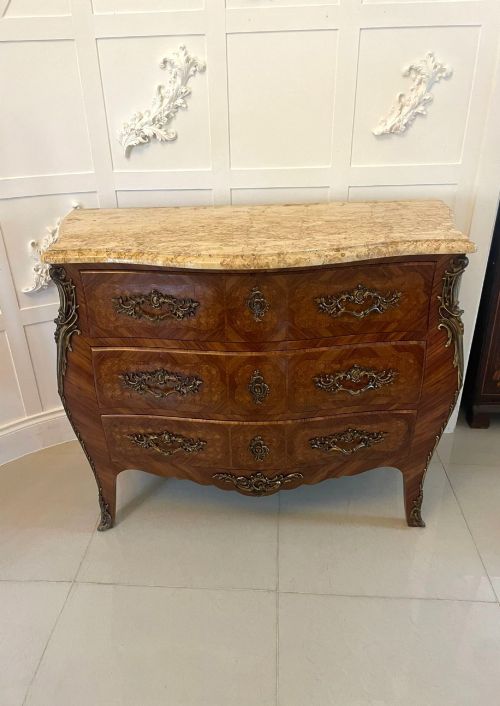
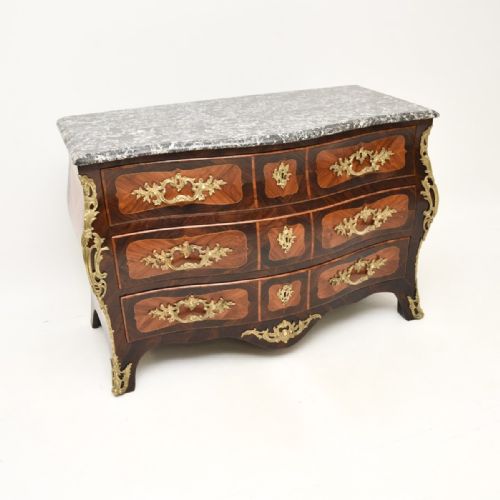
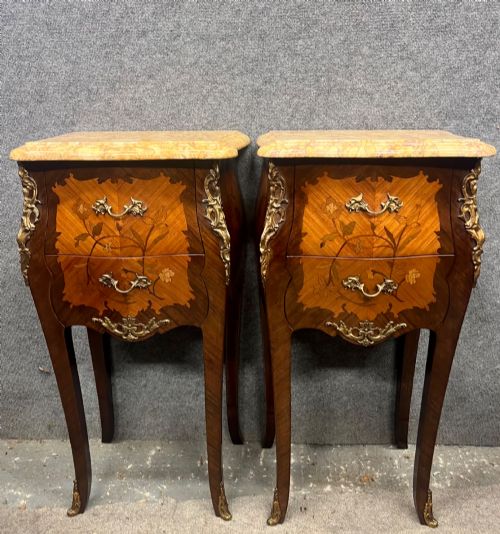
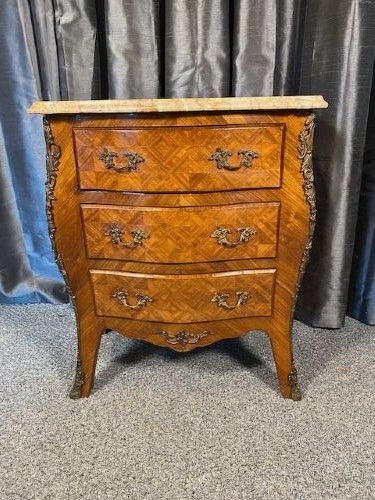
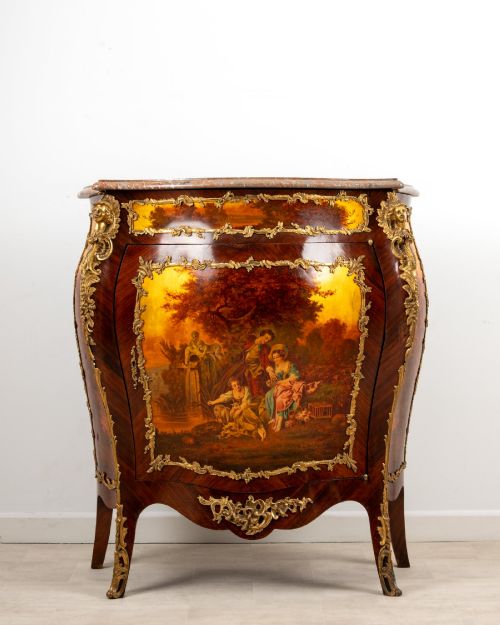
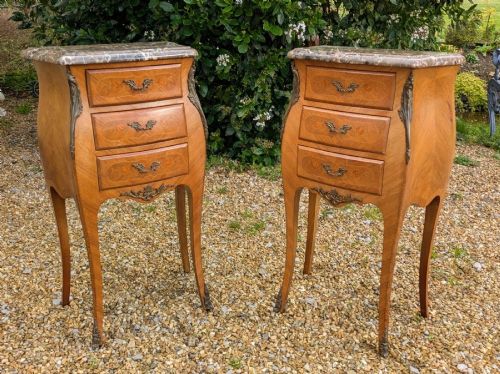
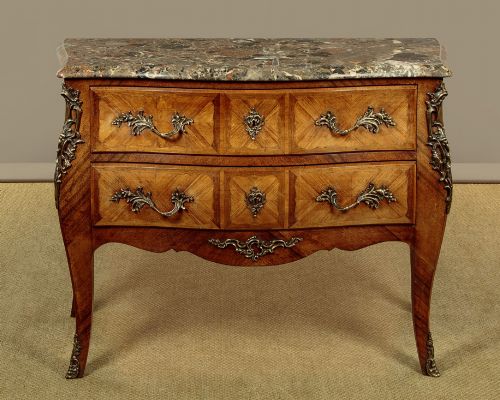
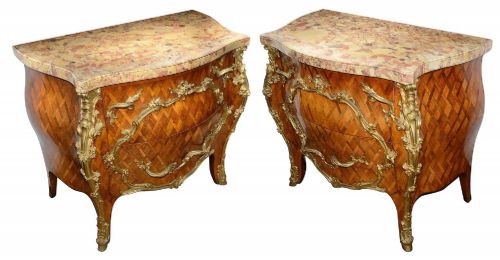
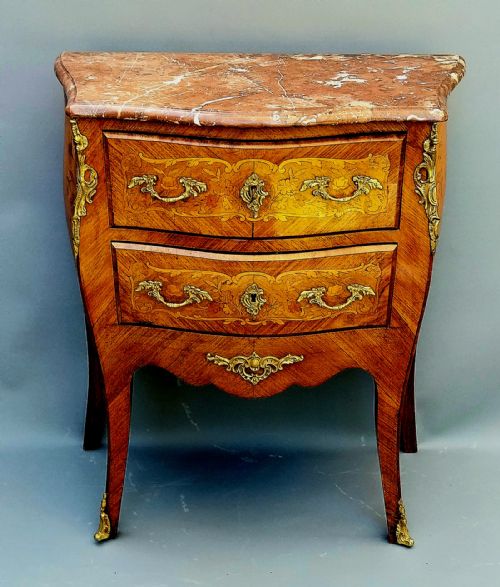
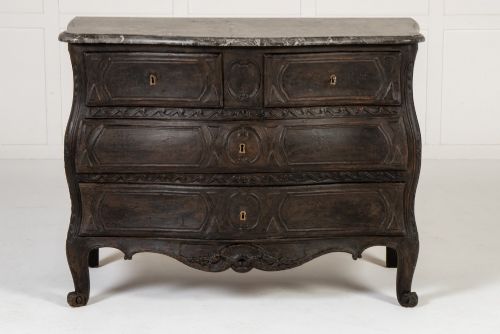
A rococo marble top chest combines substantial stone surfaces with ornate timber carcase work rooted in eighteenth-century continental design. Pieces carrying this description appear most frequently as commodes, bedside cabinets, and small drawer units originating from French and Italian workshops.
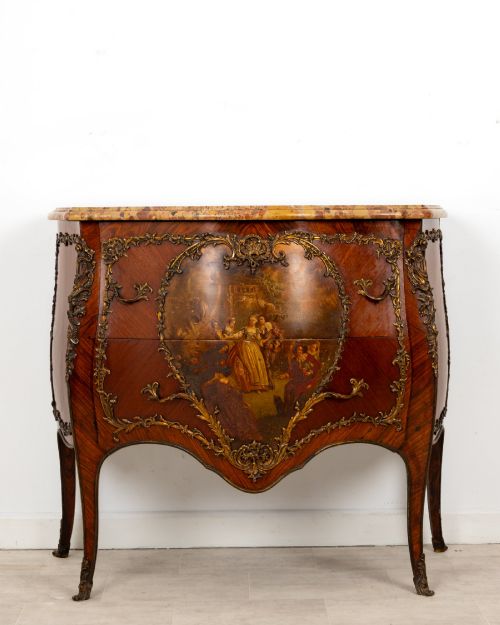
Makers working within the Louis XV and French Rococo styles shaped these bodies into bombé and serpentine silhouettes designed to catch the light. The form spans genuine eighteenth-century examples alongside nineteenth-century revivals and early twentieth-century interpretations.
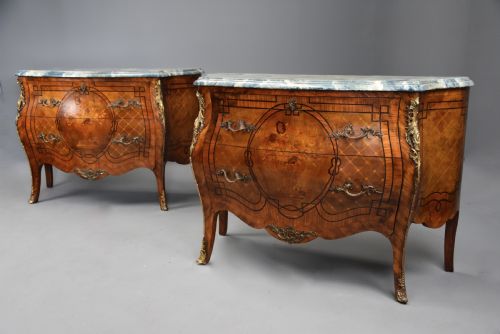
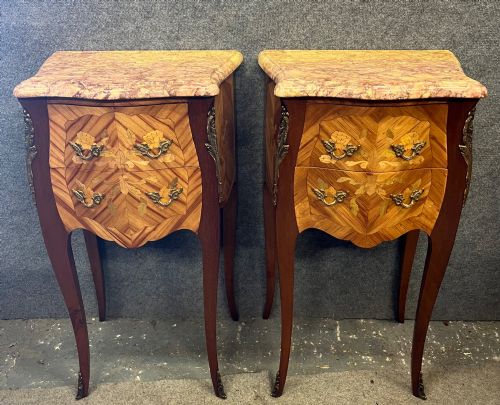
Buyers encounter variations ranging from grand salon commodes to compact bedside chests fitted with shaped marble slabs. Each version relies on the interplay between polished stone and figured wood veneers to create visual weight.
How they were made
Carpenters constructed these carcases using timbers like kingwood, walnut, and mahogany, often laying down intricate parquetry and marquetry patterns across the curved surfaces. Skilled hands shaped the wood to receive cast metal mounts before applying polished stone tops.
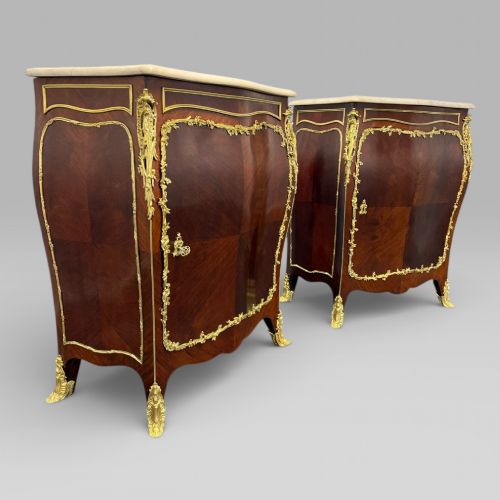
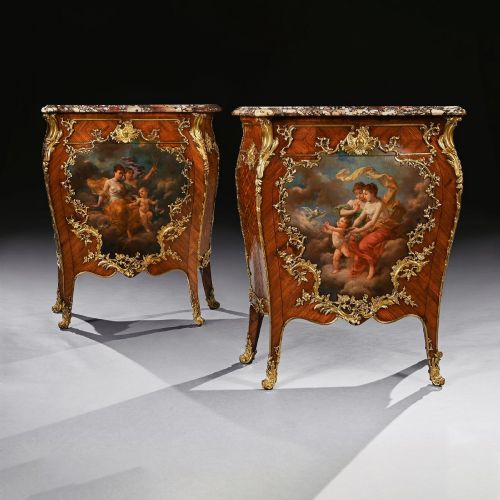
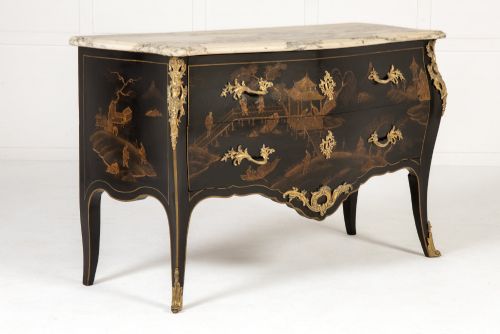
Foundries produced ormolu and gilt bronze mounts to accent the corners, handles, and apron scrolls of the commode. These metal elements were fastened securely to follow the complex contours of the bombé or serpentine timber frame.
Marble slabs were sawn and hand-polished to match the specific serpentine or breakfront profile of each individual chest. The stone sits directly on the wooden carcase, providing a heavy, cool counterpoint to the warm veneers below.
Listings feature pieces spanning the eighteenth century through to the 1930s, executed in kingwood, walnut, and mahogany.
What varies in quality
The precision of the timber marquetry and the fluidity of the carved carcase define the upper tier of production. Superior examples demonstrate seamless alignment between the bronze mounts and the underlying wood curves.
The choice of marble slab and the crispness of the gilt bronze chasing separate standard pieces from exceptional work. Heavier, richly veined stone and finely detailed metalwork indicate a higher standard of manufacture.
Jacques Bircklé·E. Kahn
The Rococo Marble Top Chest Glossary
- Bombe
- A bulging or swelling shape that curves outward on the front and sides of a chest. This swelling outline requires advanced veneer work to fit the timber smoothly.
- Ormolu
- Gilt bronze mounts applied to furniture for decorative accent. The term describes bronze that has been treated with a gold wash or mercury gilding process.
- Marquetry
- Fitted pieces of various woods assembled to create decorative patterns and pictures on a furniture surface. Craftsmen cut veneers together to ensure tight joints.
- Serpentine
- A furniture front or marble edge shaped with a central concave curve flanked by two convex sweeps. This undulating line is characteristic of rococo design.
- Vernis Martin
- A type of simulated Japanese lacquer developed in France during the eighteenth century. It employs successive layers of varnish to achieve a glossy, translucent finish.
Rococo Marble Top Chest: Frequently Asked Questions
What is a rococo marble top chest?
A rococo marble top chest is an ornate storage piece featuring a heavy stone top and curved wooden body influenced by eighteenth-century French design.
These items encompass commodes and bedside cabinets finished with decorative wood veneers and metal mounts.
How were these chests used originally?
Original owners utilised these decorative chests in bedrooms and salons for storing clothing and personal items.
The flat marble surface also served as a stable platform for lighting and display objects.
How do I identify a revival piece?
Revival pieces are typically dated to the nineteenth or early twentieth centuries rather than the 1700s.
Examination of the timber construction, interior drawer linings, and hardware often reveals the later manufacturing period.
How should I care for the marble top?
The marble slab requires gentle cleaning with mild soap and water to preserve the polished finish.
Acidic liquids should be kept away from the stone to prevent surface etching.