
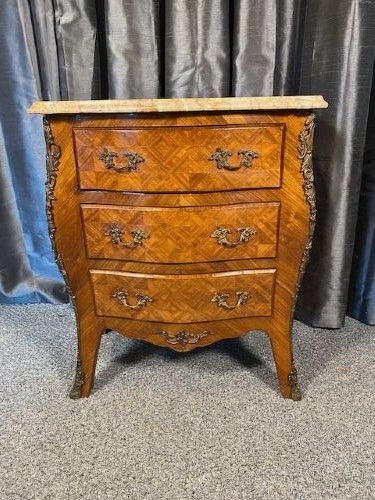
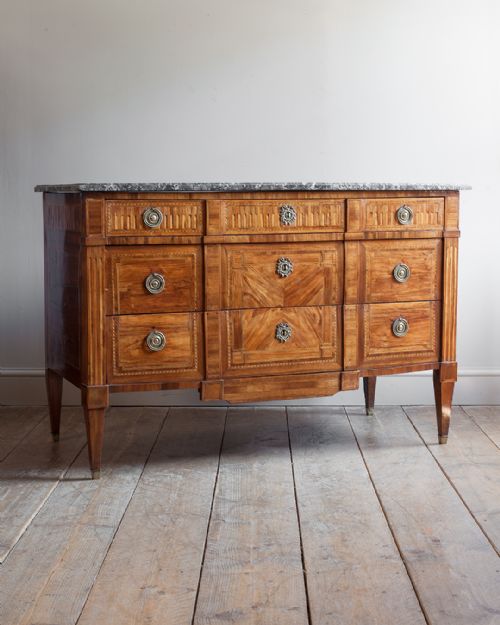
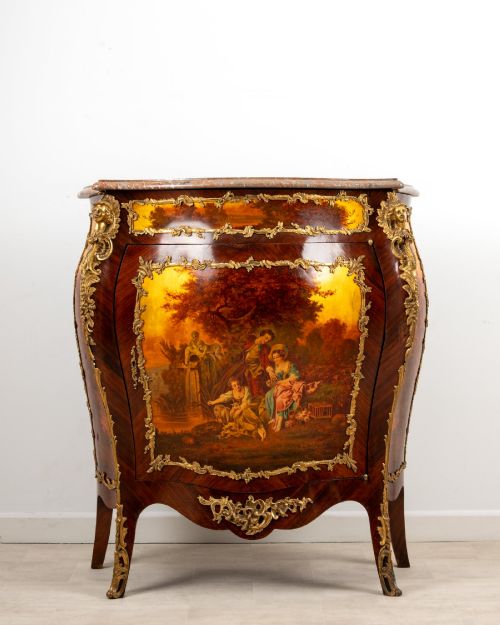
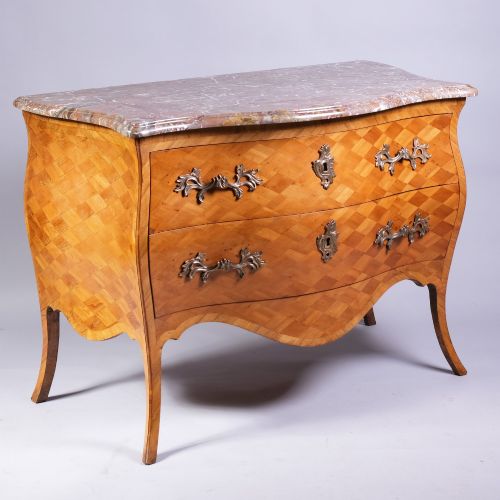
Kingwood Marble Top Commode
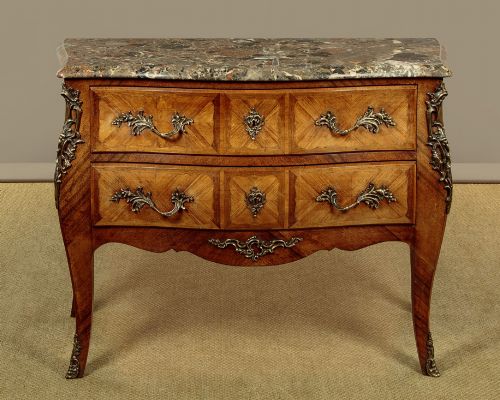
A kingwood marble top commode brings continental elegance to a room, offering practical drawer space beneath a cool stone surface.
Kingwood Marble Top Commode
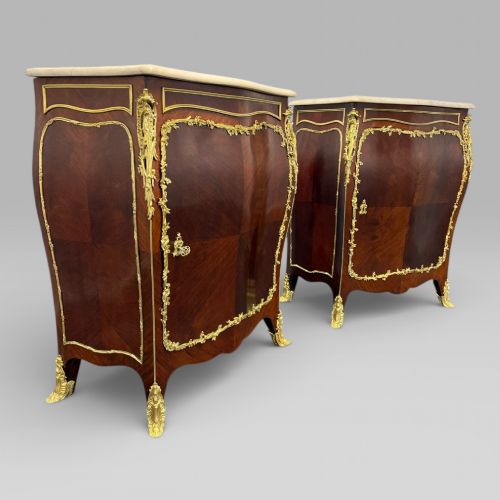
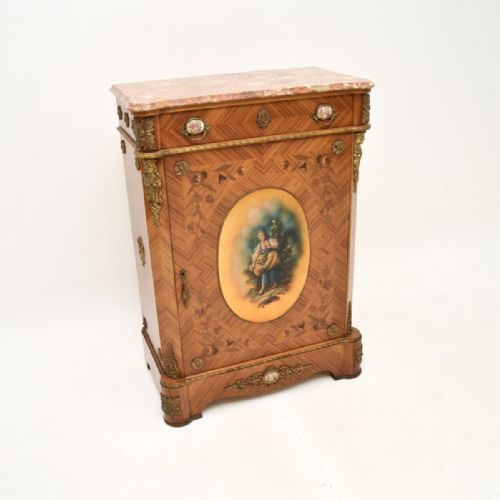
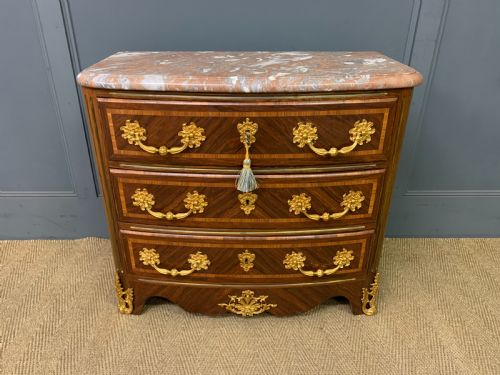
When searching for a kingwood marble top commode, buyers encounter low chests of drawers, side cabinets, and bedside tables designed for storage and display.
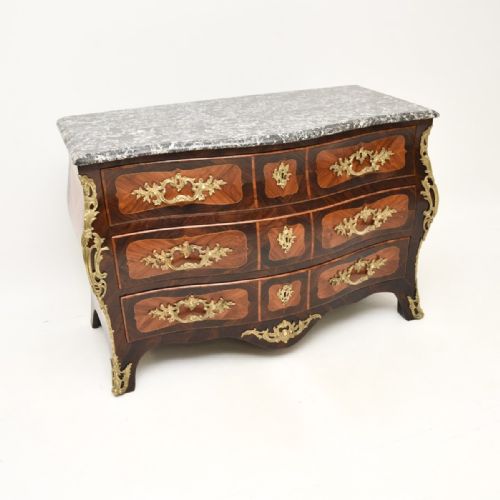
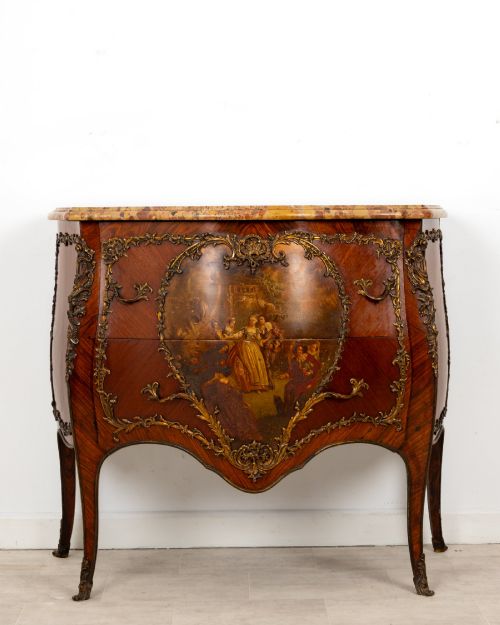
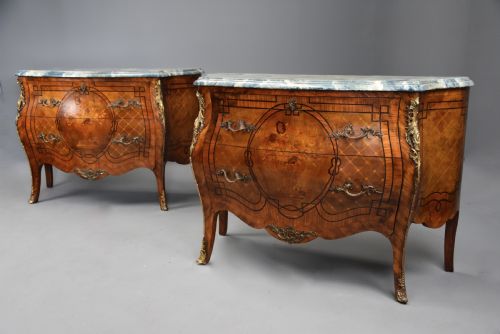
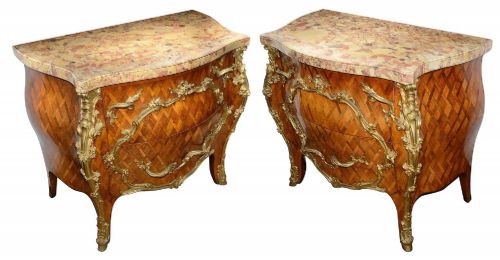
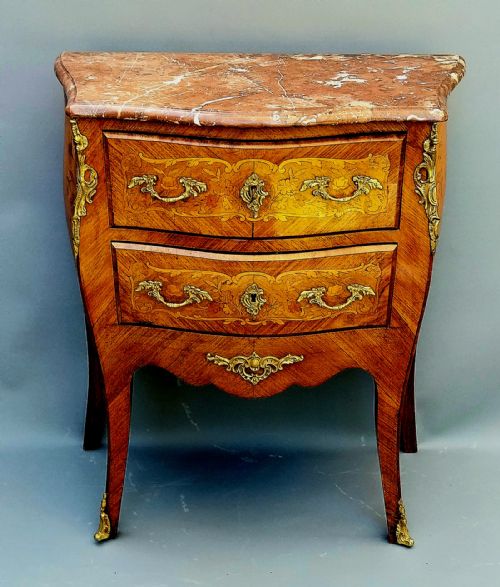
The version most commonly met on this page is the French chest dating from the nineteenth century, often following Louis styles with serpentine or bombe contours.
Pieces range from grand eighteenth-century originals to later revivals produced around nineteen hundred and the early decades of the twentieth century.
Materials and Construction
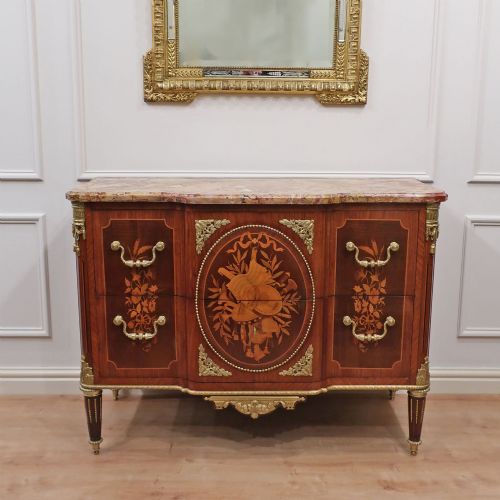
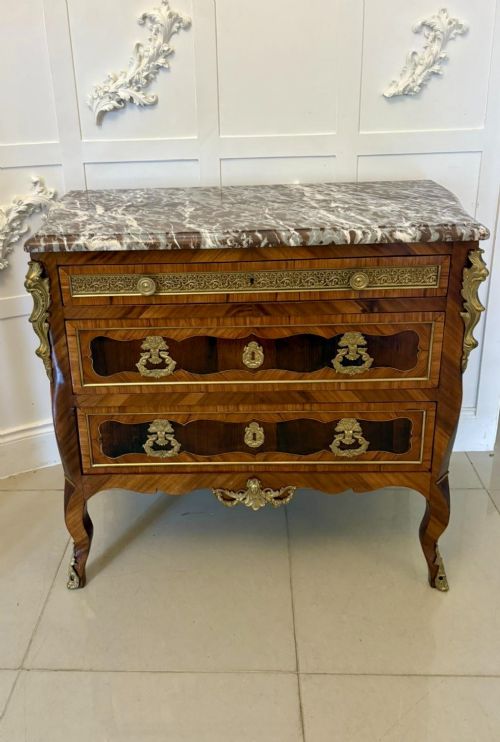
Cabinet makers utilised dense kingwood veneers laid in geometric marquetry or floral patterns across carcases built from secondary timbers like walnut.
Heavy slab marble tops, shaped to follow the serpentine or undulating outlines of the furniture, rest directly on the upper frame.
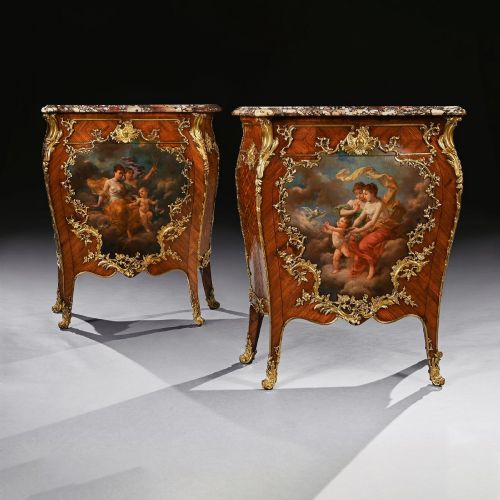
Gilt bronze and ormolu mounts protect vulnerable corners and accent handles, complemented on certain examples by painted Vernis Martin panels.
Many pieces spent their lives hiding clandestine love letters behind serpentine drawers.
Assessing Quality and Execution
The distinction between tiers rests upon the crispness of the bronze cast mounts and the precision of the parquetry inlay across curved surfaces.
Superior examples display harmonious grain matching in the wood veneers and heavy, well-figured marble tops that fit the wooden profile precisely.
Jacques Bircklé·E. Kahn·Maison Millet·Paul Sormani·Bruneau
The Kingwood Marble Top Commode Glossary
- Kingwood
- A dense Brazilian timber displaying rich violet-brown tones with darker grain stripes. It was heavily utilised by cabinet makers for high-status French furniture.
- Bombe
- A swollen, bulging contour typical of continental case furniture. This curved shape requires exceptional skill in veneer application.
- Ormolu
- Gilt bronze mounts applied to furniture edges and handles. This decorative metalwork enhances the sculptural profile of the piece.
- Vernis Martin
- A simulated Japanese lacquer technique developed in France. It provides translucent painted panels depicting pastoral scenes.
Kingwood Marble Top Commode: Frequently Asked Questions
What rooms suit a kingwood marble top commode?
These low cabinets fit comfortably in bedrooms as bedside storage or in living spaces as lamp tables. The stone surface provides a practical ledge for decorative items.
The compact footprint allows them to occupy hallways or alcoves where deep furniture would obstruct movement.
How do I identify eighteenth-century pieces?
Early pieces show hand-cut dovetails and native construction timbers hidden beneath the decorative veneers. The mounts display individual chisel marks rather than uniform factory casting.
Examination of the carcase underside reveals the age of the structural woods and historical fastening methods.
Are marble tops removable?
The stone slabs generally rest loose by their own considerable weight to allow safe transport of the timber carcase. Lifting the marble requires multiple people due to the dense material.
Certain makers secured the stone with internal brackets, though most simply rely on gravity within a rebated wooden frame.
What is the difference between revival periods?
Nineteenth-century revivals often utilise machine-sawn veneers and crisp, heavy ormolu castings that reflect industrial advancements. Eighteenth-century originals show greater variation in hand-shaped components.
Later copies produced around nineteen hundred frequently adopt exaggerated bombe profiles and bright gilt finishes.