


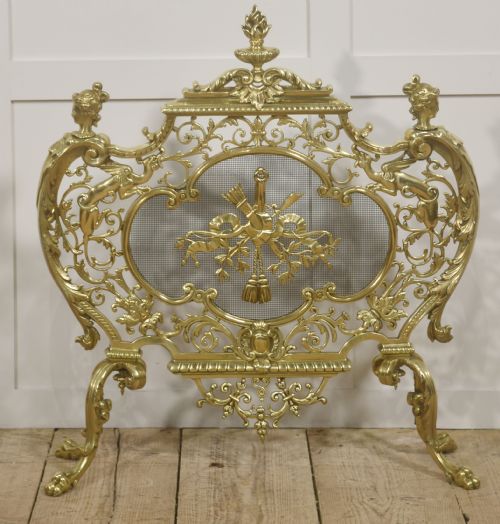


Rococo Hearth Screen
A rococo hearth screen brings asymmetrical curves and pierced brass or carved timber to the fireplace, adding warmth and decorative theatre to a room.

Rococo Hearth Screen
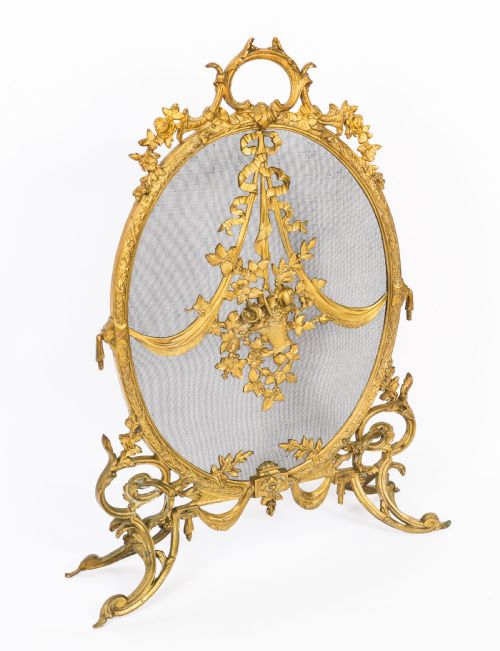
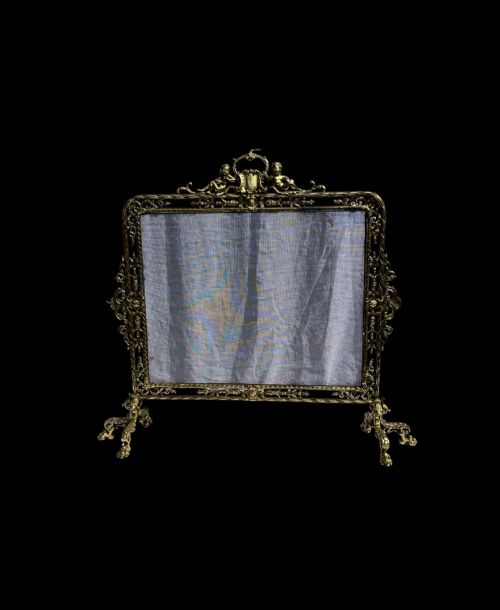
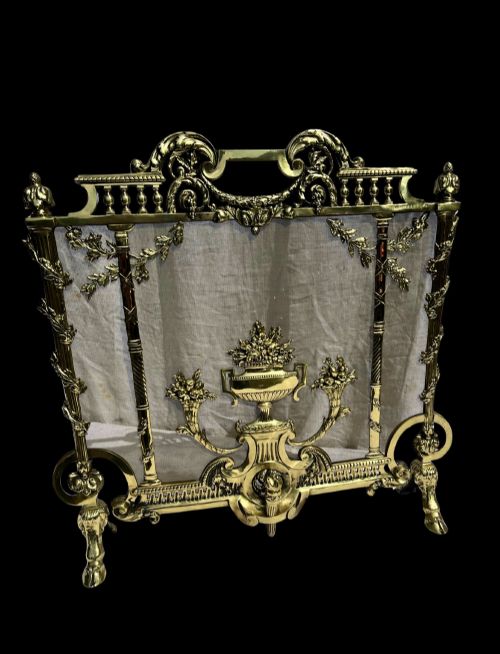
A rococo hearth screen serves to block radiant heat when the fire dies down while dressing the fireplace during warmer months. These pieces take the form of rigid folding guards, standing frames, and multi-panel screens placed directly before the grate.
The versions most commonly met on this page span the nineteenth century, including Victorian interpretations and French revivals. Makers of the period drew heavily on earlier Louis designs, applying ornate scrollwork, crests, and floral motifs to brass, gilt bronze, and carved timber.
How they were made
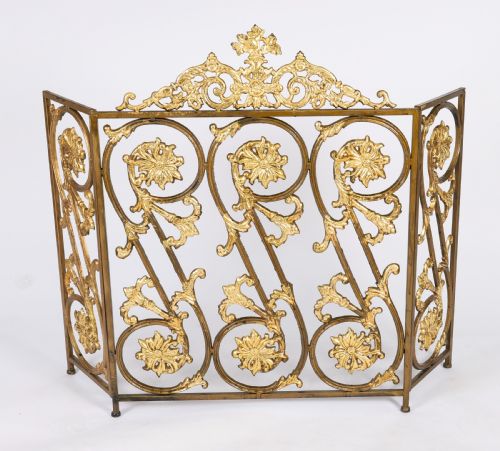
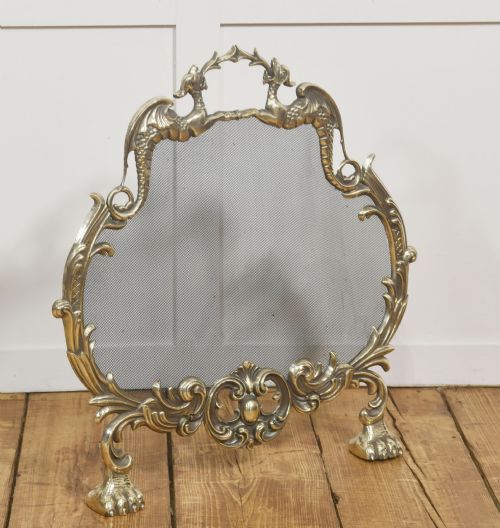
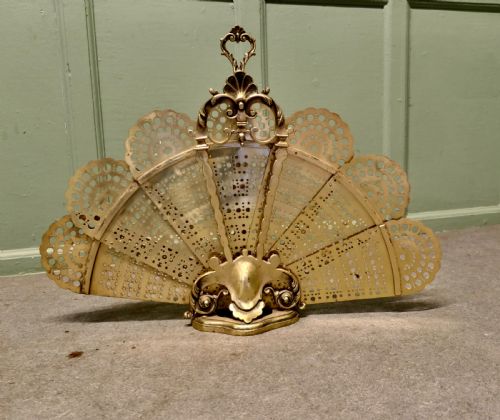
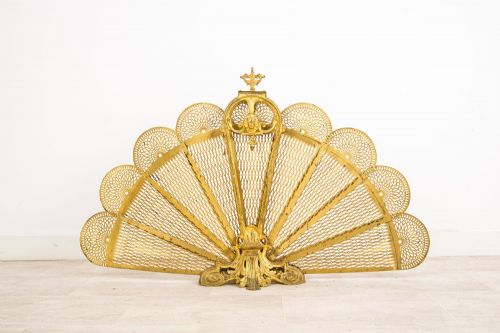
Makers shaped heavy brass, gilt bronze, and ormolu by casting and piercing, creating openwork frames and detailed scrollwork guards. Wire mesh and folding peacock tail configurations allowed screens to expand or contract around the hearth opening.
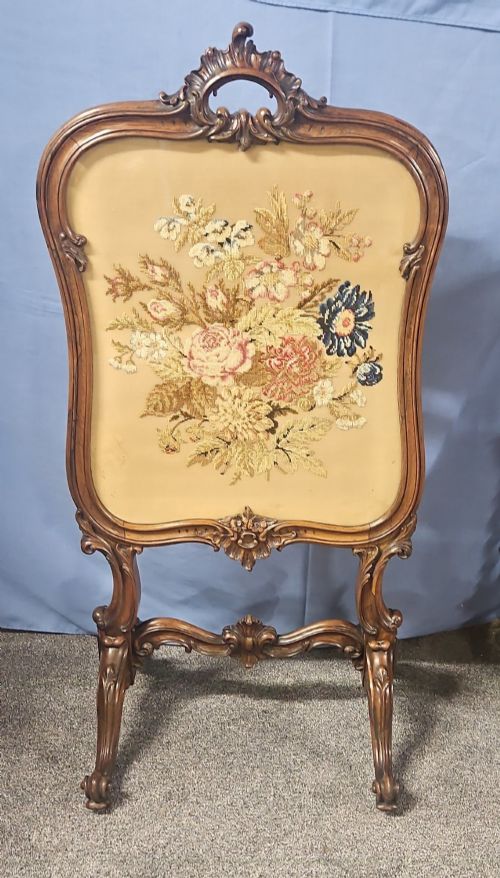
Wooden frames utilise walnut, oak, and giltwood, often housing textile inserts. Workers mounted wool and canvas tapestries, embroidered panels, and painted surfaces directly into carved wooden surrounds.
Peacock screens fan out gracefully to guard the hearth, offering a theatrical display of folding metal feathers that would make any Victorian parlor proud.
What varies in quality
The crispness of the casting and the depth of the chasing distinguish finer brass and gilt bronze work from simpler production. Heavier gauges of metal and intricate piercing in the rococo manner demand greater skill from the foundry.
Timber frames show quality in the precision of the carved ornament and the integrity of the joinery. The execution of the central textile panel, whether needlework tapestry or painted canvas, also elevates the piece.
The Rococo Hearth Screen Glossary
- Ormolu
- Gilt bronze mounted onto furniture or used for decorative fireplace accessories. The technique involves applying a finely ground high-carat gold mercury amalgam to a bronze base.
- Pole screen
- A standing fireplace screen featuring an adjustable panel mounted on a central vertical shaft. The screen slides up and down to protect the face from the fire's heat.
- Rococo Revival
- A nineteenth-century design movement mimicking the ornate, asymmetrical styles of the eighteenth-century French court. It relies on C-scrolls, shell motifs, and naturalistic plant forms.
- Tapestry
- A form of textile art woven on a loom or embroidered with wool and canvas. Many nineteenth-century screens incorporate these figural or floral panels into wooden frames.
- Spark screen
- A fine wire mesh guard designed to catch embers flying from an open fire. These functional pieces often incorporate decorative brass frames in revival styles.
Rococo Hearth Screen: Frequently Asked Questions
What is a rococo hearth screen used for?
These screens served a dual purpose in nineteenth-century interiors, acting as a functional guard against flying sparks and an ornamental cover for an empty fireplace during summer.
Placed in front of the hearth, they softened the gaping black void of the grate while diffusing remaining heat from dying embers.
How do I place one in a modern room?
A hearth screen stands directly on the floor in front of the fireplace opening, whether the fire is lit or unlit. Folding and peacock designs can be angled to fit the hearth space.
They also function as decorative room accents against plain walls when not needed near a fireplace.
How do I identify a nineteenth-century piece?
Nineteenth-century pieces often display heavy cast brass, gilt bronze, or carved walnut with characteristic French revival motifs. Examination of the assembly methods, such as hand-cut screws or traditional joinery, helps confirm the period.
Checking the weave of the tapestry or the gauge of the wire mesh provides further clues to the manufacturing era.
What is the difference between brass and gilt bronze?
Brass is an alloy of copper and zinc, offering a bright metallic yellow finish that takes intricate casting well. Gilt bronze, or ormolu, uses a bronze base coated with gold, giving a warmer, richer lustre.
Gilt bronze was typically reserved for higher-end decorative items during the revival periods.